

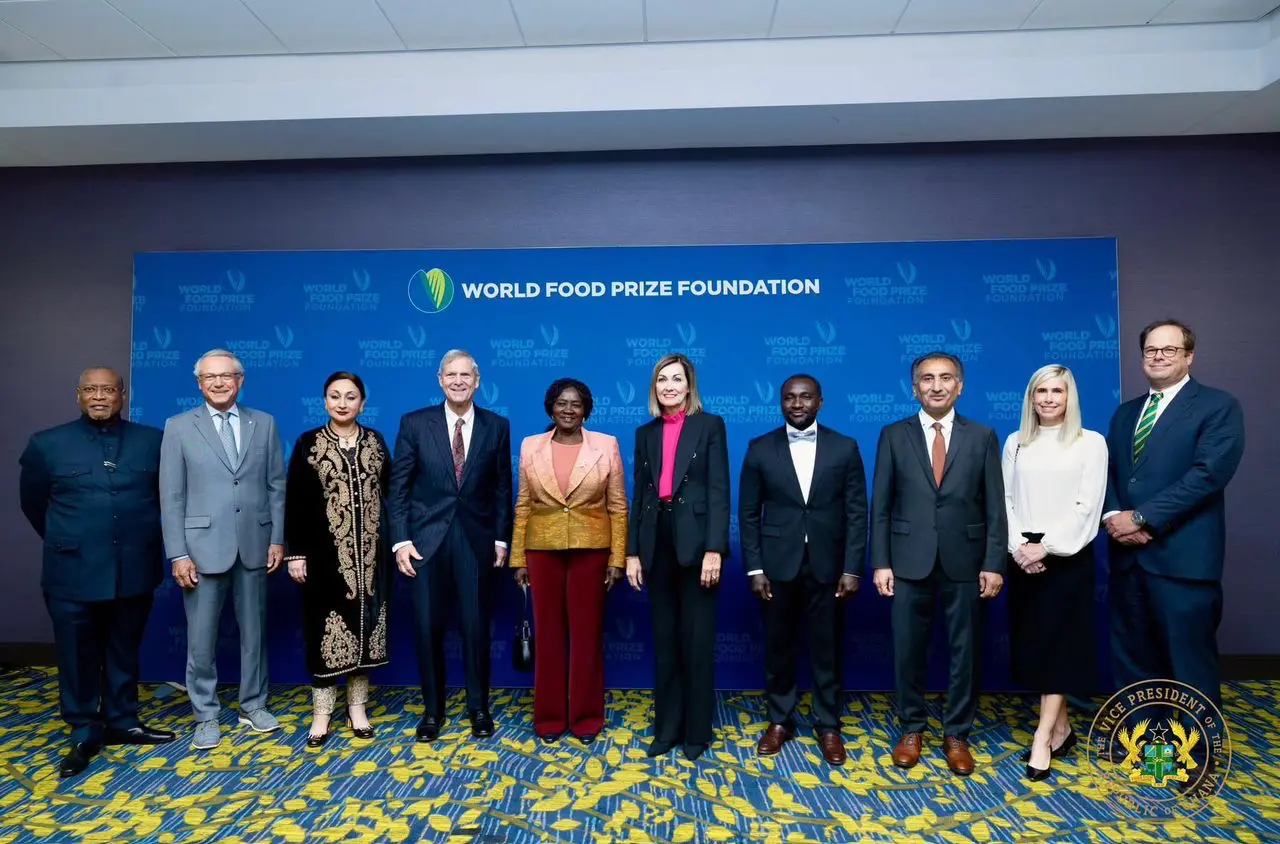
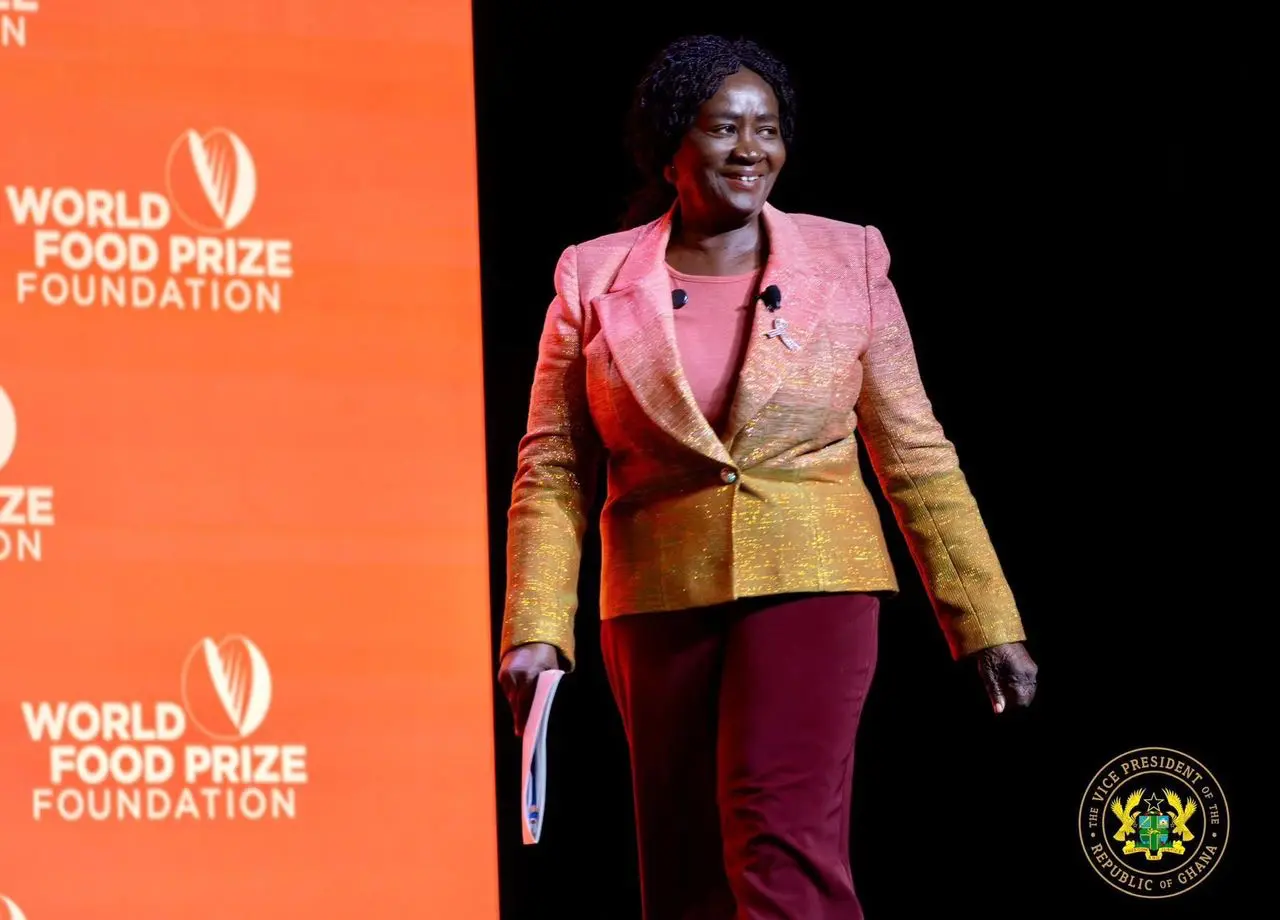
Vice President Prof. Naana Jane Opoku-Agyemang took center stage at the prestigious Borlaug Dialogue, where she delivered a compelling keynote address emphasizing Ghana’s resolute commitment to achieving national food security. During her speech, she detailed a suite of ambitious agricultural reforms currently underway.
Central to this transformation agenda is the vision laid out by His Excellency President John Dramani Mahama, encapsulated in the Feed Ghana Programme. This initiative is designed as a robust, market-driven, and highly coordinated effort targeting 22 essential commodity value chains.
These chains cover critical areas of the national diet and economy, ranging from grains and legumes, vegetables, and starchy staples to tree crops and livestock. The program’s strategic core is focused on dismantling systemic weaknesses that have historically hampered productivity, specifically targeting improvements in irrigation, storage and processing infrastructure, digital integration, the strengthening of cooperative development, and enhanced market access for farmers.
Further bolstering the agricultural modernization drive is the Grow24 Programme, which operates as a vital part of the broader 24-Hour Economy initiative. Grow24 is specifically geared toward modernizing agricultural practices and their associated value chains, providing essential support for agro-manufacturing, and ultimately cultivating an environment ripe for export-ready agribusiness. In a move to build resilience against unforeseen challenges, Ghana is also rolling out a dedicated five-year Agricultural Risk Management Strategy.
This strategy is currently prioritizing the enhancement of productivity and stability within the poultry, tomato, and maize sectors in select regions across the country.
Beyond structural and production concerns, Vice President Opoku-Agyemang candidly addressed crucial social equity issues within the sector. She acknowledged that while women constitute more than half of Ghana’s agricultural workforce, they are persistently hampered by significant barriers related to land access, credit, technology, and training. To directly address these deep-seated inequities, the Vice President announced measures such as the establishment of a dedicated Women’s Development Bank.
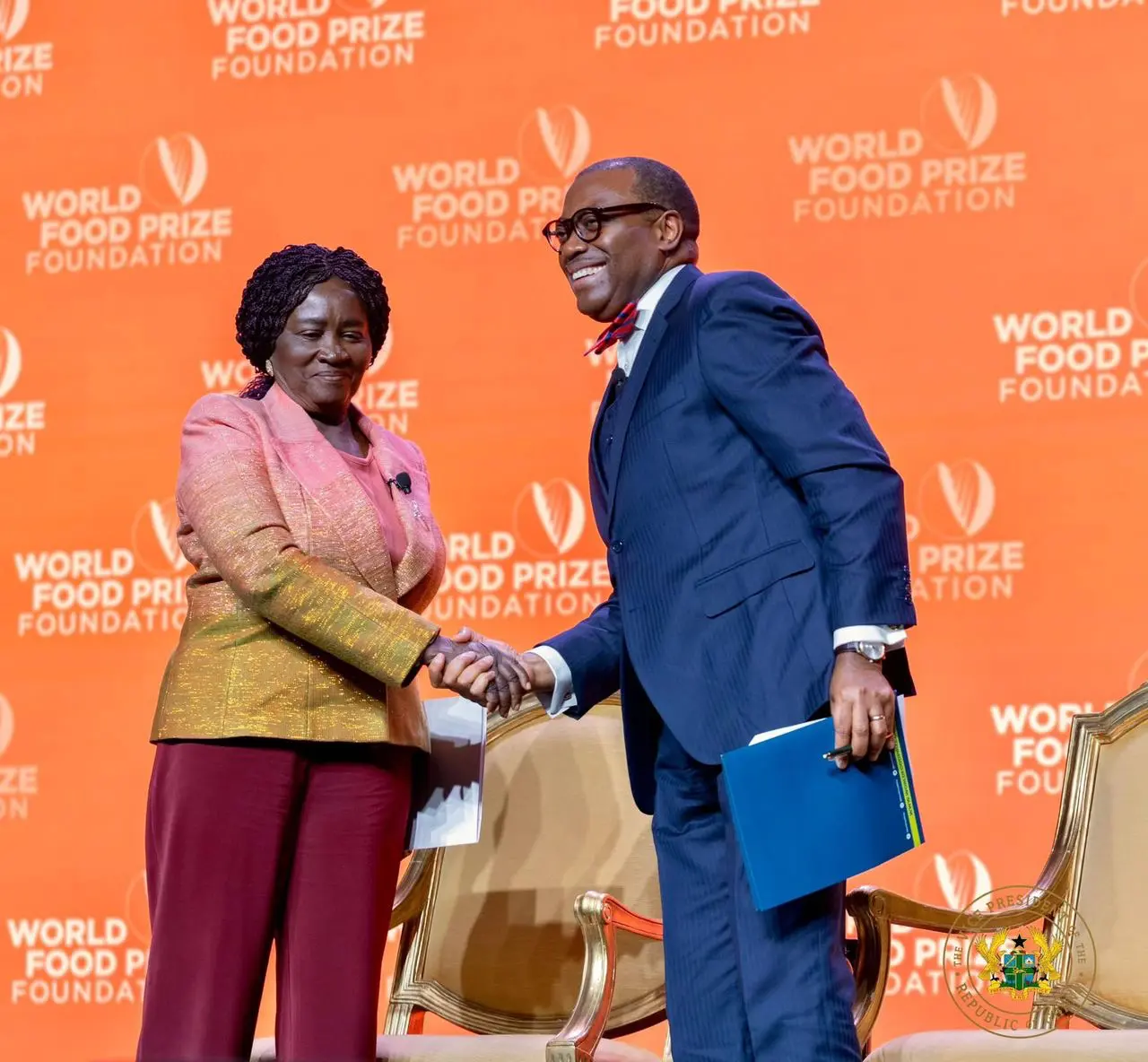
Additionally, the government is significantly increasing its investment in high-potential areas like youth-led agritech, expanding access to crucial mechanization services, and developing comprehensive digital market platforms to foster widespread innovation throughout the sector. Concluding her engagement, Prof. Opoku-Agyemang had the honor of joining AfDB President Dr. Akinwumi Adesina to jointly present the 2025 World Food Prize, an act symbolizing the celebration of leading innovation and impactful leadership on the global agricultural stage.
Ruth Abla ADJORLOLO