

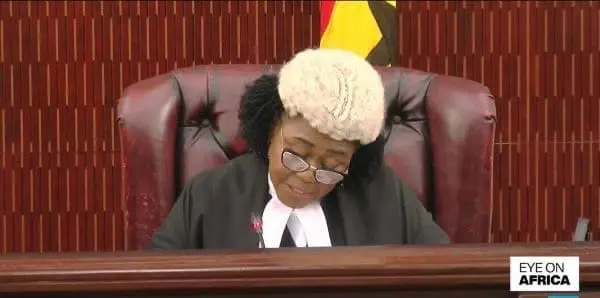

The Supreme Court has made a landmark ruling on the conditions under which a Member of Parliament (MP) must vacate their seat. According to the court, an MP’s seat is considered vacant only if they change their political affiliation and continue to serve in Parliament under their new identity. This decision was made in support of a suit filed by Majority Leader Alexander Afenyo-Markin.
The court’s judgment shed light on Articles 97(1)(g) and (h) of the Constitution, emphasizing that these provisions solely apply to the current parliamentary term. This means that if an MP decides to run for re-election under a different party, they won’t have to vacate their seat. However, if they switch parties within the current parliamentary term, they will lose their seat.
In the same vein, independent MPs who join a political party will have to give up their seats. The ruling stressed that constitutional provisions should be interpreted within the context of the current term and not applied to future elections.
This decision provides clarity on the rules governing MP seat vacancies and has significant implications for Ghana’s parliamentary dynamics. The court’s emphasis on the importance of contextual interpretation ensures that MPs are held accountable for their actions within the current term, while also allowing for flexibility in future elections.
Ruth Abla ADJORLOLO
