

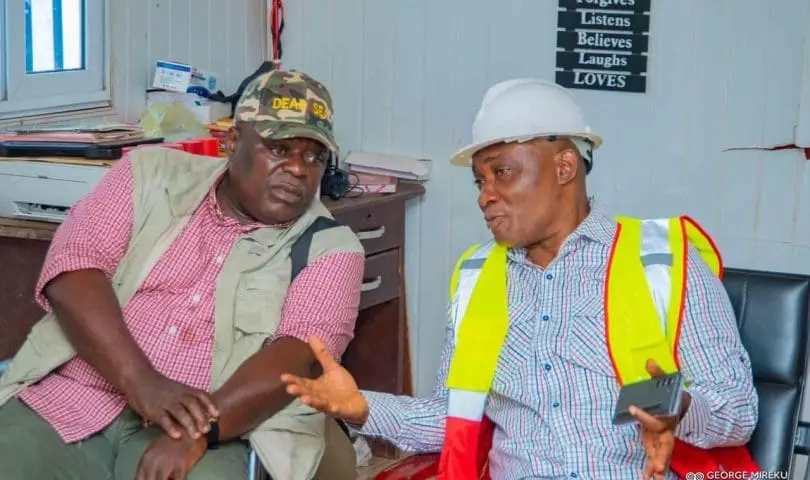

The Deputy Minister for Lands and Natural Resources, George Mireku Duker, and CEO of the Atta-Mills Institute, Samuel Koku Sitsofe Anyidoho, toured licensed small-scale mining companies in the Tarkwa-Nsuaem Municipality of the Western Region.
The tour, which took place on Saturday, October 19, 2024, aimed to showcase the operations of law-abiding small-scale mining companies and advocate for responsible mining practices. The delegation visited four companies, including Tarkwa Community Mining Scheme, Mohammed Brothers Ltd, Johnson Mining Services Ltd, and Dakete Mining Company Ltd.
During the tour, Mr. Anyidoho urged civil society organizations and individuals calling for a total ban on small-scale mining to reconsider their stance. He emphasized that not all small-scale mining companies engage in destructive practices, known locally as “galamsey”. Instead, he advocated for supporting responsible small-scale miners and complementing government efforts to combat illegal mining.
Koku Anyidoho noted that his experience had changed his perspective on small-scale mining, stating, “Galamsey has become a very big issue, so it’s a crisis. Unfortunately, the discourse is that all small-scale licenses must be taken away. We have quacks and bad people in every profession, but it will be unfair to join the call without coming here firsthand.”
Mr. Duker reiterated his commitment to promoting responsible small-scale mining, citing its potential to create jobs and stimulate economic growth. He noted that the government will continue to fight against galamsey while supporting law-abiding small-scale miners.
“The protection of river bodies is critical, but all we see are the destroyed water bodies and not the companies who are engaged in responsible small-scale mining,” Anyidoho added. “The discourse is that everybody with a small-scale mining license must have it revoked, but I believe we should separate the chaff from what is good so that we can have people advocating for you.”
Mr. Duker emphasized that as long as Ghana’s laws make provision for Ghanaians to engage in small-scale mining, he will advance their cause and fight for them. He believes that small-scale mining is the only means through which Ghanaians can grow to become owners of large-scale mining companies.
By promoting responsible mining practices, Ghana can strike a balance between economic development and environmental sustainability. The government’s efforts to regulate and support responsible small-scale mining are crucial in achieving this balance.
The tour highlighted the importance of collaboration between government, civil society, and the private sector in promoting sustainable mining practices and combating illegal mining. As Ghana moves forward, it is essential to recognize the value of responsible small-scale mining in driving economic growth and creating opportunities for Ghanaians.
Ruth Abla ADJORLOLO
