
By Fuvi Kloku
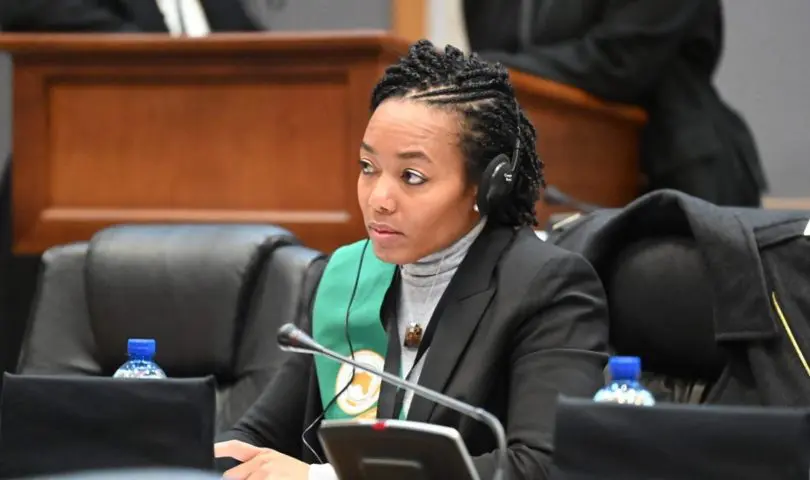
At the 2025 Pan-African Women’s Day Commemoration, Dr. Zanetor Agyeman-Rawlings delivered more than a speech, she issued a call to action. Her address, grounded in compassion and clarity, challenged African leaders and institutions to confront the structural barriers that continue to stifle the full potential of African women in agribusiness, trade, and development. It was a moment of reckoning, and a blueprint for transformation.
Dr. Agyeman-Rawlings did not mince words. She named land ownership as one of the most persistent and unjust obstacles facing women across the continent. Despite being the backbone of agricultural labor, many women are denied the right to own the land they cultivate. This exclusion bars them from accessing credit, stifling innovation and economic mobility. Ironically, studies show that women are more reliable in loan repayments than men, yet they face the highest hurdles in securing financial support.
Her proposals were not abstract ideals, they were grounded in practical solutions. She called for the deployment of female customs and immigration officers at border posts, recognizing that women dominate cross-border trade but often face harassment and exploitation. This simple intervention could dramatically improve safety and efficiency for the 90 percent of traders who are women.
But perhaps the most compelling part of her address was her reframing of reparations. Rather than viewing them solely as compensation for historical injustice, Dr. Agyeman-Rawlings urged the continent to see reparations as investments in Africa’s future. Infrastructure, technology, and energy development must be the currency of repair. The transatlantic slave trade, she argued, was not merely a tragedy , it was a conquest, a war that took millions of Africans as prisoners. The response must be equally bold.
She also emphasized the importance of visibility and representation. “If they can see it, they can aspire to it,” she said, proposing short video profiles of women leaders in the Pan-African Parliament to inspire young girls across the continent. Representation is not a luxury,it is a necessity for ambition to take root.
Dr. Agyeman-Rawlings cautioned against dismantling traditional cooperative systems that have long sustained women’s economic activity. These community-based models often function more efficiently than formal structures. Financial institutions, she argued, must adapt to these organic systems rather than replace them.
Her final point was perhaps the most quietly revolutionary: the need to assign economic value to women’s unpaid labor. Across Africa, women perform countless hours of work that go unrecognized and uncompensated. By valuing this labor, we begin to shift the narrative from charity to justice, from invisibility to empowerment.
Dr. Zanetor Agyeman-Rawlings’s address was not just a reflection on what is, it was a vision of what could be. It was a reminder that reform is not a favor to women; it is a necessity for the continent’s progress. Her words challenge us to build systems that recognize, reward, and elevate the contributions of African women;not someday, but now.
If Africa is to rise, it must rise with its women. And if we are to build a future worthy of our past, we must do so together, intentionally, and with courage.