

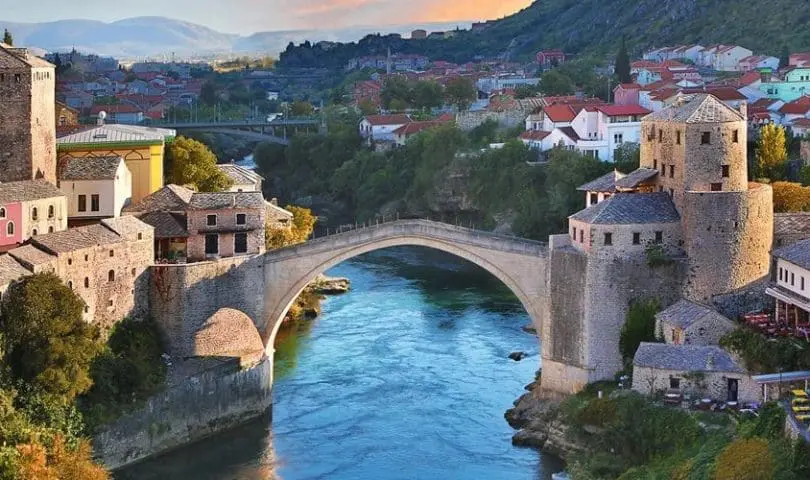

In a powerful symbol of reconciliation, the iconic Old Bridge in Mostar, Bosnia and Herzegovina, stands as a testament to the country’s journey from conflict to recovery. Twenty years after its reconstruction, the bridge’s message remains clear: peace and progress are attainable, but require collective efforts and partnerships to promote economic development and address the root causes of fragility and conflict.
The story of the Mostar Bridge is a microcosm of Bosnia and Herzegovina’s transformation from a low-income to an upper-middle-income country, aspiring to join the European Union. With the support of international partners, including the World Bank Group, the country has rebuilt its infrastructure, economy, and social fabric.
However, as the world celebrates these achievements, it cannot ignore the stark reality facing many other regions. Violent conflict has surged dramatically since 2010, and the COVID-19 pandemic has further destabilized fragile situations globally.
Despite these challenges, the World Bank remains committed to helping countries transition from crisis to sustainable growth. Over the past five years, the organization has significantly increased its engagement in fragile and conflict-affected situations, with a multi-faceted and adaptive approach.
Through partnerships and targeted financing mechanisms, the World Bank has achieved tangible results, from supporting the socio-economic reintegration of internally displaced persons in Burkina Faso to facilitating infrastructure repairs in Ukraine.
As the world reflects on the journey of Mostar Bridge, it is reminded that the need to build bridges – both literal and metaphorical – has never been greater. The reconstruction of Stari Most wasn’t just about restoring a physical structure; it was about reconnecting communities and rekindling hope. This is the essence of the World Bank Group’s mission: to build bridges between communities torn apart by conflict and transform fragility into resilience.
Ruth Abla ADJORLOLO
