

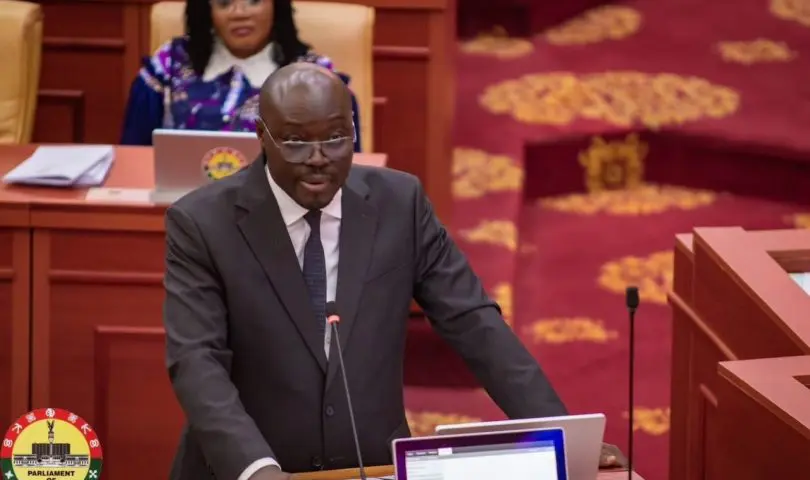


Ghana’s Parliament has officially sanctioned the Energy Sector Levy (Amendment) Bill, 2025, introducing a new GHS 1 levy on every litre of petroleum products. The controversial legislation, approved despite fierce opposition from the Minority Caucus, aims to generate an estimated GHS 5.7 billion annually to address the nation’s critical energy sector debt, which stood at a staggering US$3.1 billion as of March 2025.
Finance Minister Dr. Cassiel Ato Forson, presenting the Bill under a certificate of urgency, underscored its necessity to stabilize the country’s energy supply and avert a return to persistent power outages, colloquially known as “dumsor.” He assured lawmakers and the public that the new levy’s impact on ex-pump fuel prices would be absorbed by the strong performance of the Ghana Cedi, meaning consumers should not experience an immediate increase in prices at the pump.
The Minister further explained that a minimum of US3.7 billion is required to fully clear the existing energy debt, with an additional US1.2 billion needed to procure essential fuel for thermal power generation throughout 2025.
However, the Minority Caucus, led by Alexander Kwamena Afenyo-Markin, vehemently rejected the Bill, labeling it an “inappropriate burden” on Ghanaians and likening it to another form of the unpopular E-levy. They argued that the government should explore other avenues for revenue generation rather than imposing further taxes on citizens already grappling with economic hardships.
Conversely, Majority Leader Mahama Ayariga passionately defended the Bill’s passage, emphasizing its crucial role in resolving the enduring power crises that have plagued Ghana. He urged citizens to embrace the “one cedi, just one cedi” contribution per litre of fuel as a collective sacrifice to secure a stable and reliable power future for the nation.
The government views this new levy as a strategic policy tool to tackle a systemic crisis, aiming to prevent future energy shortfalls and maintain investor confidence in the sector.
Sankofaonline
