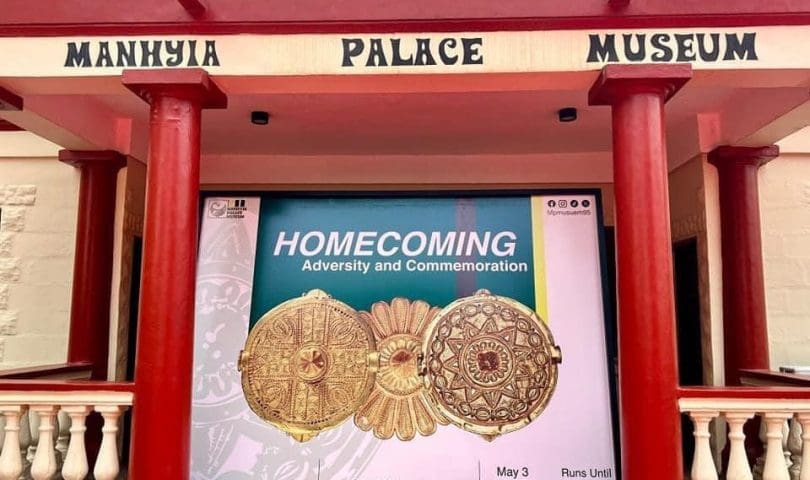

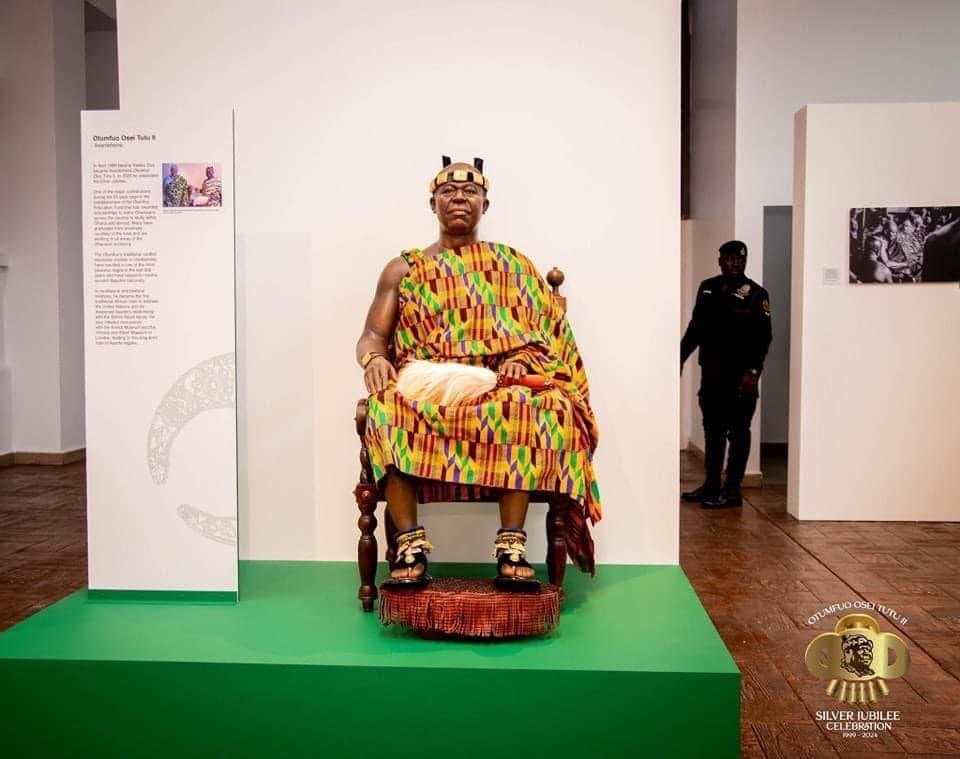
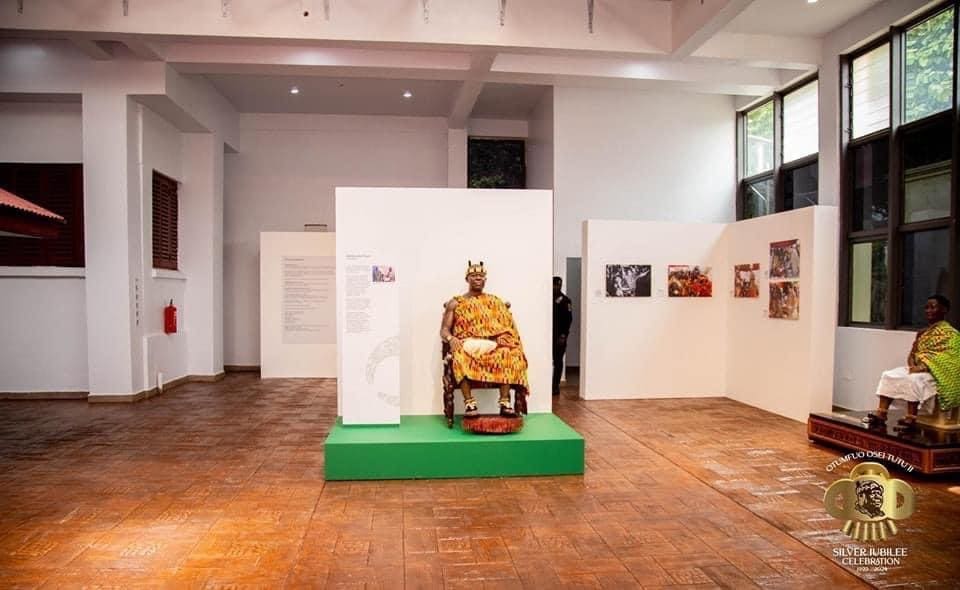
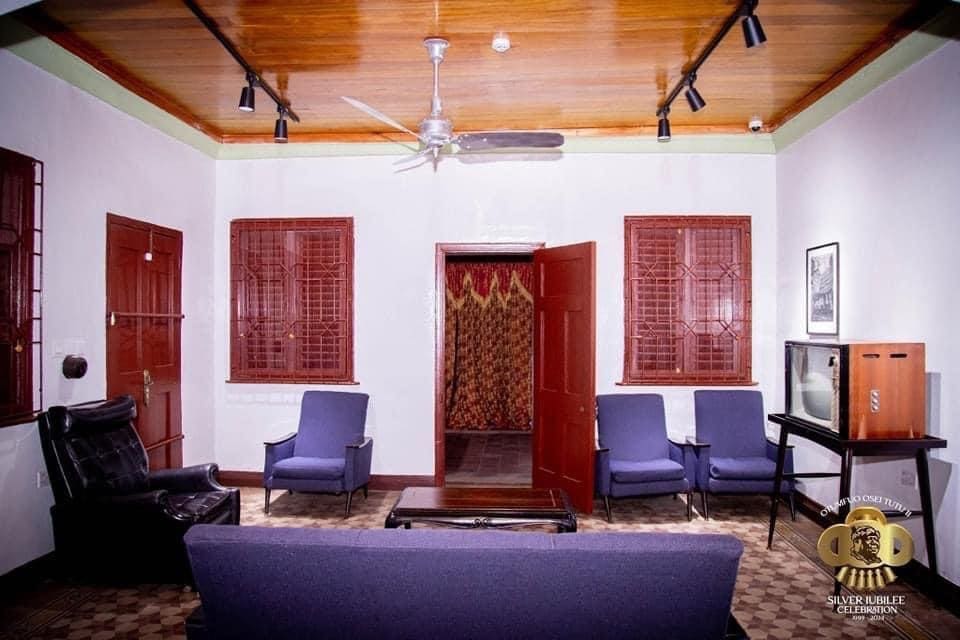
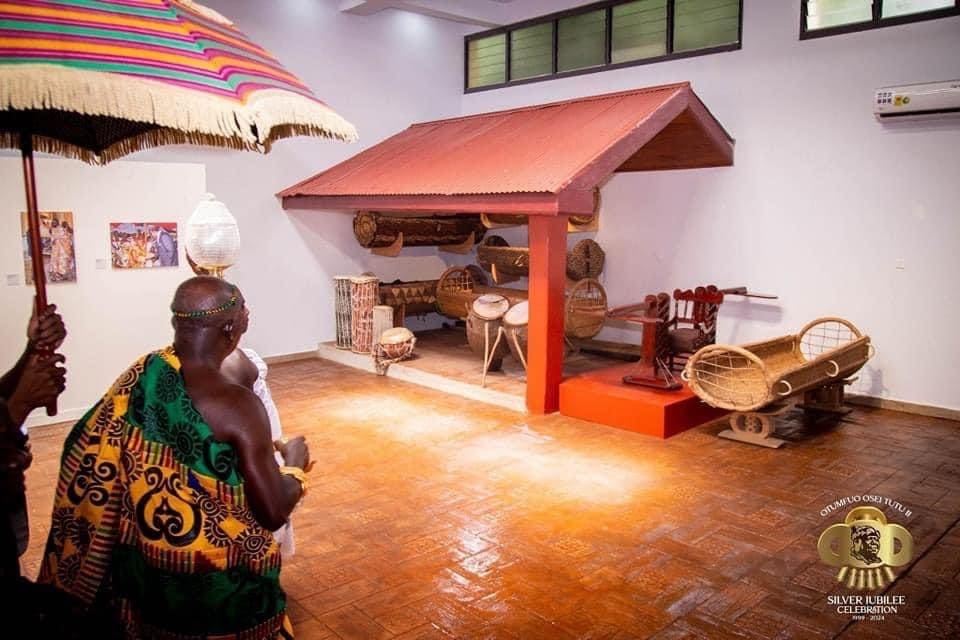
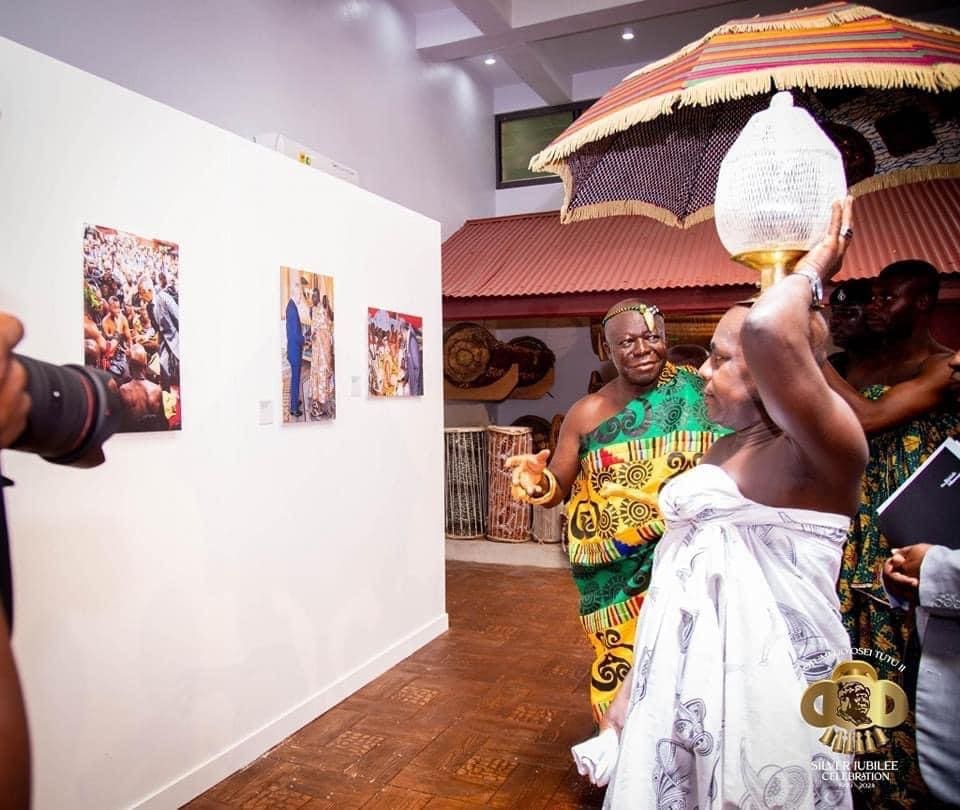
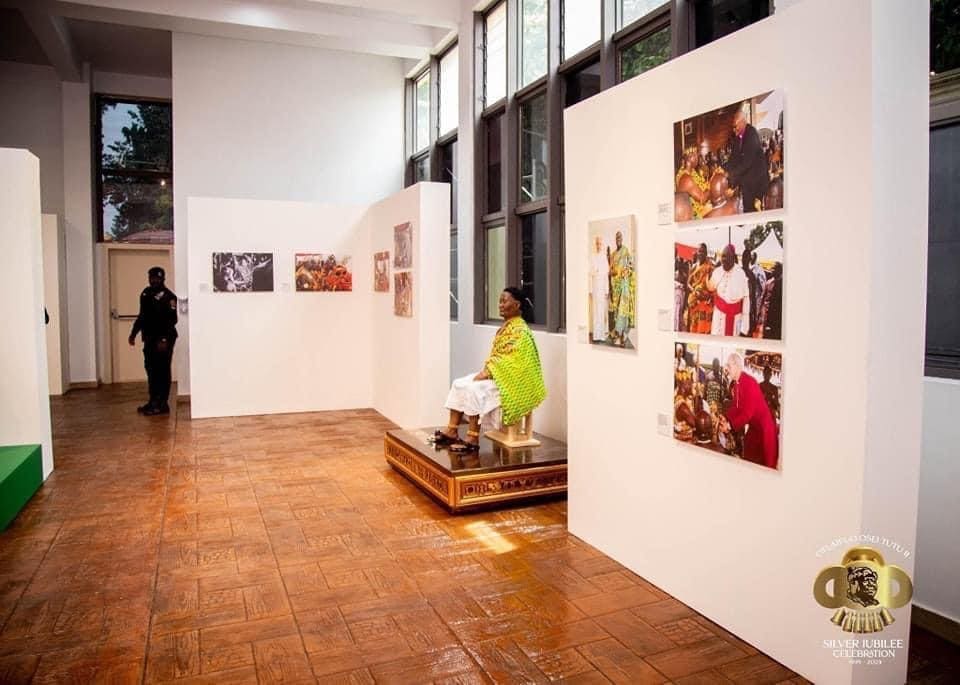
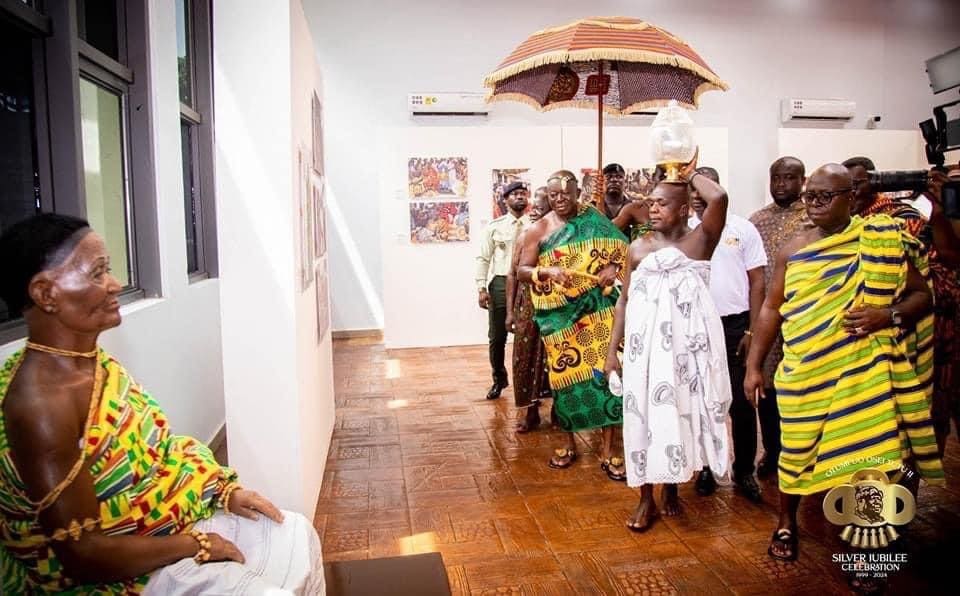
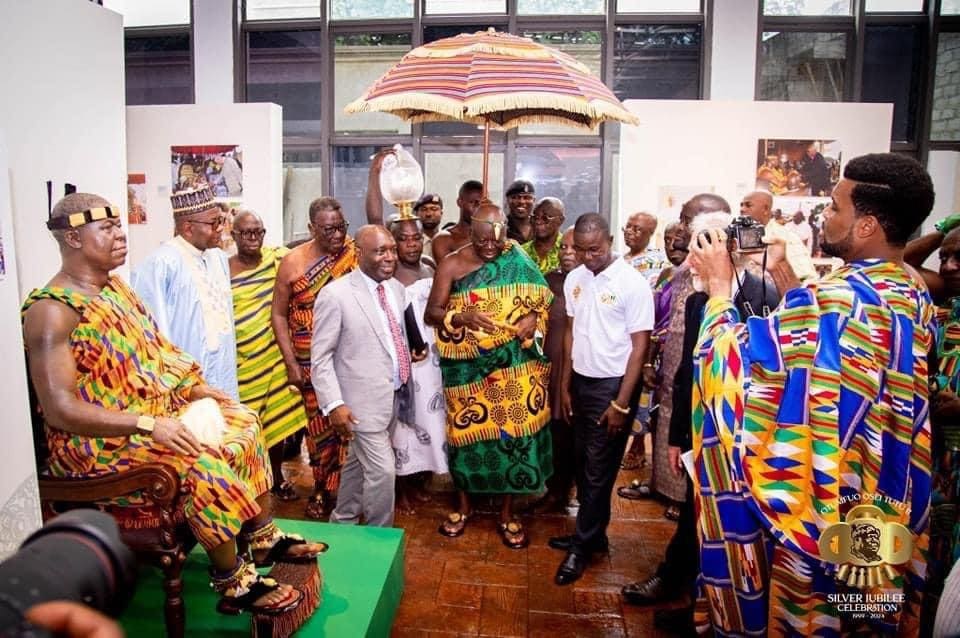
During the Silver Jubilee celebrations of Otumfuo Osei Tutu II, Asantehene, the Manhyia Palace Museum in Kumasi reopened its doors to the public on May 1st, 2024. The occasion, hosted by the Asantehene himself, showcased refurbished facilities and unveiled a captivating exhibition titled “Homecoming,” featuring a stunning display of Ashanti heirlooms.
The Homecoming exhibition stands as a testament to the tireless efforts of Otumfuo Osei Tutu II in reclaiming and preserving the cultural heritage of the Asante Kingdom. These efforts are further highlighted by the return of artifacts looted by British military forces during the 19th-century Anglo-Ashanti Wars, some of which have been away from their homeland for over 150 years.
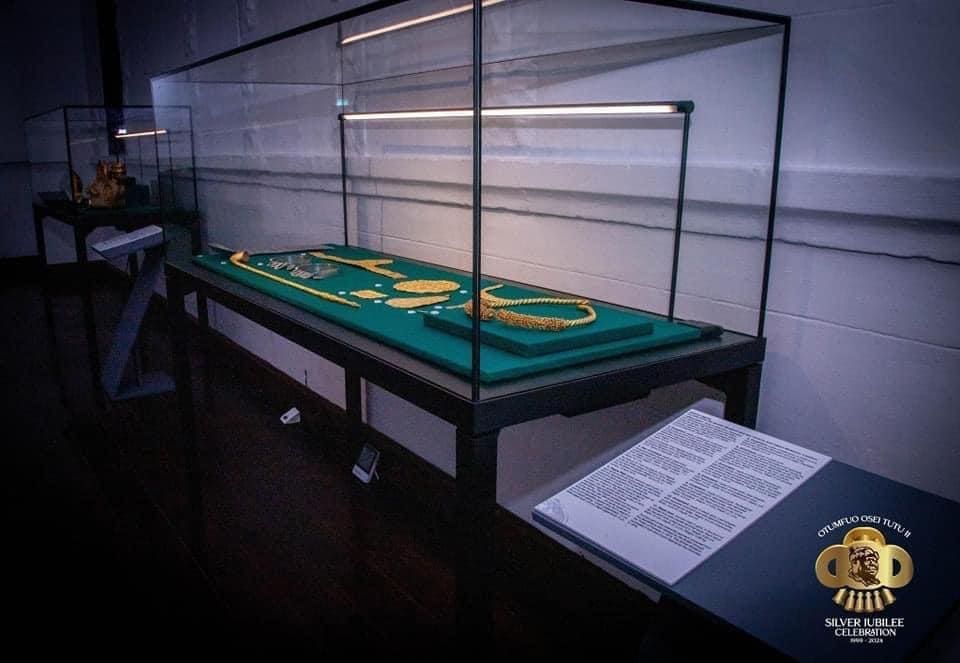
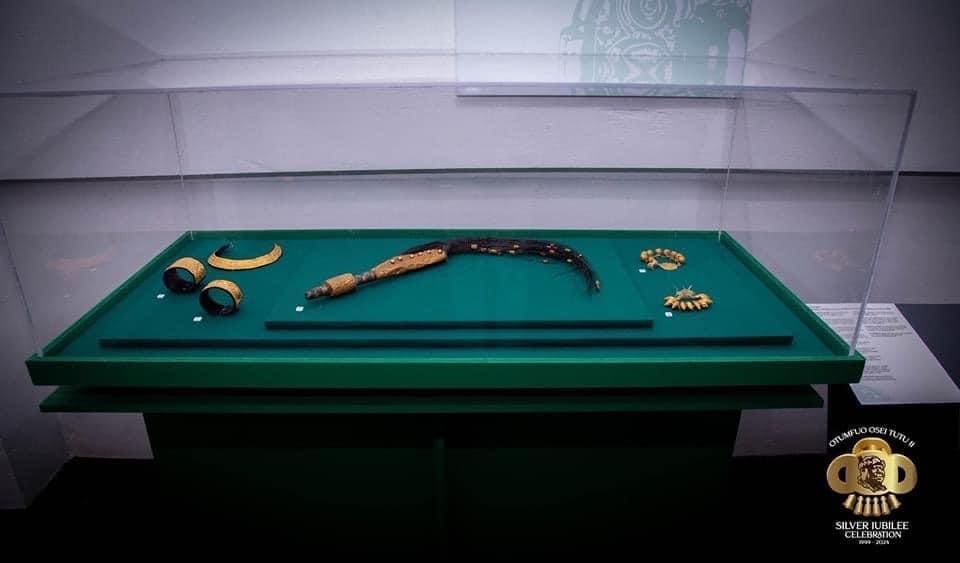
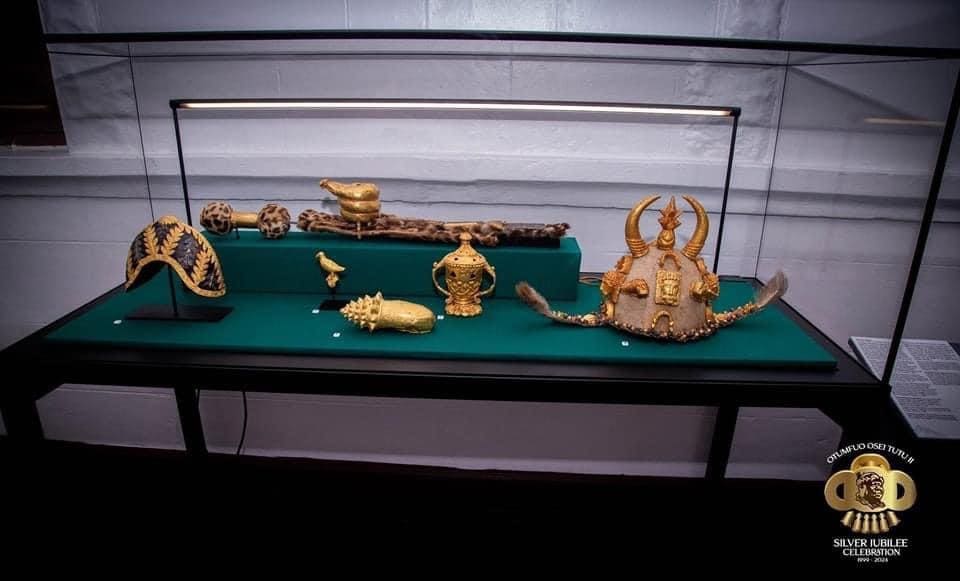
Among the treasures revealed to the public are iconic artifactssteeped in the rich history of the Asante Kingdom. Notable among them is the revered sword of state, known as Mpomponsuo, and the gold badges once worn by officials entrusted with the solemn duty of purifying the king’s soul.
One of the most remarkable pieces is a gold lute harp, presented by Asantehene Osei Bonsu to British diplomat Thomas Edward Bowdich during a pivotal 1817 trade treaty, which was housed in the Fowler Museum at the University of California, Los Angeles. In a gesture of cultural reconciliation, the Fowler Museum repatriated seven such artifacts in February 2024.
In his speech, Asantehene Otumfuo Osei Tutu II mentioned that the exhibition underwent negotiations by his predecessors, Nana Prempeh I, Nana Prempeh II, and Otumfuo Opoku Ware. He also challenged young ones to be creative and daring, considering the artifacts displayed, which date back to 1874 and earlier.
Ivor Agyeman-Duah, Director of the Manhyia Palace Museum and chief negotiator for the Asantehene, also emphasized the significance of these agreements as partnerships that transcend borders. He noted that the exhibition not only reconnects the Asante Kingdom with its past but also fosters international cooperation in the movement to repatriate cultural artifacts to their rightful origins.
“Homecoming renews our connections to Britain and the United States, in the spirit of progress and cooperation,” Agyeman-Duah remarked, reflecting on the journey that began half a century ago when Asantehene Otumfuo Opoku Ware II first requested the return of these items from the British Museum in 1974.
The Fowler Museum’s personal return of the treasures, including a royal stool ornament from the private collection of Asantehene Kofi Karikari, adds a poignant chapter to this ongoing narrative of reconciliation and cultural restoration. This exhibition not only offers visitors a rare glimpse into the splendor of Ashanti history and culture but also serves as a powerful symbol of resilience and heritage preservation.
Source: Joanita Amegashie