

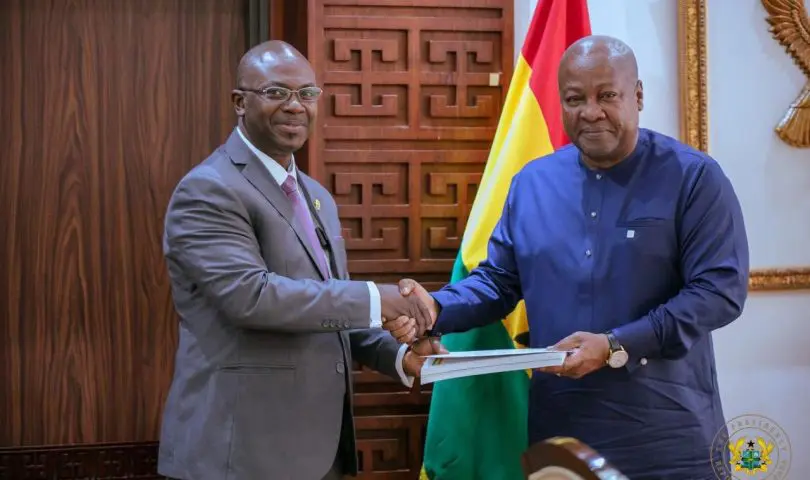


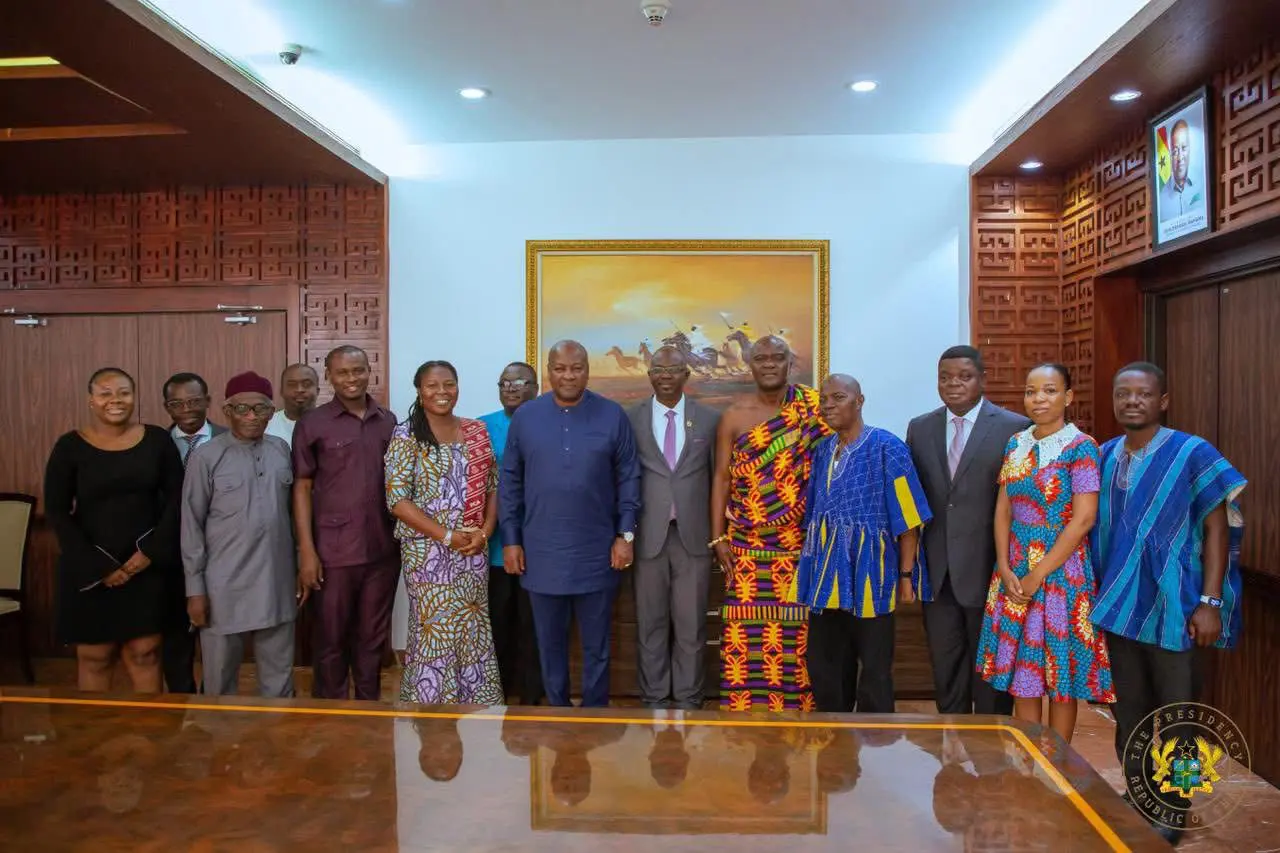
ACCRA – President John Dramani Mahama has given a firm assurance to the Public Interest and Accountability Committee (PIAC) that the substantial oil revenues allocated to his ambitious $10 billion “Big Push” infrastructure initiative will be disbursed and managed with utmost efficiency. The President’s pledge came during a courtesy call from PIAC members, led by Chairman Constantine K.M. Kudzedzi, who visited to congratulate him on his recent election victory and discuss critical matters concerning the management of Ghana’s petroleum revenues.
President Mahama outlined his government’s five-year plan, which envisions an annual investment of $2 billion into high-priority infrastructure projects nationwide. These projects are designed to revitalize key sectors, including the construction and rehabilitation of roads and major bridges, as well as significant upgrades to education and health infrastructure.
A crucial component of the “Big Push” also targets boosting productivity in the agriculture sector through initiatives such as irrigation schemes, the establishment of farmer service centers, and support for agribusiness development.
The President confirmed that the primary funding sources for this monumental policy initiative would be a combination of petroleum revenue and minerals royalties, underscoring the government’s commitment to leveraging Ghana’s natural resources for national development.
In his remarks, President Mahama highly commended PIAC for its invaluable role in monitoring and ensuring transparency and accountability in the utilization of Ghana’s petroleum revenues. He specifically highlighted PIAC as a commendable model, setting a precedent for other nations striving to establish effective oversight mechanisms in the management of their natural resource wealth.
PIAC, established under Ghana’s Petroleum Revenue Management Act (PRMA), is mandated to monitor compliance with the Act, provide a platform for public debate on revenue utilization, and offer independent assessments to assist Parliament and the Executive in their oversight functions.
Ruth Abla ADJORLOLO
