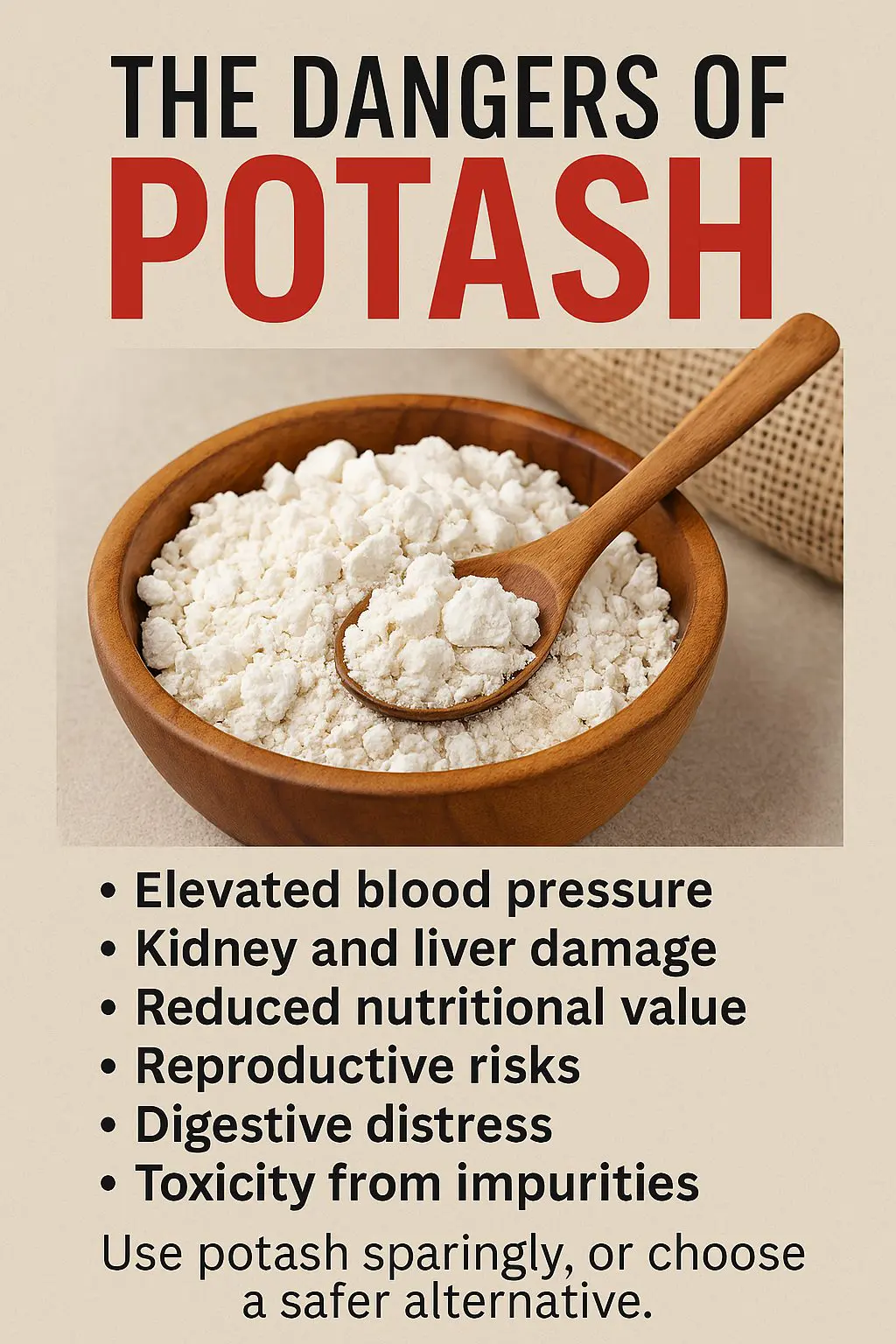
This substance is highly alkaline and is usually composed of sodium carbonate or potassium carbonate. It often contains unwanted elements including grit, clay particles and traces of potentially harmful metals. Beneath its culinary practicality lies a spectrum of health dangers.
Consuming potash in excess can drive up sodium levels in the body, which may elevate blood pressure and contribute to cardiovascular problems such as stroke or heart failure. Research also indicates that regular intake can increase creatinine and urea in the bloodstream, potentially straining the kidneys and liver and leading to lasting organ damage.
Potash may also interfere with the nutritional integrity of meals. When used to soften protein-rich foods, it can reduce their ability to deliver essential nutrients, gradually undermining dietary balance. Its impact on reproductive health is especially concerning. Studies involving animals have revealed links between heavy consumption and decreased sperm count along with testicular harm. In pregnant women, potash has been associated with triggering premature contractions, thereby raising the risk of complications during pregnancy.
From a digestive perspective, its strongly alkaline nature can irritate the stomach lining, causing discomfort in the form of nausea, gas or diarrhea. Individuals dealing with ulcers or stomach sensitivity are especially vulnerable. Habitual chewing of potash or excessive dietary use can compromise dental health by eroding the enamel and weakening the gums.
Another overlooked threat lies in its impurity levels. When poorly processed, potash may contain harmful metals which, if ingested repeatedly, could damage the liver or impair neurological function.
Though widely embraced in traditional cooking, potash carries more than flavor—it carries risk. Using it sparingly, or opting for safer substitutes like baking soda or simply allowing more cooking time, may be a wiser path toward preserving both tradition and health.
Sankofaonline