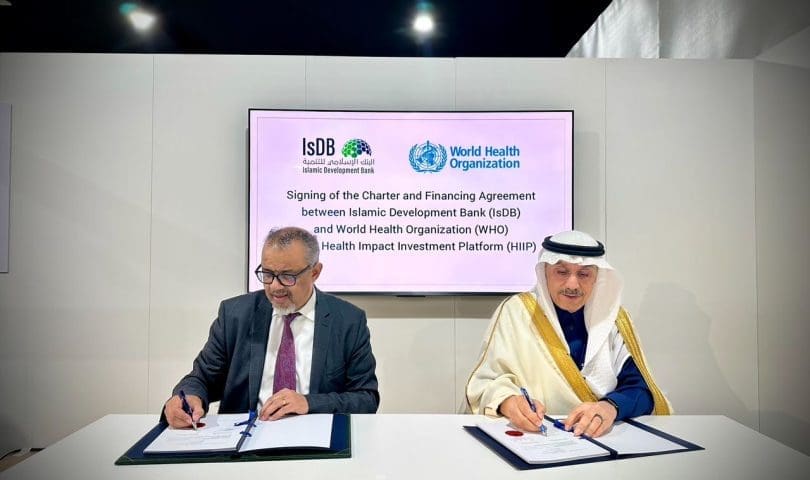

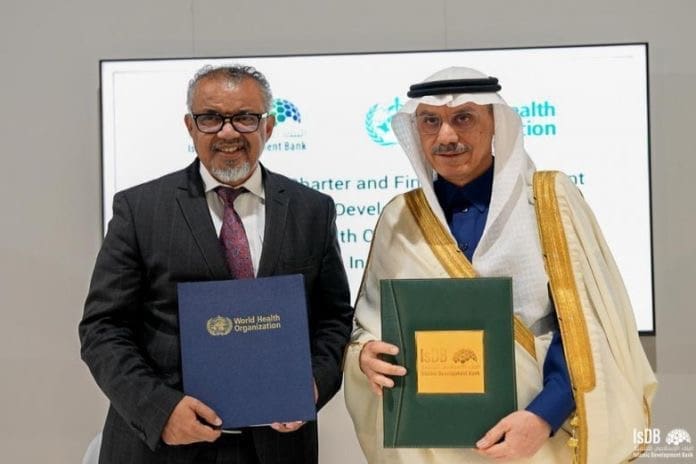
In a groundbreaking move, the Islamic Development Bank (IsDB) has pledged $10 million to the World Health Organization (WHO) to launch the Health Impact Investment Platform (HIIP), a revolutionary initiative aimed at strengthening primary healthcare and climate resilience in low- and middle-income countries. This significant contribution was announced on the sidelines of the UN Climate Change Conference (COP29) in Baku, marking a crucial step towards operationalizing the global commitment to climate and health.
The HIIP represents a pioneering collaboration among Multilateral Development Banks (MDBs), WHO, and countries in need of robust health and climate solutions. Its primary focus is on investing in essential, climate, and crisis-resilient primary healthcare services and systems, particularly in underserved communities. By doing so, HIIP aims to foster resilience against emerging health threats and climate challenges .
The $10 million grant from IsDB will support WHO’s technical assistance to countries worldwide, enabling them to assess investment needs and design impactful health projects. These projects will serve as the foundation for co-investment by MDBs, ensuring resources are directed towards areas with the greatest potential for positive health outcomes.
WHO’s priorities for the next four years include strengthening climate resilience through national adaptation plans and making 10,000 health facilities fully functional, including with solar electrification ¹. IsDB’s contribution is projected to unlock at least $500 million in health investments across the region, part of a broader effort to mobilize $1.5 billion in concessional loans and grants focusing on critical areas ¹ ².
According to IsDB President H.E. Dr. Muhammad Al Jasser, “The Islamic Development Bank is proud to support the Health Impact Investment Platform, advancing universal health coverage and resilience in our Member Countries.” Dr. Tedros Adhanom Ghebreyesus added, “Low- and middle-income countries need access to sustainable financing to strengthen their health systems through primary healthcare, making them more resilient to pandemics and equitable in delivering essential health services”.
WHO/Ruth Abla ADJORLOLO