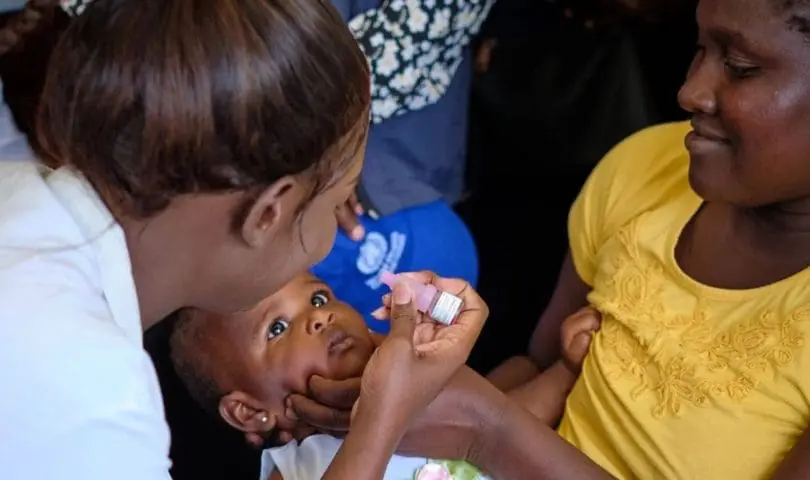

The latest data from the World Health Organization (WHO) and UNICEF has revealed a concerning trend in global childhood immunization rates. Despite efforts to improve vaccination coverage, the number of children receiving essential vaccines has stalled, leaving millions of children unprotected against preventable diseases.
According to the data, global immunization coverage has remained largely unchanged since 2022 and has still not returned to pre-pandemic levels in 2019. The number of children who received three doses of the vaccine against diphtheria, tetanus, and pertussis (DTP) has stalled at 84%, while the number of children who did not receive a single dose of the vaccine increased from 13.9 million in 2022 to 14.5 million in 2023.
The data also shows that vaccination rates against measles have stalled, leaving nearly 35 million children with no or only partial protection. Measles outbreaks have hit 103 countries over the last five years, with low vaccine coverage being a major factor.
However, there are some brighter spots in immunization coverage. The introduction of new and under-utilized vaccines, such as the human papillomavirus (HPV) vaccine, has expanded the breadth of protection, particularly in countries supported by Gavi, the Vaccine Alliance.
To address the ongoing challenges in immunization coverage, the Immunization Agenda 2030 (IA2030) Partnership Council is calling for increased investment in innovation and ongoing collaboration. The council recommends that partners step up their support for country leadership to improve routine immunization as part of their integrated primary health care programs, backed by robust political support, community leadership, and sustainable funding.
Overall, the latest data highlights the need for ongoing efforts to improve immunization coverage and protect children against preventable diseases.
WHO/Ruth Abla ADJORLOLO