

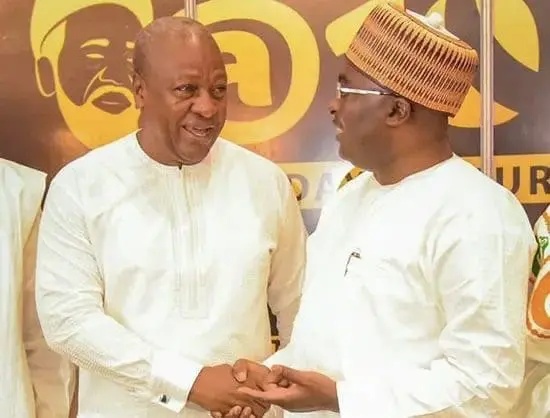

Ghana’s presidential election is shaping up to be a highly contested race, with former President John Dramani Mahama of the National Democratic Congress (NDC) facing off against Vice President Mahamudu Bawumia of the ruling New Patriotic Party (NPP). The two candidates have launched competing manifestos, promising fiscal stability, job creation and a path out of Ghana’s worst economic downturn in decades.
The election, set for December 7, marks the end of President Nana Akufo-Addo’s two-term tenure as head of the West African nation. Ghana’s democratic history suggests a tight contest, as no party has won more than two consecutive terms in government.
Mahama, 65, has vowed to scrap first-year university fees, boost tertiary education and reduce taxes within his first three months in office. He also pledged to wage a “ruthless war” against corruption and recover misappropriated assets. During his 2013-2017 presidency, Mahama invested heavily in infrastructure but faced criticism over power shortages, economic instability and alleged state corruption.
Bawumia, an economist and former central banker, promises to simplify the tax system, reduce the number of ministers and cut public spending by 3% of GDP. His plan includes providing digital training to one million young people to aid job searches.
Ghana’s economic hardships have tainted Akufo-Addo’s presidency. The country defaulted on most of its $30 billion external debt in 2022, prompting an International Monetary Fund bailout and debt restructuring.
Analysts predict a tight two-man contest, despite other candidates running. Mahama and Bawumia hail from northern Ghana, a traditional NDC stronghold where the NPP has made gains in recent years.
Mahama’s manifesto focuses on education and anti-corruption measures, while Bawumia emphasizes economic reform and job creation. As Ghana prepares for its ninth general election since 1992, concerns surround electoral integrity and public trust in the Electoral Commission.
Some portions of this article was culled from Reuters.
Ruth Abla ADJORLOLO
