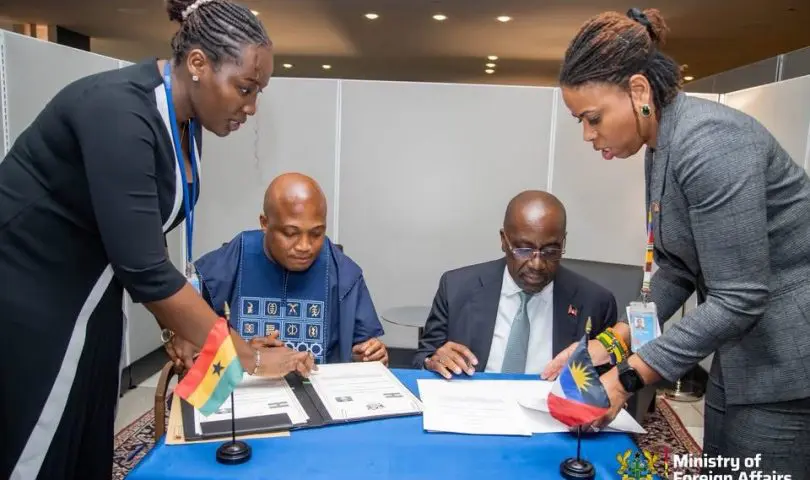

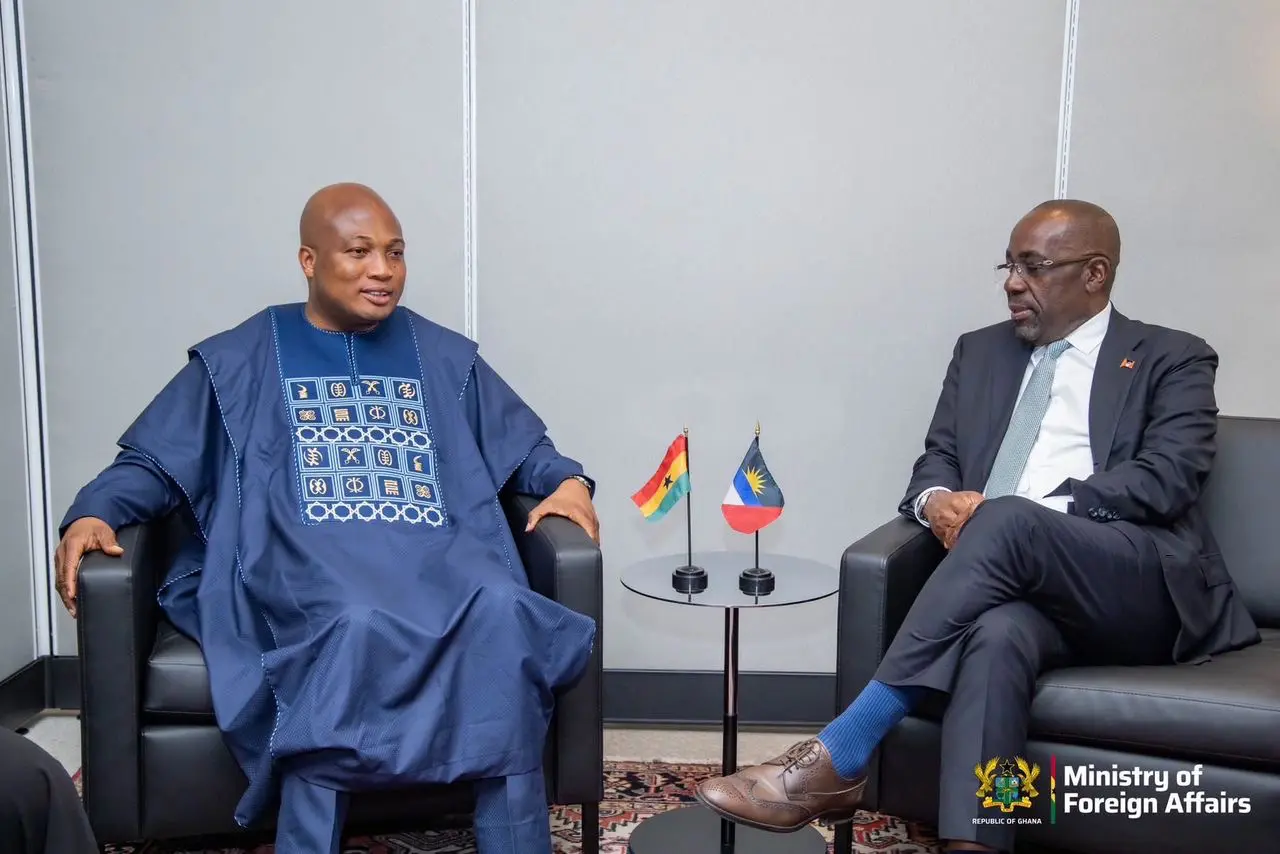
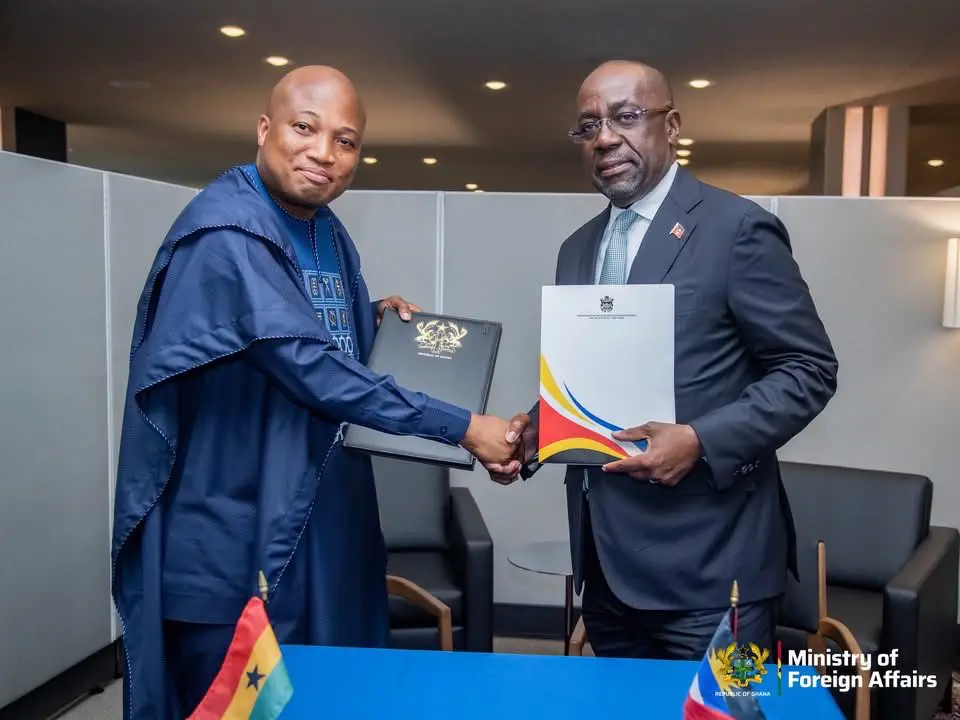
Ghana’s Minister for Foreign Affairs, Samuel Okudzeto Ablakwa, has announced a significant diplomatic success, confirming a new Visa Waiver Agreement with the Caribbean nation of Antigua and Barbuda. The agreement, which was formally signed on the sidelines of the United Nations General Assembly (UNGA), represents the tenth such visa exemption deal secured for Ghanaian citizens since the beginning of the Mahama Administration.
A Strategic Push for Mobility and Ties
The milestone agreement was concluded with Minister Ablakwa’s counterpart, H.E. E.P. Chet Greene, Minister for Foreign Affairs, Trade and Barbuda Affairs, whom Ablakwa publicly thanked for his “remarkable contribution.” This latest addition underscores a deliberate foreign policy strategy by the administration to “add more value to the Ghanaian Passport,” thereby enhancing Ghana’s image on the global stage and improving the travel experience for its citizens.
Minister Ablakwa stressed that these diplomatic efforts go beyond mere convenience, serving as concrete tools to boost trade, tourism, and people-to-people engagements. The agreement with Antigua and Barbuda, in particular, carries deep cultural significance, aiming to connect Ghana more closely with its “brothers and sisters in the Caribbean,” acknowledging the historical and diaspora links between West Africa and the Eastern Caribbean.
Expanding Ghana’s Diplomatic Footprint
The deal with Antigua and Barbuda is particularly noteworthy as it is reported to be Ghana’s first visa waiver agreement with an Eastern Caribbean nation, significantly expanding its diplomatic footprint in the region. This success follows the recent ratification of similar visa waiver deals with other countries, including São Tomé and Príncipe, Colombia, Dominica, and Mozambique, as well as an earlier agreement with Morocco.
The flurry of agreements demonstrates a concerted push to strengthen ties with the Global South and enhance the Ghanaian passport’s standing in international travel rankings. Ghana is positioning itself as a hub for regional and continental cooperation, utilizing multilateral platforms like the UNGA to forge bilateral relationships that yield tangible benefits for its people and economy.
Ruth Abla ADJORLOLO