


Sankofaonline News Desk
Accra, Ghana — July 19, 2025
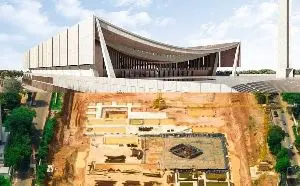
The ambitious National Cathedral project—a towering symbol of faith and heritage—now faces institutional collapse as Deloitte & Touche’s audit reveals financial opacity, stalled construction, and alarming contractual entanglements. President John Dramani Mahama’s sweeping response has dissolved the project’s Secretariat and prompted legal maneuvers to dismantle its governing structure. What began as a sacred commission has become a crucible for public accountability.
Key Findings and Financial Red Flags
According to the Deloitte report—now ordered for full public release—the contractor responsible for cathedral construction ceased work in March 2023, yet continued receiving payments from state coffers. Sources familiar with the audit cite payouts exceeding GHS 140 million post-halt, with no measurable progress recorded at the site. The contract’s structure was deemed “lopsided” and financially disadvantageous to the Republic of Ghana, sparking urgent calls to terminate it.
Though the report did not encompass all facets of the Secretariat’s operations, its findings triggered the Auditor General’s call for a forensic audit to investigate deeper improprieties within the project’s procurement, financing, and executive decisions.
Institutional Collapse: Secretariat and Board Dismantled
By executive directive, the National Cathedral Secretariat was dissolved on May 1, 2025, and the Attorney General was tasked with taking legal steps to dissolve the Board of Trustees, which had operated as a company limited by guarantee. The move marks a public rebuke of the governance structure that facilitated unchecked expenditure and murky reporting standards.
Transparency Drive and Public Access
President Mahama has demanded immediate publication of the Deloitte audit report. Civil society organizations and media platforms will now have direct access, a gesture aimed at restoring transparency in an affair mired by secrecy and speculation. This release opens the door for broader public scrutiny and civic engagement, especially as forensic investigations begin.
Implications for Public Finance and Governance
The contractor’s continued compensation despite non-performance raises broader alarms about oversight mechanisms within Ghana’s public procurement system. If forensic auditors uncover further misappropriation or procedural fraud, legal action may extend beyond contract termination to criminal prosecutions and asset recovery.
More broadly, the scandal has reignited debates around monumental state-led projects launched without airtight feasibility studies, parliamentary oversight, or sustained public consensus. Many Ghanaians question whether the cathedral—envisioned as a spiritual unifier—ever aligned with the country’s developmental priorities.
Next Steps: Forensic Audit and National Reflection
The ongoing forensic audit will probe into all financial flows, project milestones, and stakeholder roles. Should wrongdoing be established, the President has pledged that “individuals will be held accountable irrespective of status or affiliation.” The audit also forms part of a wider oral initiative examining public contracts and governance lapses across several ministries.
What remains of the National Cathedral project is not a construction site, but a cautionary tale—one that asks how faith, patriotism, and governance can so easily converge, collapse, and compel a national reckoning.
