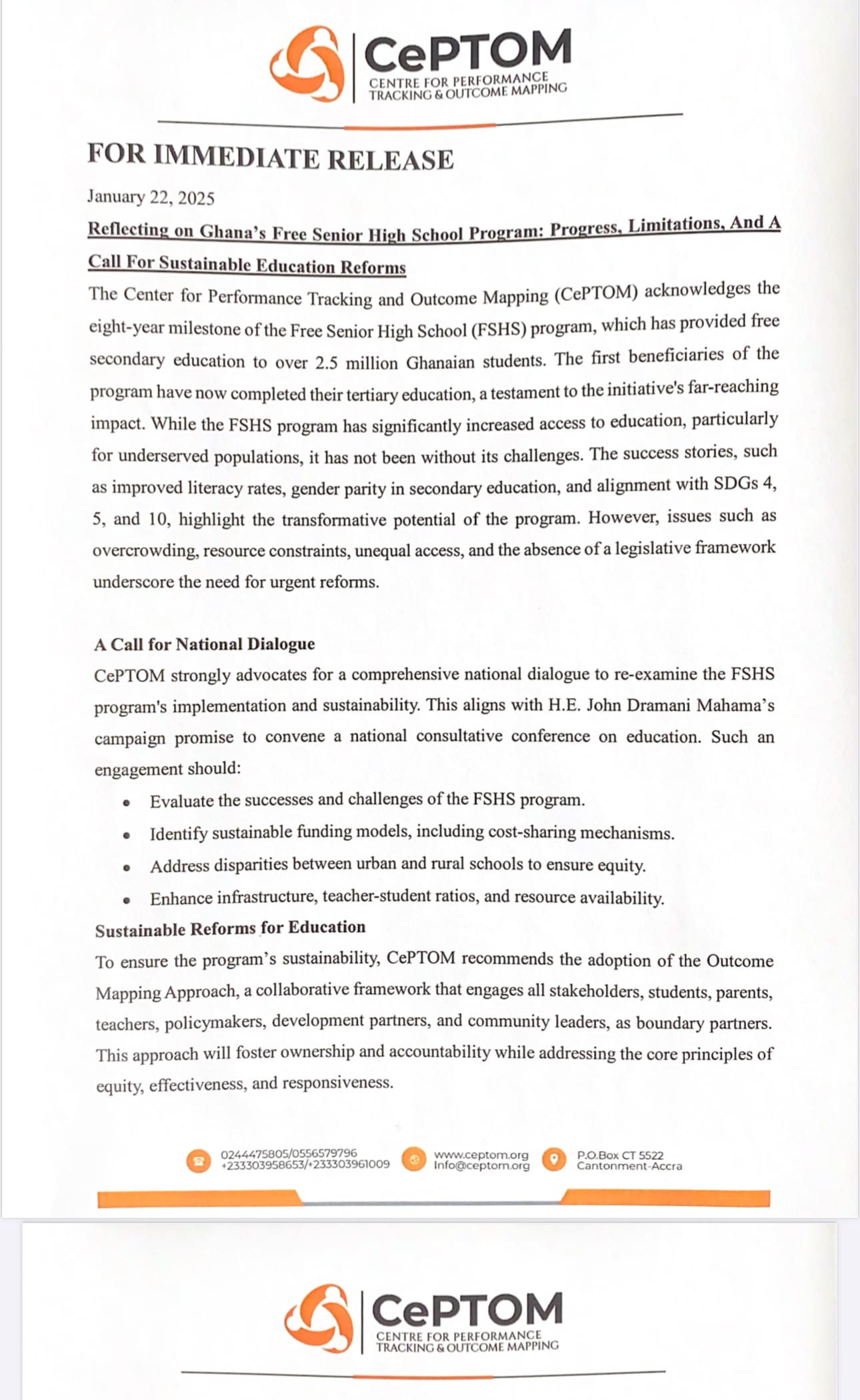
Ghana’s Free Senior High School (FSHS) program has reached a significant milestone, celebrating eight years of providing free secondary education to over 2.5 million Ghanaian students. The program’s first beneficiaries have now completed their tertiary education, demonstrating its far-reaching impact.
While the FSHS program has increased access to education, particularly for underserved populations, it has faced challenges such as overcrowding, resource constraints, unequal access, and the absence of a legislative framework. Despite these issues, the program has achieved notable successes, including improved literacy rates, gender parity in secondary education, and alignment with the United Nations’ Sustainable Development Goals (SDGs) 4, 5, and 10.
To address the program’s challenges, the Center for Performance Tracking and Outcome Mapping (CePTOM) is advocating for a comprehensive national dialogue to re-examine the FSHS program’s implementation and sustainability. This dialogue should focus on evaluating the program’s successes and challenges, identifying sustainable funding models, addressing disparities between urban and rural schools, and enhancing infrastructure, teacher-student ratios, and resource availability.
CePTOM recommends adopting the Outcome Mapping Approach, a collaborative framework that engages all stakeholders, to ensure the program’s sustainability. This approach will foster ownership and accountability while addressing the core principles of equity, effectiveness, and responsiveness.
As Ghana moves forward, it is essential to safeguard the country’s future through sustainable education reforms. The FSHS program has opened doors for many, but it is crucial to ensure that these doors lead to opportunities, empowerment, and a brighter future for every Ghanaian child.
Ruth Abla ADJORLOLO