


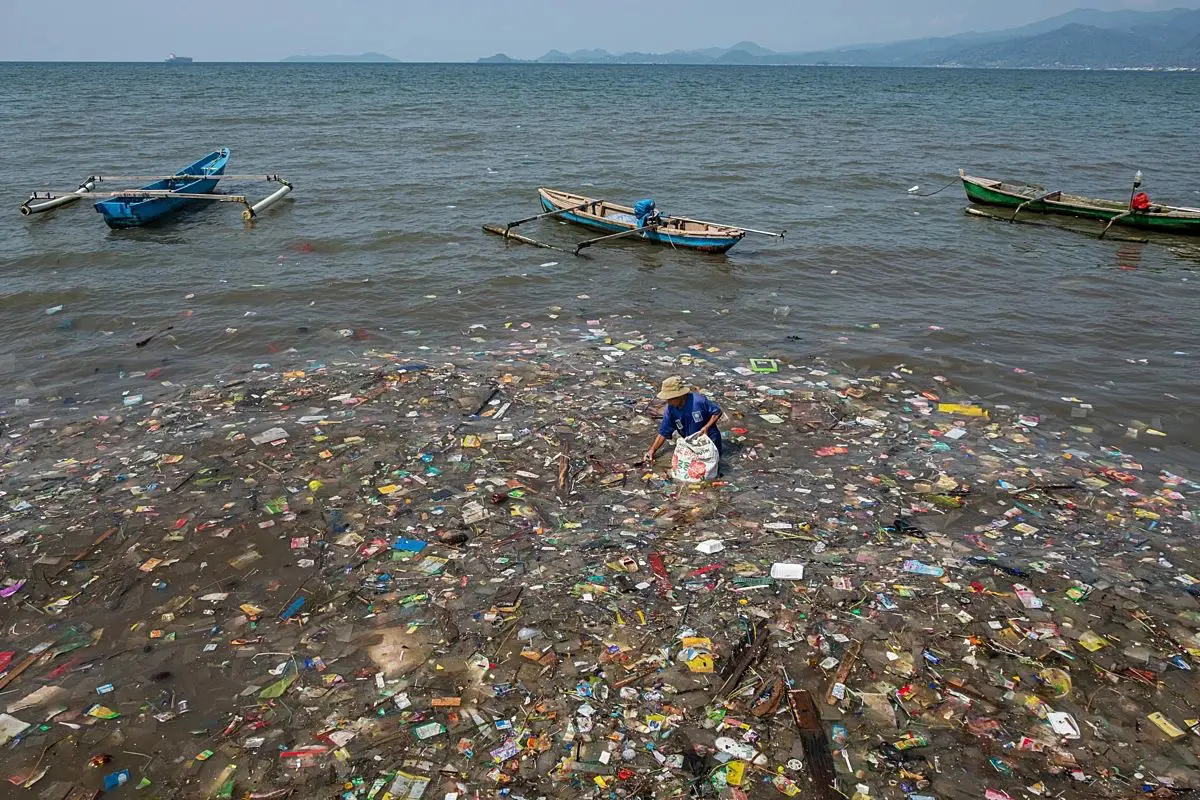
ACCRA, Ghana – For Ghanaian fishermen, the once-bountiful waters off the coast are now yielding a disheartening new catch: plastic waste. Years of inadequate waste management and rampant littering have transformed parts of Ghana’s marine environment into a floating landfill, forcing artisanal fishers to contend with nets full of discarded bottles, bags, and debris rather than the fish that sustain their families and communities.
Fishermen from coastal communities like Tema, Jamestown, and Winneba report a drastic decline in fish stocks, a direct consequence of the escalating plastic pollution. “For some years now, whenever we cast our nets, all we catch are plastics,” lamented Kwame Nkum, a fisherman from the Central Region. He added that a whole day’s haul might yield only a dozen fish amidst heaps of waste. This dire situation is not only reducing their income but also damaging expensive fishing gear, forcing some to reduce their fishing days or seek alternative livelihoods.
The problem stems from the alarming rate at which plastic waste, estimated at nearly one million metric tonnes annually in Ghana, leaks into the ocean. Up to 90% of this plastic is not properly disposed of, clogging drains, rivers, and streams before eventually ending up in the sea. Studies have also revealed that microplastics are now prevalent in Ghanaian coastal waters, sediments, and even the guts of marine life, raising serious concerns about food safety and the long-term health of the ecosystem.
While some fishermen acknowledge their own contribution to the problem by discarding waste at sea, the overwhelming issue is a systemic one, driven by rapid urbanization, population growth, and insufficient waste management infrastructure. Efforts to tackle the crisis, including a national plastic action plan backed by international partners, are underway, but the impacts on Ghana’s vital fishing industry, which employs hundreds of thousands and provides a livelihood for millions, are increasingly severe. The calls from fishermen for a permanent ban on plastic production underscore the urgency of the situation, as they desperately seek to reclaim their oceans and their traditional way of life.
Sankofaonline
