


Ghana’s economic challenges continue to mount, with the Ghanaian cedi losing 19% of its value against the U.S. dollar in 2024. This depreciation has significantly increased the cost of imports, worsening inflation and economic hardship for businesses and consumers alike.
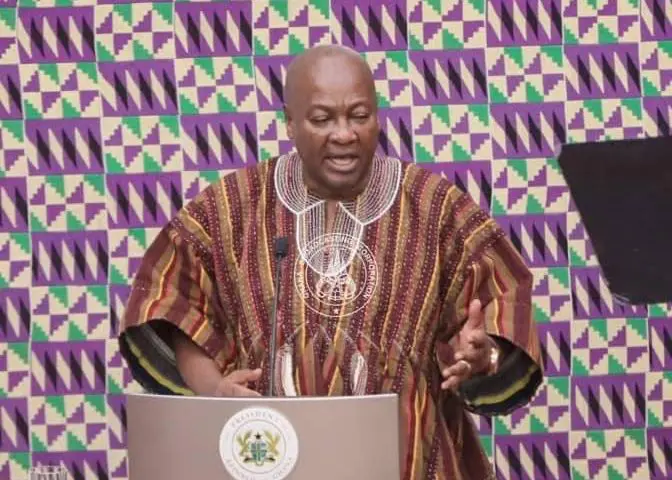
The country’s public debt has ballooned to a staggering 721 billion Ghana cedis, further complicating its economic outlook. President John Dramani Mahama has acknowledged the severity of the situation, emphasizing the need for urgent measures to address these financial shortfalls.
State-owned enterprises are also struggling with substantial debt. The Electricity Company of Ghana (ECG) owes 68 billion Ghana cedis, while the Ghana Cocoa Board is indebted to the tune of 32.5 billion Ghana cedis. The Cocoa Board’s financial situation is particularly dire, with 9.7 billion Ghana cedis due for payment by the end of September 2025.
President Mahama highlighted the board’s inability to fulfill cocoa supply contracts, resulting in significant revenue losses. For every ton of cocoa delivered, COCOBOD and Ghanaian farmers are set to lose $4,000 in revenue. The Ghana Cocoa Board’s financial woes are partly due to its inability to supply 333,767 metric tons of cocoa sold at $2,600 per ton during the 2023-2024 season.
The energy sector is also facing significant financial challenges, primarily due to collection and system losses, noncompliance with cash waterfall mechanisms, and legacy debts. The sector’s financing shortfall is estimated at approximately $2.2 billion or 34 billion Ghana cedis for 2025.
President Mahama has acknowledged the need for extensive work and sacrifice to repair the repercussions of debt accumulation and economic mismanagement. As Ghana navigates these economic challenges, it remains to be seen what measures will be taken to stabilize the sector and restore economic growth.
Ruth Abla ADJORLOLO
