

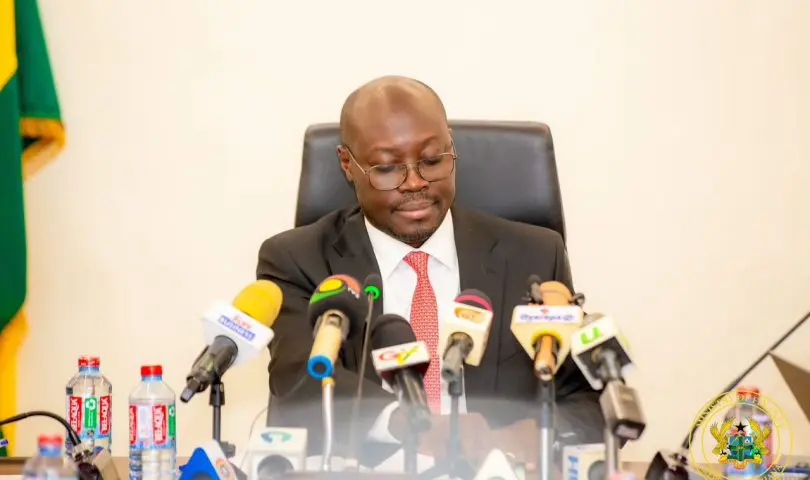

The Ghanaian government is set to borrow GH¢6.53 billion on Friday, January 31, 2025, to refinance maturing treasury bills and other expenditures. This move will be achieved through the issuance of 91-day, 182-day, and 364-day bills to cover GH¢6.09 billion in maturing bills.
Treasury bills have been in high demand due to their attractive yields, with analysts warning that this could lead to increased interest payments for the government. Last week, the total uptake of treasury bills reached GH¢8.16 billion, surpassing the target of GH¢6 billion and maturities of GH¢5.60 billion.
Yields on the 91-day and 182-day bills increased by 10 basis points to 28.42% and 28.97%, respectively, while the 364-day bill yield rose by 12 basis points to 30.39%. Analysts expect strong participation in the money market, with yields remaining high following the Monetary Policy Committee’s decision to maintain the policy rate at 27%.
Despite these developments, money market rates have broadly trended downwards. The 91-day and 182-day Treasury bill rates declined to 27.73% and 28.43%, respectively, in December 2024, from 29.39% and 31.70% in December 2023.
The Institute for Economic Affairs (IEA) has emphasized that Ghana can only achieve debt decline through sustained fiscal consolidation, aided by a successful restructuring of the external debt. The government aims to achieve an end-2029 debt-to-GDP ratio of 56.8%, which the IEA considers a sustainable level.
As of December 2024, Ghana’s total public debt decreased to GH¢736.00 billion, driven by a decline in the external debt component. However, the domestic debt increased, reflecting the government’s reliance on domestic borrowing due to limited access to international capital markets.
Ruth Abla ADJORLOLO
