



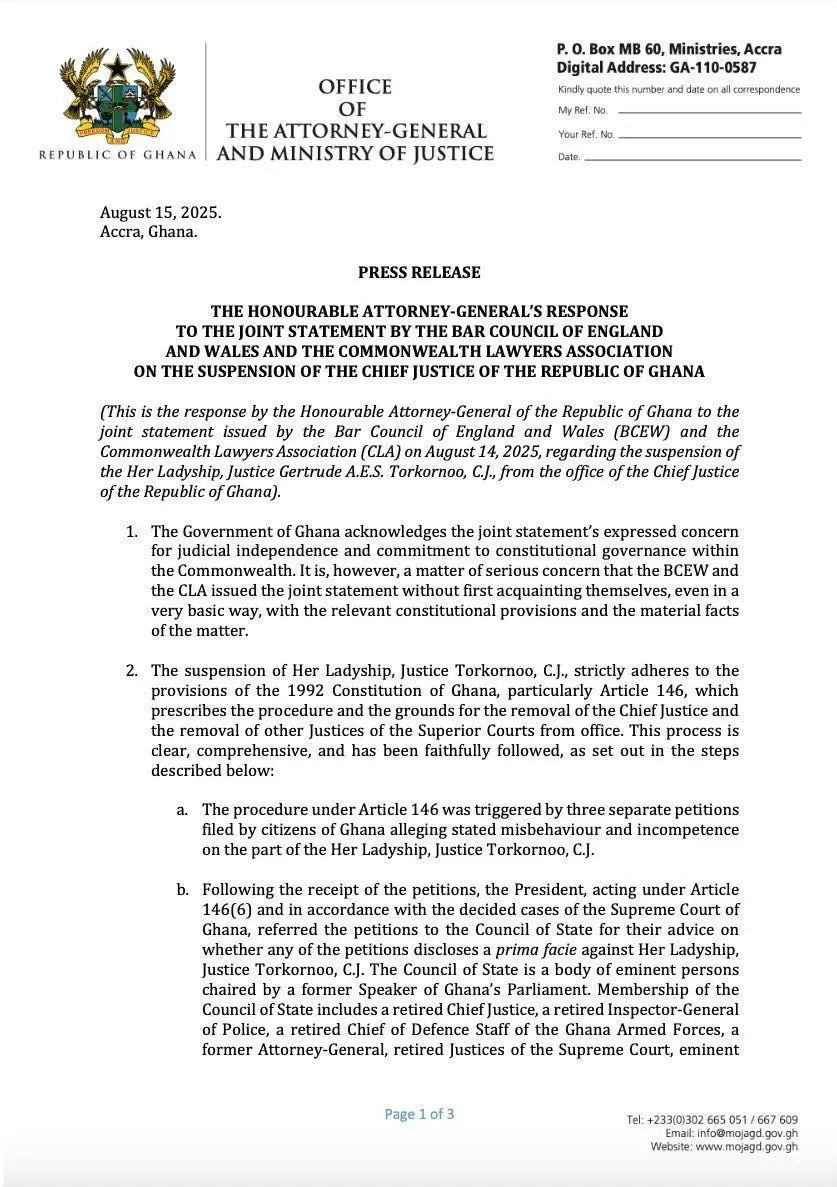
The Attorney-General of the Republic of Ghana, Hon. Dominic Akuritinga Ayine, has issued a press release defending the government’s suspension of Chief Justice Gertrude A.E.S. Torkornoo. The statement responds directly to a joint statement from the Bar Council of England and Wales and the Commonwealth Lawyers Association, which had raised concerns over the matter.
According to the Attorney-General, the international legal bodies issued their statement without a basic understanding of Ghana’s constitutional provisions or the facts of the case. He stated that the suspension was in strict accordance with Article 146 of Ghana’s 1992 Constitution, which outlines the procedure for removing a superior court justice. He detailed the process, explaining that the procedure was initiated by three separate petitions from citizens alleging “misbehaviour and incompetence” on the part of the Chief Justice.
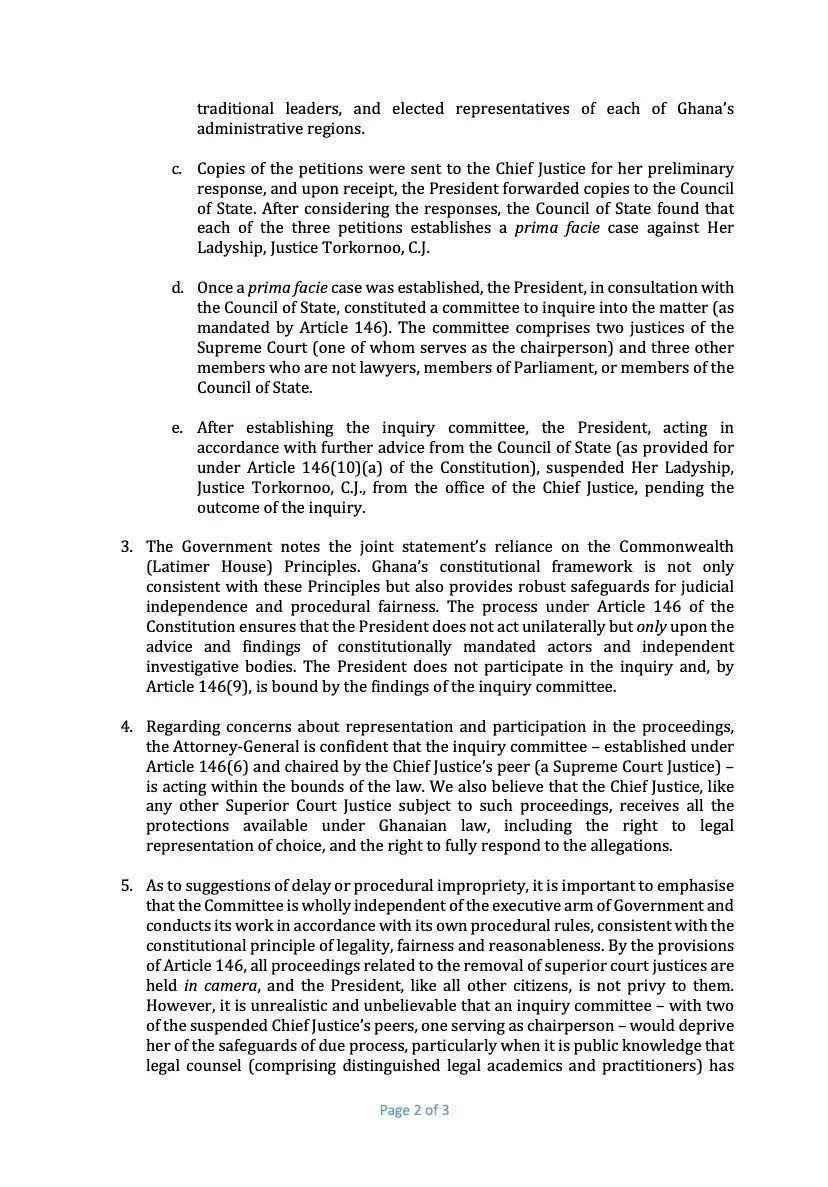
After receiving the petitions and a preliminary response from the Chief Justice, the President referred them to the Council of State. The Council of State subsequently found a prima facie case against Justice Torkornoo, leading to the formation of an inquiry committee. The Attorney-General clarified that this committee, which includes two Supreme Court justices, is independent of the executive and conducts its own proceedings. He also noted that the Chief Justice has received all due process protections, including legal representation by a team of distinguished lawyers.
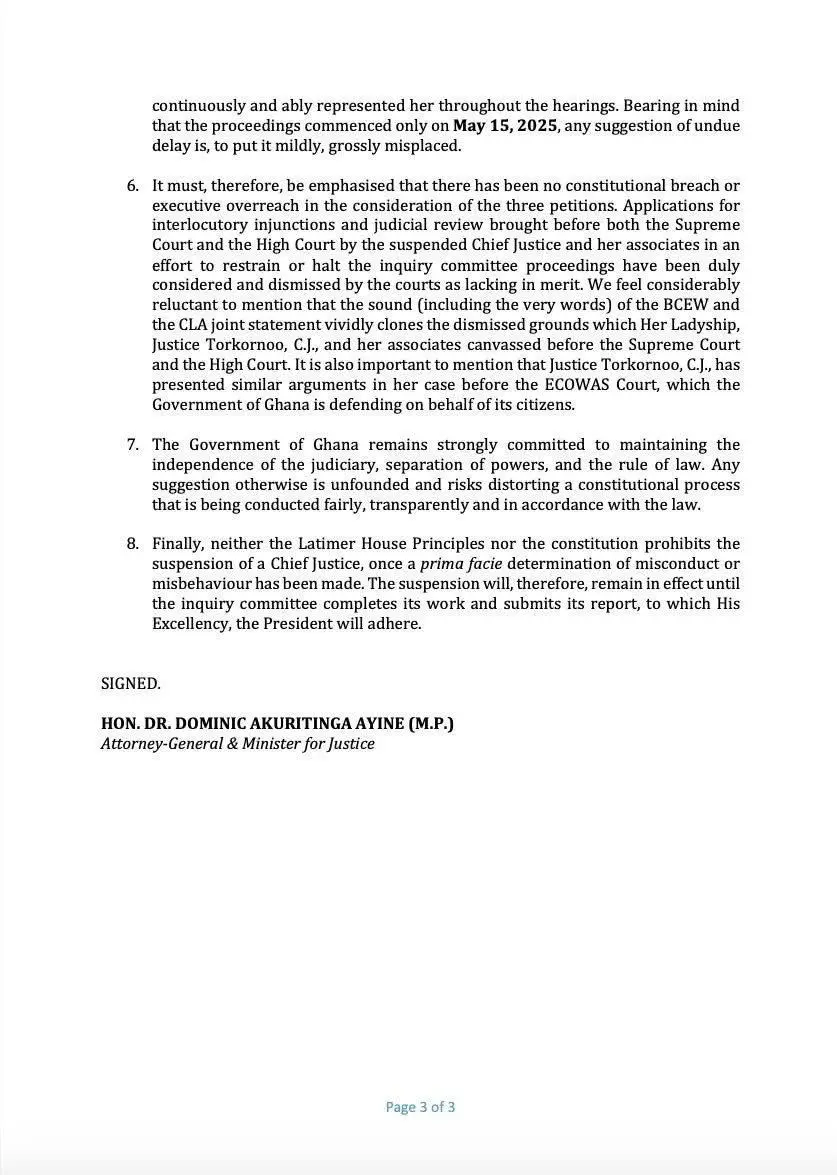
The government’s statement also addressed concerns about executive overreach, emphasizing that the President is bound by the committee’s findings and does not participate in the inquiry. The Attorney-General pointed out that similar legal challenges brought by the suspended Chief Justice in Ghanaian courts have been dismissed. He concluded by asserting that the suspension, which will remain in effect until the inquiry is complete, is not in violation of either the constitution or the Commonwealth’s Latimer House Principles.
Ruth Abla ADJORLOLO
