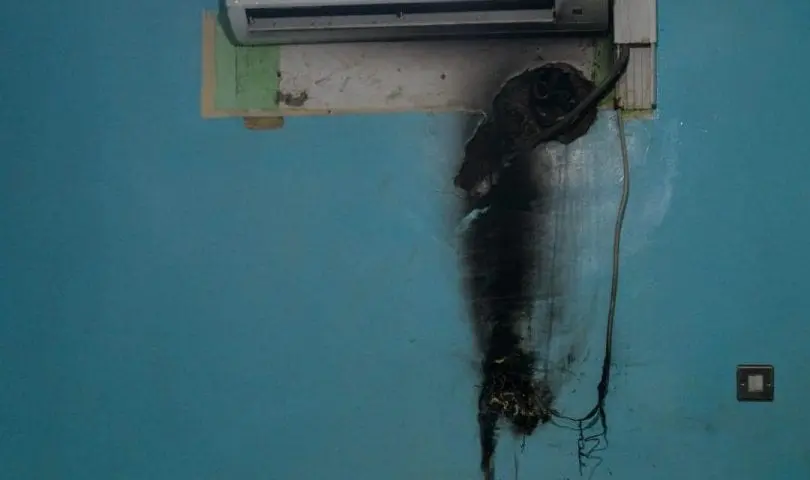

Source: sankofaonline.com
As a result of social media reports of fire outbreak at Korle-Bu Maternity ward and subsequent denial by the news media, sankofaonline.com reporters spoke to some of the staff at the hospital to ascertain the truth. Our investigations found out that, there was a fire outbreak at the Neonatal Intensive Care Unit, NICU. The NICU is located on the third floor of the Maternity ward. We are not sure if the news media would want us to believe that not until the whole building is engulfed in fire, then there was no fire outbreak. Our sources found out that the fire started at an air conditioner switch in a room that serves as one of the restrooms for the medical staff. The fire was localized and was put off with a fire extinguisher stationed at the same unit before the Ghana National Fire Service, GNFS, arrived later. It was a standard procedure to call the GNFS when a fire is detected in the hospital. Most electrical outlets are made of rubber or plastics. When these items are on fire, they normally produce dense black, oily smoke and has some toxic qualities. The most common gases produced during the combustion of rubber and plastic are hydrogen sulfide and sulfur dioxide. These gases are both dangerous and can be fatal in certain cases to humans.

A nurse on the floor informed us that it is a standard procedure and a precautionary measure to move the babies from the area near a fire outbreak due to smoke inhalation and other harmful particles the fire may produce. No patient or staff suffered smoke inhalation or any injuries as a result of the incident. We also learned that normal hospital operations have resumed after assessment by the GNFS and hospital authorities which indicated that there was no further threat of danger to either patients or staff.
Anonymous sources informed us that there were no periodic checks of equipment such as electrical outlets and others which may help to prevent such fires in the hospital. The equipment which caught fire, she noted, was installed over 15 years ago. “With the frequent power outages and no checks to replace outdated suckets etc., it was no surprise for such occurrences” one staff noted with displeasure.
Management should be advised to perform periodic checks of equipment such as electrical outlets and cables to help prevent such occurrences in the future.