

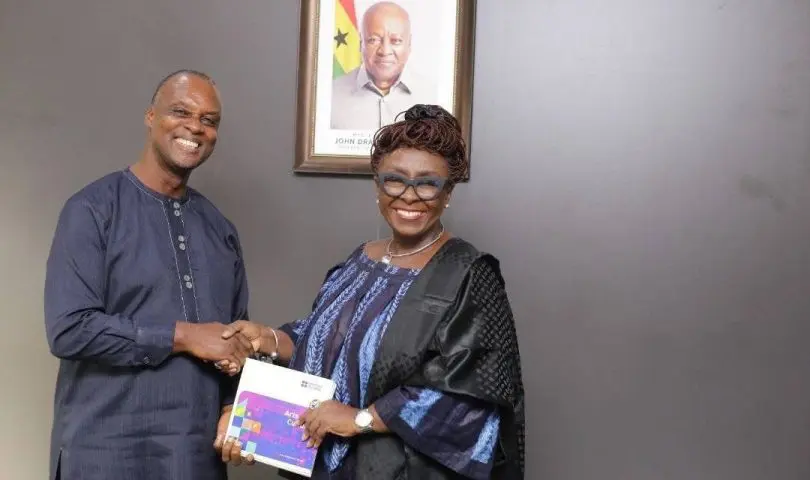

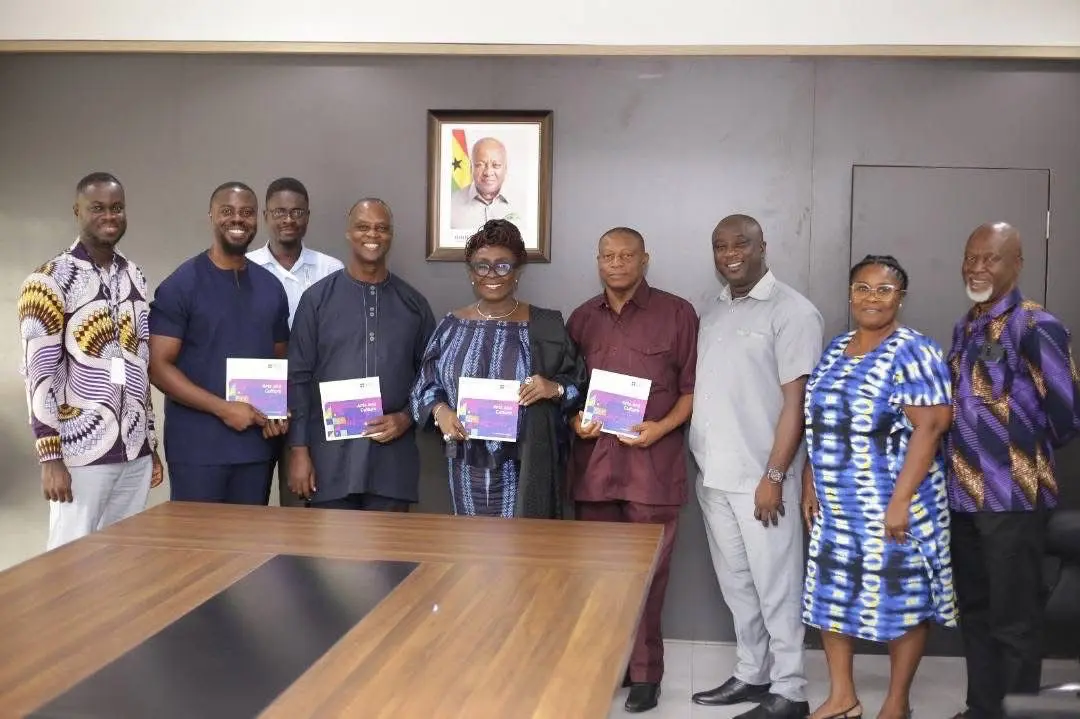
Accra, Ghana – The British Council, led by International Development Expert Nii Doodo Dodoo, embarked on a significant working visit to Ghana’s Ministry of Tourism, Culture and Creative Arts on Tuesday, June 3rd, to discuss expanded collaboration aimed at promoting Ghana’s rich cultural heritage. The discussions focused on bolstering the creative arts sector and maximizing tourism’s economic contribution.
Minister Abla Dzifa Gomashie welcomed the delegation, acknowledging the British Council’s historical support for arts and culture in Ghana. She emphasized the critical need for increased investment in areas like gastronomy, craft, dance, and painting, which she noted are underfunded despite their global potential. Mad. Gomashie stressed that while Ghana possesses abundant talent, it requires appropriate training to render its creatives competitive on the international stage. She further highlighted the importance of professionalizing tour guides to ensure accurate and engaging historical narratives without distortion.
Mr. Dodoo, reflecting on his own roots in Ghana’s tourism industry, described the visit as a “homecoming” and highlighted the British Council’s over 80 years of activity in the country, particularly in arts and culture. The organization expressed keen interest in Ghana’s “Black Star Experience” initiative and its role in shaping the nation’s cultural narrative. Dodoo drew parallels with the UK, where tourism generates nearly £16 billion annually and employs approximately one million people, suggesting valuable lessons for Ghana.
The dialogue also addressed equipping young artists with crucial business skills to maximize their commercial success. The British Council reiterated its commitment to fostering cultural exchanges and fortifying Ghana’s creative economy through strategic partnerships. Minister Gomashie concluded by emphasizing the need for consistency and quality in Ghanaian arts and crafts, citing personal observations of declining durability in recent cultural gifts compared to older ones, asserting that “policy must recondition mindsets and ensure consistency in our cultural outputs.” The engagement signals a forward step in strengthening partnerships for the development of Ghana’s tourism, culture, and creative arts sectors.
Sankofaonline
