




No copyright infringements intended. For entertainment purposes only.The artists are :Amakye Dede, Daasebre, Daddy Lumba, Kojo Antwi and the rest. Subscribe for more mixtapes.
Olamide – Wavy Level [Official Video]
Ahenfo Kyiniye
The Orchard Music (on behalf of Krew Media Hype Productions)
Nana Acheampong | Screwface/Sharifa
Abielie Woos
[Merlin] Africori (on behalf of Ox Records); BMI – Broadcast Music Inc., TuneCore Publishing, LatinAutor, and 1 Music Rights Societies
Awoso
The Orchard Music (on behalf of Krew Media Hype Productions); Downtown Music Publishing, Soundreef Ltd, BMI – Broadcast Music Inc., The Royalty Network (Publishing), ASCAP, and 3 Music Rights Societies
A. B. Crentsil
Highlife Essencial A.B.Crentsil
The Orchard Music (on behalf of Krew Media Consult)
Kojo Antwi
Anokye
The Orchard Music (on behalf of Freedom Family Records)
Amakye Dede
Krokro Me
[Merlin] Africori (on behalf of Amakye Dede), and 1 Music Rights Societies
Batman & Sidney | Nana Acheampong
Abu Aka Mesim
[Merlin] Africori (on behalf of Ox Records)
Aben Wa Ha
The Orchard Music (on behalf of Krew Media Hype Productions); CMRRA, BMI – Broadcast Music Inc., TuneCore Publishing, and 3 Music Rights Societies
Kojo Antwi
Copenhagen 2019, Vol. 1
The Orchard Music (on behalf of Music For Dreams), and 1 Music Rights Societies
Nana Acheampong
Ashiwo ”More”
[Merlin] Africori (on behalf of Ox Records), and 1 Music Rights Societies

Source: pulse.com.gh
Humans beings have searched for ways to improve their sexual experience for thousands of years, including trying to discover the best foods to improve their sex lives.
Scientists have linked a variety of foods with better sex and there is irrefutable proof for certain foods which are said to boost libido, improve stamina, and enhance your sex life.
In an article on the Times of India, Sexologist, Dr. Vijay Singhal explains the concept of foods for sex and how they can improve the libido. “Any healthy food is good for sex. However, there are certain items that are particularly beneficial- Walnuts, strawberry, avocados, watermelons, and almonds. One must note that alcohol is bad for healthy sex life – it increases the desire but decreases performance.”
Here are 7 foods that you can take to take your sexual performance to the next level!
1. Beetroot Juice
The juice of this root vegetable can increase your stamina and allow you to keep the bedroom activity going for considerably longer. Researchers have found that the nitrates in beet juice help reduce oxygen uptake, which in turn makes exercise less tiring.
Once in the body, the nitrates are transformed into nitric oxide, which is a key player in relaxing and opening up the blood vessels, which then improves blood flow to the penis. Enjoy fresh beet juice alone or mixed with a small amount of fresh apple or carrot juice.
2. Nuts
You can turn to nuts if you’re looking for a quick snack or if you’re looking for some extra kick in the bedroom. Certain nuts are rich sources of L-arginine, an amino acid.
L-arginine stimulates the production of nitric oxide, a substance that boosts blood flow to the penis. As a bonus, nuts and their healthy fat content (omega-3 fatty acids) can help lower cholesterol, which in turn can improve blood circulation.
These are the nut you need to munch on for that extra boost of stamina in the bedroom:
walnuts
pumpkin seeds
sunflower seeds
pecans
hazelnuts
peanuts
3. Spinach
Another food that provides a super L-arginine boost is spinach. The resulting conversion to nitric oxide to support and help maintain erections is one big reason why you should include spinach salads and steamed spinach on your menu or add baby spinach leaves to your green smoothies.
Another reason is that nitric oxide is involved with exercise recovery time, which will help with your sexual health!
4. Oysters
Pretty much everyone has heard about the wonderful aphrodisiac properties of oysters and even if you’re not a fan of their slimy texture, you will surely be impressed by their effects on your performance. Oysters, clams, and scallops contain compounds that raise testosterone and estrogen levels.
A boost in hormone production translates into heightened sexual desire in many cases.
4. Garlic
In the past, you may have been warned never to eat garlic before a date but the smelly herb is a miracle-worker because it’s a natural blood thinner often used to prevent high blood pressure, high cholesterol, and heart disease.
The anticoagulant properties make sure that there is plenty of blood flow to your nether regions. You and your partner can both benefit from a healthy dose of garlic before a sexy night in.
5. Eggs
You should eat eggs if you want to achieve a healthy erection. Eggs contain amino acid L-arginine that can improve erectile dysfunction. However you want them; poached, scrambled, or fried, eggs are sure to give you a much-needed boost after a long day at work.
They are full of protein, which keeps you going without packing on the calories. They’re also an excellent source of amino acids, which combat certain types of heart ailments as well as erectile dysfunction.
6. Watermelon
The nutrient citrulline, found in watermelons can have a Viagra-like effect on the body as it boosts nitric oxide which relaxes the blood vessels.
This is the same effect that Viagra has to treat erectile dysfunction.
7. Ginseng Tea
Consuming too much coffee on a regular basis leads to over-stimulation of the adrenal glands, flooding the body with hormones normally produced in times of stress.
These hormones negatively impact libido and sexual performance. As an alternative, try ginseng tea which contains the ginsenoside compound that increases sexual satisfaction and can prevent erectile dysfunction.
It’s good to know that you can boost your sexual stamina while enjoying a good meal at the same time. If you incorporate these super-foods into your diet, you will be sure to ramp up your performance in the bedroom.
Source: pulse.com.gh
Source: silentbeads.com
There are friends I grew up with. We went to school together and did most things together. In school, we were called the four musketeers. In good times and in bad times, it was always the four of us. After school, I did my national service with two of these friends—Cynthia and Pamela. It was Grace who got separated from us but even that, she was always involved in everything we did.
We were the ladies you will call party girls—if for a month no one invites us to a party, the four of us will put money together and organize our own party. Life was beautiful that way and we hardly had any stress in our lives.
The greatest change in my life was caused by Grace. It was through her that I found the man who later became my husband.
During national service, I visited Grace in her office and she introduced me to his boss. She said, “Boss, meet my twin sister Asantewaa. We may physically not resemble but we are twins. Each from different parents and we do everything together..” The boss smiled and said, “So you’re the crazy Asantewaa I’ve been hearing of every day?” We laughed and we shook hands. The boss was involved in our conversation throughout. He sounded like someone who really liked me.
One day he called; “Hey, you haven’t come around for a while so I decided to take your number from grace and give you a call.” That call…that call was the beginning of what threw us into a cage of romance. A month later we were a thing hidden in the dark but three months later, we sprouted and became something you could see and say, “These two are together.”
“Oh Martin, you put my heart in a spin with the way you look at me and say the things you say.”
A year and a half later, I was holding the hand of Martin and were standing in front of a pastor who gleefully asked, “Asantewaa, do you take Martin as your blah blah blah and blah?” I said I do and the two of us moved from being a boyfriend and a girlfriend to being a wife and a husband.
Things started changing between me and the rest of the girls.
My friends didn’t see it but I had the eyes so wide and a heart so deep to sense the subtlest of change. I called Grace one day, “Hey girl, When was the last time you called me and stayed on the phone with me for over three minutes?” She laughed. “You’re married now. We have to leave you alone to concentrate on your marriage. What we did when you were not, we can’t do it again.” I asked, “Says who?” She responded, “Married women have their husbands to care for plus you’re my boss’ wife, I have to give you that respect.”
I had the same conversations with Pamela. She said, “But Asantewaa, you know we can’t continue being the way we used to be. You’re married now and you have to look the part.” When I spoke to Cynthia, she made my heart cried. She said, “We were all here having fun and living life and then you went ahead and got married. Now, look at us. The rest of us can’t go on like we used to be because you were the bond that held us together.”
Honestly, I don’t know who made that rule. Yeah, our counselor said it during counseling but I took it as advice I couldn’t implement. “These are the girls I grew up with. It’s through them I found this man who made me a wife so why should I let them go just because a man put a ring on my finger? Does marriage mean forgoing friends and happiness? Hell, I can’t do that.”
So one weekend, I called my ladies over to my house and had a noisy party just like we used to do. My husband was deeply involved serving us food and drinks but guess what, these my friends couldn’t bring themselves to feel free like we used to. They were all of a sudden playing good girls and being wallflowers. I couldn’t believe my eyes that day. Hey, girls what’s up? Cheer up. It’s only us and a man here.”
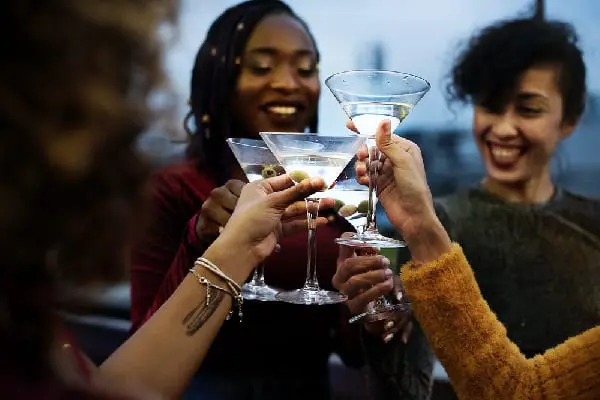
I had to accept defeat. I had to come to terms with the fact that I’ve lost my friends. We didn’t fight and we didn’t pick on each other but just because I got married, they were slowly drifting away. We could go a whole week and some days without hearing from each other. One day, I saw them on Instagram—the three of them. They’ve had a beach party and posting photos and having fun on Instagram. That made me really sad. It was a weekend, I could have gone with them and my husband wouldn’t have had issues.
The problem is, my husband didn’t lose his friends? They were still going out and having fun. Friday nights were my worse night. My husband will come home very late. He will call to tell me earlier that he wouldn’t come home early because he’ll be out there with some friends. I would be home alone, watching movies I’ve watched several times. That didn’t feel right so I decided to find a way to reconnect with my friends. Friendship is about fitting in and being where you blend so one night I went out with them. It was a club.
My husband had traveled but I told him I would be out with my friends. That night I took off my ring for the first time. They didn’t notice. They kept asking if my husband will be ok. They were worried my husband will accuse them of spoiling me. That didn’t stop me. In the club that night, I danced like a woman possessed. I didn’t know how to use all the freedom available to me that night. we danced, we got drunk and danced some more.
There is always that guy who would make a move on you and wouldn’t take a no for an answer. He came right from behind and started dancing with me. Because I didn’t talk or say no to him, he held my waist and started pushing towards me. I still didn’t say a word. I was there to have fun and I didn’t care which turn the fun will take. I kept dancing with him and he kept throwing himself all over me. Grace walked closer to me and whispered in my ears, ‘Why have you removed your ring?” I only laughed.
When I got tired I took a seat and this guy came to sit next to me. “Can I buy you a drink?” I answered, “You’re a gentleman. Don’t ask me. Just buy me a drink.” He brought drinks and we spoke all night. My friends tried all they could to stop the conversation but we kept going. When leaving that night, we exchanged contacts and he asked me my name. I felt alive again. I felt I’d regained what was lost and I was rejuvenated. Going back home, Grace again asked why I removed my ring. I said, “I would have missed all this fun if I had it on. I didn’t want to miss a thing.”
That same night the guy called. I didn’t pick. The next morning he called, I didn’t pick. He kept calling and I kept missing the calls. Later he sent me a message, “At least, say hi to me? I’m not a bad person.” I said hi and he said hi back. He called and I picked. He said, “Could we do it again this weekend?” I responded, “If only my husband will allow it, why not?”
“You’re married?”
“Yeah, I’m married. Happily married.”
“Really?”
“You want to see some proof?”
“Lol, not really but I’m surprised.”
“I know. A married woman has to have fun sometimes.”
“I still want to know you more.”
I wasn’t there because of a boy. I was there to be with my friends and reconnect with them in the best way possible. That night, we did get back and had fun and we’ve never looked back since then. Every now and then, we go out and the ring goes off. I’m not out there to cheat. I’m out there to blend and have fun with friends who have been the pillars of my life. If a boy comes through, we talk, we drink, we dance, we exchange numbers. In the end, I go back home to the man I said: “I do.” With or without the ring, he’s all I have. And my friends too.
Asantewaa, Ghana
#SilentBeads

Source: psychologytoday.com
You have undoubtedly heard the term “gaslighting,” a communication technique in which someone causes you to question your own version of past events. Whether this happens in a romantic relationship or in a work setting, gaslighting can give you the very uncomfortable feeling that you’re losing your grip on reality.
Perhaps your partner went out to complete an errand that you believed should only take 20 minutes. However to your annoyance (and not a little bit of concern), two hours go by with no word from your partner. Your partner’s phone is sitting in the kitchen, so calling isn’t even an option. When your partner finally walks through the door, you’re beside yourself with worry and rage. “Why so mad?” asks your partner. “I told you yesterday I had a dentist appointment today. Remember?” It’s true, the dentist is a good half an hour away, so that would explain the length of time.
Try as you might, you honestly cannot conjure up in your memory of the last 24 hours when your partner ever proclaimed such a statement. You begin to suspect that your partner never actually told you and the challenge to your own mental repository was a tactic to avoid blame. If you’ve ever been through such a situation, then you know what it’s like to experience gaslighting.
The example of the missed communication seems innocent enough. People think they say something that they actually didn’t say. Your partner’s behavior, assuming you were actually correct in your own recall, may have been a cover-up, or it could be a genuine case of having thought something was said that wasn’t. However, gaslighting is usually thought of in terms of relationships as a deliberate manipulation that one partner performs on the others for reasons that are anything but innocent. In this case, your partner would be, as you might say, “messing with your head.”
In a new study, University of West Georgia’s Neill Korobov (2020) put gaslighting under the microscope by studying its use by romantic partners in their everyday conversations. The definition of gaslighting that Korobov uses views it as a form of deflection when a partner in a close relationship wishes to “flip a criticism back on the other during an argumentative exchange” (p. 1).
In an exchange marked by gaslighting, this kind of flipping “is an interactional move where the recipient of a complaint or criticism (or any perceived attribution of blame for something), flips it back and positions the other as somehow having done something to cause or deserve the very thing that they are upset about” (pp. 1-2). In that dentist example, in other words, it was your fault that you didn’t remember what your partner told you, not your partner’s fault for failing to inform you ahead of time.
In a true narcissistic flip, or gaslighting, the person who does the flipping is believed to seek to create a reaction in the other person as a manipulation tactic. Korobov’s analysis was less focused on the personality of the gaslighter, however, than in the window it provides “into the argumentative fabric of the couple’s interactions” (p. 2). Through studying narcissistic flips as they evolved over the natural course of a conversation between close relationship partners, the author analyzed it “as a structured rhetorical move designed to accomplish some bit of important relational business.”
When a partner engages in gaslighting, the question becomes one of understanding how this impacts the way the interaction unrolls in real time. The structured rhetoric, in this case, is a partner’s attempt to create a version of reality that operates both offensively and defensively. On the offensive side, the gaslighting partner undermines the validity of the other partner’s position and on the defensive side, the gaslighter deflects criticism back toward the receiving partner.
The data for the Georgia study were obtained from a 2-week set of recordings that young adult couples made in their homes of conversations they had whenever they were spending time together, whether at home watching TV, driving, or eating a meal. The participants were 20 heterosexual romantic couples from the university and surrounding community. Over the course of the 2 weeks, they each produced 7 hours of recorded conversation, leading to a massive 140 hours of conversations.
You might think that if you were in this study, the last thing you would do is turn the recorder on during an argument. However, Korobov believed that the young adults in this study wouldn’t mind “keeping it real,” especially because “it may be trendy to be… edgy, real, and provocative” (p. 4). Self-editing, therefore, didn’t seem to present a real threat to the validity of the study according to the author’s analysis.
As it happened, there were plenty of argumentative moments that the participants caught in their two weeks of recorded conversations. In sorting through the transcripts of these conversations, Korobov distinguished between two types of assessments that people make when speaking to each other.
In subject-side (S-side) assessments, you express a personal view about your feelings (e.g. “the way I felt you were treating me”). In an object-side (O-side) assessment, you present an observation as a statement of fact (e.g. “the way you treated me”). The S-side assessment makes it clear that you’re stating your own feelings, which may or may not be “true,” but the O-side assessment turns what might be ambiguous in reality into a fact (“you did treat me that way”).
Using this framework, Korobov traced the conversational pattern of his participants to attempt to isolate the moments of narcissistic flips. Consider the following dialogue between the members of this couple:
Rue: The way I felt you were treating me… felt dumb at your parents… Like a fool.
Wes: You try too hard. You did that to yourself.
Rue: I felt that way. Don’t tell me how to feel.
Wes: That’s on you. You can feel however… that doesn’t make it true.
Rue began with an S-side assessment, expressing her feelings. Wes flips things back on to her using the O-side assessment of claiming to be true, the fact that she tries too hard. Rue comes back by asserting the validity of her feelings. Wes once again flips things back at the end “noting essentially that while they are her feelings, they are not entitlements to truthful knowing.”
As a manipulative tactic, whether narcissistic or not, such deflections in conversation serve to (a) establish the controller’s version of the truth while (b) devaluing the partner’s feelings. An even more destructive scenario unfolds when the controlling partner first gives an S-side statement that lures the other person into thinking this is a conversation about feelings. However, the O-side statement soon follows, creating a new “truth” that the partner must now accept.
In this detailed analysis of the actual conversations partners had, it seems clear that partners who manipulate behave much like expert tennis players. They serve up the ball, you go for it, thinking it’s heading your way, only to have the ball land just out of reach. The dominant player may even volley for a while, setting you up for thinking that this is going to be an easy game, when all of a sudden your friendly return of the ball precedes the winning stroke. You’ve been set up.
Restating the situation in gaslighting, Korobov notes that “O-Sides were thus useful for positing an objective view of the problem that deflected or flipped the cause back on the one making the complaint.” You now question your own feelings because they don’t fit the objective “facts” as stated by your partner.
There are ways out of this type of conversational game-playing, fortunately. If you can keep the conversation O-sided throughout, then you and your partner will both be debating your versions of the truth. In these situations, Korobov found that deflections were virtually absent.
Furthermore, if partners can combine their objective and subjective statements, they may actually be able to collaborate their way to a resolution without anyone feeling gaslighted. As the author states, “Ways of taking up conflict that can toggle between one’s own subjective position, an externally objective interpretation, and an awareness (a kind of second-order subjective stance) of how the other views oneself seem relationally promising as resources for smoothing out conflict” (p. 13).
To sum up, looking at the structure of your own discussions with your partner, even those that take place in the heat of an argument, can help you both avoid the kind of deflections and flipping that can undermine your intimacy. It may take a little work, but by applying this kind of analysis, you can continue to build relationship fulfillment.