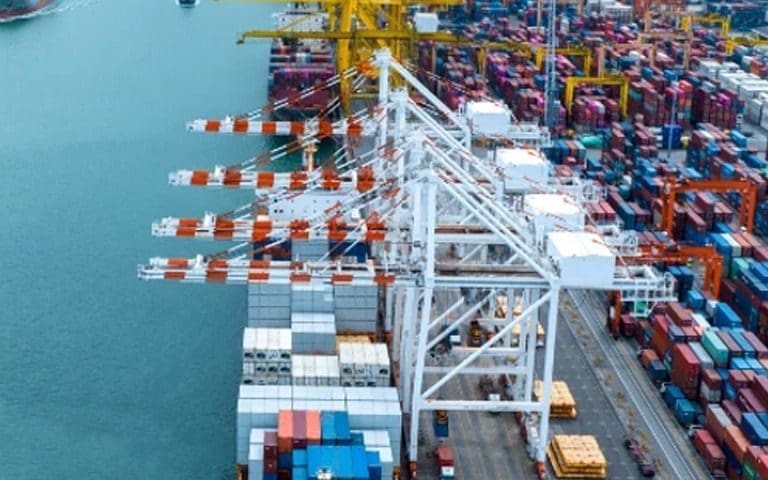

Photo : Credit GreenOak’s Images
In the face of rising geopolitical tensions, rapid digitalization, and climate change, the global trade landscape is undergoing a significant transformation. While this shift poses risks for developing countries, it also presents opportunities.
To sustain the benefits of international trade and investment, which have lifted one billion people out of poverty over the past 30 years, the Aid for Trade initiative is crucial.
Since its inception in 2005, Aid for Trade has mobilized $650 billion to support developing countries in integrating into the global economy. The World Bank has been a significant contributor, with its share of Aid for Trade funding doubling between 2010 and 2022 to $16 billion annually. This support has addressed supply-side constraints in critical sectors like transport, energy, and agriculture, boosting export capacity and economy-wide performance.
Examples of successful Aid for Trade projects include a trade corridor in West Africa, trade facilitation reforms in the Pacific Islands, e-readiness diagnostics in African Least Developed Countries, and export diversification in Timor-Leste.
While progress has been made, the rise of trade protective measures and a fragmenting world economy threaten to marginalize developing countries. To address these challenges, deepened international cooperation, innovative partnerships, and targeted interventions are essential. Scaling up Aid for Trade flows is critical to ensuring that the weakest members of the global economy can reap the development benefits of trade.
Ruth Abla ADJORLOLO