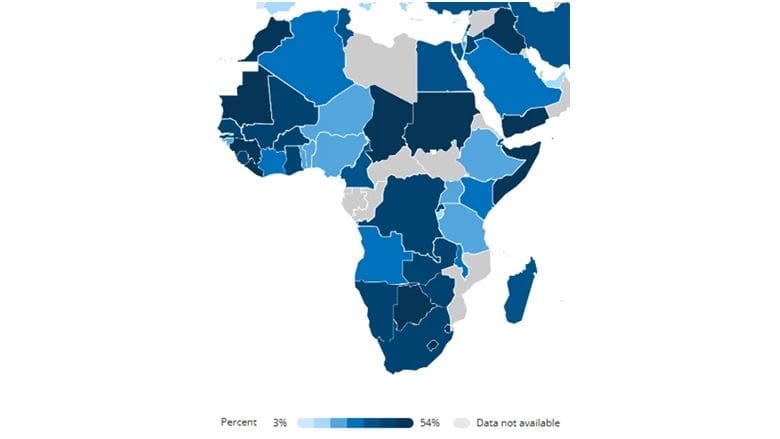

Sub-Saharan Africa is on the cusp of a demographic revolution, with its population projected to grow from 1.5 billion in 2024 to 2.5 billion by 2050. This surge in population presents an enormous opportunity for the continent to reap a demographic dividend, driven by an expanding workforce. However, this can only be achieved if the region’s economies can create productive employment opportunities for its youth.
The challenge is daunting: Sub-Saharan Africa needs to create 15 million jobs each year to keep pace with its growing population. Yet, many youths are idle, neither in education, employment, nor training. Adolescent girls are particularly vulnerable, often dropping out of school due to early marriage or childbearing.
To address this crisis, World Bank Group President Ajay Banga has called for building “a ladder of opportunity” for young people in developing countries. This people-focused framework recognizes that the path to inclusive growth in Africa lies in generating higher-quality jobs, with higher labor earnings driving poverty reduction.
A multi-pronged strategy is required to solve this challenge. This includes increasing wage employment in the formal private sector, boosting productivity in self-employment and micro-enterprises, and enhancing labor mobility within countries and internationally.
Social protection programs have proven effective in helping the poor onto the ladder of opportunity. Initiatives like Ethiopia’s Productive Safety Net and Senegal’s urban Yokk Koom Koom program have significantly boosted household revenues and savings.
Youth employment programs are also expanding to support African youth in finding meaningful work. Kenya’s Youth Employment and Opportunities program has helped 155,000 young people launch 86,000 businesses, create 125,000 jobs, and increase incomes by 50%.
To scale up these efforts, governments need to invest in robust systems, including digital social registries, identification systems, and labor market systems. The private sector must also play a critical role in creating productive jobs, driven by reforms that enhance the business environment, boost market access, and attract investment.
The urgency is real, but so is the opportunity. With the right investments and partnerships, Africa’s youth can climb the ladder of opportunity and drive the continent toward a brighter future.
Ruth Abla ADJORLOLO