

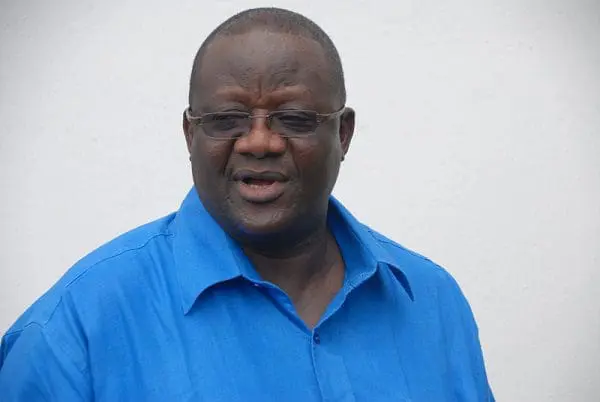

“Keep your bogus amnesty, I’m no longer interested in your NPP party.” Paul Adorkor?
In a dramatic turn that has sent shockwaves through Ghana’s political landscape, Paul Afoko, the former National Chairman, have allegedly rejected a recent amnesty offer from the party. The move is a significant blow to the NPP’s efforts at fostering unity and reconciliation ahead of the crucial 2028 elections.
A source close to the former chairman, who has been largely out of the public eye since his controversial suspension in 2015, claimed that Afoko dismissed the offer with a stern and defiant message: “Keep your bogus amnesty, I’m no longer interested in your NPP party.” This statement, if true, underscores a profound sense of betrayal and a deep-seated chasm that may be irreparable.
The amnesty offer, reportedly initiated by some high-ranking party officials, was seen by many as a strategic olive branch. The party leadership is keen to mend fences with key figures who were sidelined during the tumultuous period leading up to the 2016 elections. However, Afoko’s alleged reaction suggests that the scars from that era have not healed. His suspension, along with that of Kwabena Agyapong and Sammy Crabbe, was a contentious issue that divided the party and led to allegations of internal power struggles.
Political analysts are interpreting this alleged rejection as a sign that the party’s internal wounds are far from mended. For Afoko, who consistently maintained his innocence and challenged his suspension in court, the offer may be seen as too little, too late. The term “bogus amnesty” hints at a perception that the gesture lacks sincerity and is a cynical attempt to co-opt him back into the fold for political expediency rather than a genuine act of reconciliation.
The NPP’s leadership now faces a difficult dilemma.The alleged rejection of this peace overture by such a prominent figure could embolden other disgruntled party members. It also raises questions about the party’s capacity to genuinely unify its ranks. The path to victory in 2028, a year that will mark the return of the NPP to power , will require a cohesive and motivated front.
The coming days will be critical in determining the fallout from this alleged rejection. While the NPP will likely double down on its unity agenda, the defiant stance attributed to Paul Afoko serves as a stark reminder that some fractures are too deep to be papered over with mere political gestures. The journey to the 2028 election has just gotten a lot more complicated for the ruling party.
Sankofaonline
