

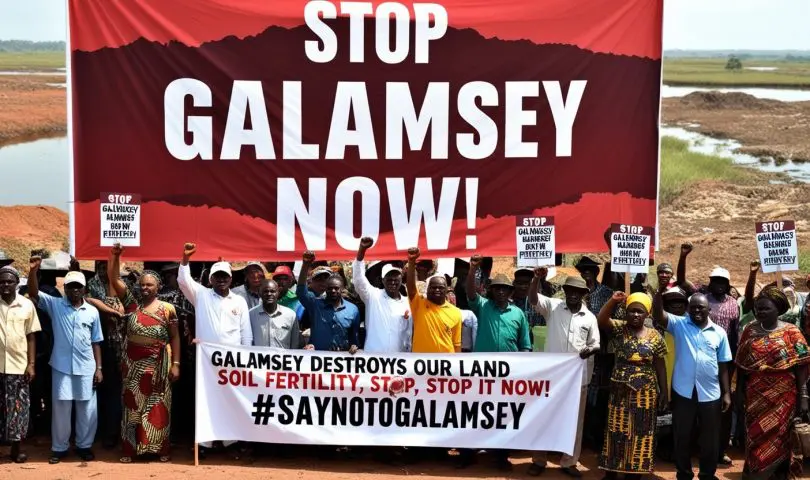

Source: Sankofaonline
Ghana stands at a critical juncture in its environmental journey. The devastation caused by illegal mining, known locally as galamsey, has scarred our rivers, poisoned our soil, and threatened the future of countless communities. But under the leadership of President John Mahama, a new chapter has begun, one rooted in strategic action, community engagement, and the transformative power of education.
Since assuming office, President Mahama has halted the issuance of new mining permits, drawing a sharp contrast with the previous administration’s approval of over 1,500 licenses. This decisive pause signals a commitment to restoring order and protecting Ghana’s natural heritage. To reinforce this stance, the repeal of Legislative Instrument 2462 has been initiated, paving the way for stronger regulatory oversight and tighter control over mining activities.
Protecting our water bodies is no longer a passive hope. The launch of the Blue Water Guards marks a bold step toward safeguarding rivers and streams that have long suffered under the weight of pollution and neglect. These guardians are not just enforcers, they are stewards of life, defending the veins of our ecosystem.
To ensure coordinated enforcement, the government has established the National Anti-Illegal Mining Operations Secretariat. This body will unify efforts across agencies, streamline intelligence, and respond swiftly to violations. It is a command center for environmental justice.
Recognizing that sustainable mining must be both responsible and inclusive, the Responsible Cooperative Mining and Skills Development Programme has been introduced. This initiative offers training, structure, and opportunity to miners who seek to operate within the law. It is a bridge from chaos to compliance.
Excavators, often the tools of destruction, are now subject to a strict impoundment policy. No machine will be released without a tracking device installed, ensuring accountability and traceability. This measure curbs reckless operations and deters repeat offenses.
Traditional Authorities, the custodians of our land and culture, are being engaged as partners in enforcement. Their wisdom and influence are vital in fostering community-based vigilance and restoring respect for the land.
But the fight against galamsey is not only about enforcement. It is about education. It is about shaping hearts and minds before they ever touch a shovel. That is why the Ministry of Education and the Ghana Education Service are collaborating to embed environmental advocacy into the national curriculum. From primary school to senior high, students will learn the value of conservation, the dangers of illegal mining, and the role they play in protecting Ghana’s future.
The Youth Employment Agency is being mobilized to recruit more Forest Guards, expanding the reach of protection and creating jobs rooted in stewardship. Forest TV has been launched to provide regular updates, documentaries, and public awareness campaigns that keep the issue alive in the national consciousness.
Forest Clubs and Forest Festivals are being promoted to foster youth engagement. These gatherings celebrate nature, build community, and inspire a generation to cherish what is theirs. Educational activities such as quizzes, debates, rhymes, and poetry are being used to make learning dynamic and memorable.
Media engagement has been intensified to sustain pressure and keep the public informed. The airwaves are becoming battlegrounds for truth, accountability, and reform.
And the land itself is healing. Under the leadership of Armah Buah, over nine previously degraded forest zones have been reclaimed. These restored reserves are symbols of resilience and renewal.
Ghana is not merely reacting to a crisis. It is building a movement. A movement that teaches, protects, and uplifts. A movement that says to every child, every miner, every leader, this land is sacred, and its future is ours to defend.
Every voice strengthens the cause. Together, we reclaim not just our forests, but our collective future.
