


By Sankofaonline Editorial Team
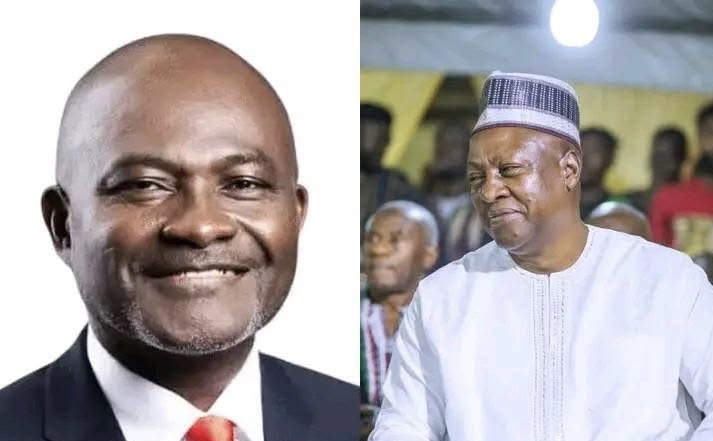
In a political climate often defined by sharp rhetoric and deep divisions, a moment of humility has emerged, offering not just a personal reckoning, but a national lesson. Ghanaian politician , Kennedy Agyapong’s recent public apology to President John Mahama, in which he expressed regret for past inflammatory remarks and acknowledged the enduring value of their friendship, invites a broader reflection on the state of political discourse in Ghana.
This gesture, though delayed, underscores a universal truth too often lost in partisan conflict: civility and mutual respect are not optional virtues, they are foundational to responsible leadership.
A Lesson in Regret and Reflection
Agyapong’s admission stems from a 2021 incident during post-election tensions, when he issued a warning to Mahama following attacks on shops belonging to his party’s supporters. His regret is twofold: the use of harsh, divisive language, and the realization that political loyalty can be fleeting, far less valuable than genuine human connection.
This moment should not be dismissed as mere political theater. It is a wake-up call to leaders across the spectrum: when tensions rise, the duty of leadership is to calm, not inflame. Words spoken in haste, especially in volatile contexts, can deepen wounds and fuel unrest.
The Necessity of Decorum and Respect
Political leaders are not just figureheads, they are custodians of national tone and temperament. Their words carry weight, and their conduct sets precedent.
- Preserving the Social Fabric: Personal attacks and incendiary language erode public trust and fracture the democratic contract. Robust debate is healthy; baseless accusations are corrosive. A functioning democracy requires citizens to see opponents as patriots with differing views, not enemies to be destroyed.
- Setting the National Standard: Leadership behavior trickles down. When leaders normalize inflammatory speech, they license it among their followers. Upholding decorum is not weakness, it is a bold commitment to unity and democratic maturity.
The Discipline of Investigation Over Assumption
Agyapong’s apology also reveals a deeper flaw in modern political culture: the rush to judgment. In an age of instant commentary, the pressure to speak first often overrides the responsibility to speak wisely.
- Stopping the Conclusion-Jumping: Leaders must resist the impulse to react before facts are known. Investigation must precede accusation. The cost of premature condemnation is high and often irreversible.
- Maintaining Credibility: A leader who speaks before thinking risks losing public trust. Credibility is built on measured, evidence-based commentary, especially in moments of national tension.
A Human Moment, A National Reminder
Kennedy Agyapong’s reflection on nearly sacrificing a friendship for political loyalty is a rare, human moment in Ghanaian politics. But the deeper takeaway is this: principles of civility, respect, and thoughtful leadership must not be optional or retrospective. They are the enduring standards by which all leaders should be measured.
As Ghana continues to navigate its democratic journey, may this moment serve not as a footnote, but as a turning point, a call to elevate our discourse, honor our shared humanity, and lead with wisdom.
