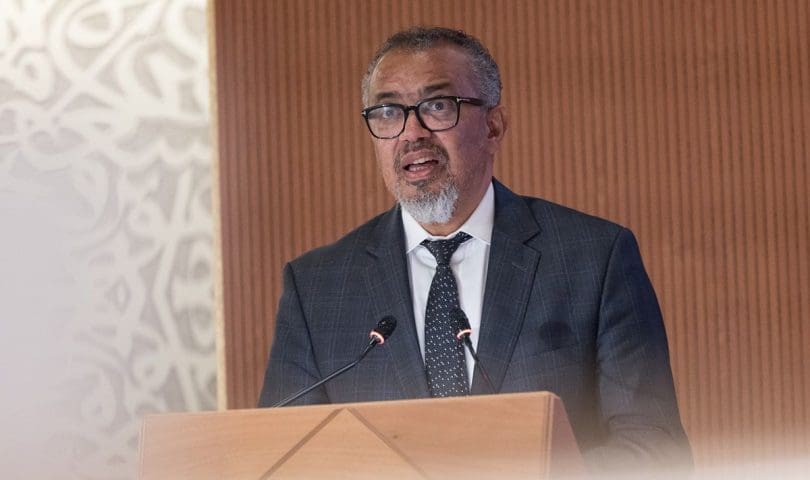

Geneva – The Seventy-eighth World Health Assembly concluded on May 27, with the World Health Organization’s (WHO) Director-General, Dr. Tedros Adhanom Ghebreyesus, commending Member States for adopting historic measures to enhance global health security. A key outcome was the approval of the first-ever global agreement aimed at strengthening preparedness and response to future pandemics, alongside a significant increase in financial support for the organization. The WHO Executive Board subsequently met until May 29 to address the Assembly’s decisions, governance reforms, and regional director appointments.
Dr. Tedros praised Member States’ commitment to multilateral action and a strong WHO, stating that despite challenges and disinformation, the Assembly sent a clear message: “countries want a strong WHO and are committed to working together with WHO to build a healthier, safer and fairer world.” The landmark Pandemic Agreement, adopted on May 20, sets forth measures to prevent pandemics and bolster health system resilience, including rapid pathogen sharing, equitable access to vaccines, diagnostics, and therapeutics, and strengthening technology transfer and supply chains.
The Director-General clarified that the Pandemic Agreement does not infringe on national sovereignty nor grant WHO additional powers, emphasizing that it is an agreement between sovereign nations to be ratified and implemented voluntarily. He expressed confidence that Member States would finalize the outstanding annex on pathogen access and benefit sharing by May 2026, despite anticipated continued “deception and distortion” regarding the agreement’s scope.
Another significant achievement of the Assembly was the approval of WHO’s 2026–27 Programme Budget, which includes a 20% increase in assessed contributions, adding US90 million annually in predictable and flexible funds. This increase is a cornerstone of WHO’s strategy to diversify its funding base and reduce reliance on earmarked voluntary funds, with Member States and philanthropic donors pledging an additional US210 million to the WHO Investment Round. Beyond these major accomplishments, the Assembly also recognized countries for disease elimination efforts and the removal of industrial trans-fats, and adopted resolutions on critical public health issues including air pollution, nutrition, digital marketing of infant formula, traditional medicine, lung and kidney health, a lead-free future, and the establishment of World Cervical Cancer Elimination Day and World Prematurity Day as official WHO health campaigns.
Sankofaonline