



By Stephen Apolima | Accra | May 28, 2025
Amid growing debate over the recent surge in the value of the Ghana cedi, Bank of Ghana Governor Dr. Johnson Asiama has issued a firm and data-backed rebuttal to skeptics, declaring that the appreciation of the local currency is not speculative, but driven by structural economic gains and sound policy.
Speaking during a high-level investor roundtable at the AfDB Annual Meetings in Lusaka, the Governor addressed what he described as “mischaracterizations” of the cedi’s performance, emphasizing that the rally is a product of real fundamentals—not market manipulation, short-term flows, or artificial support.
“The market has changed. The policy environment has changed. The cedi’s strength is not an illusion,” Asiama stated.
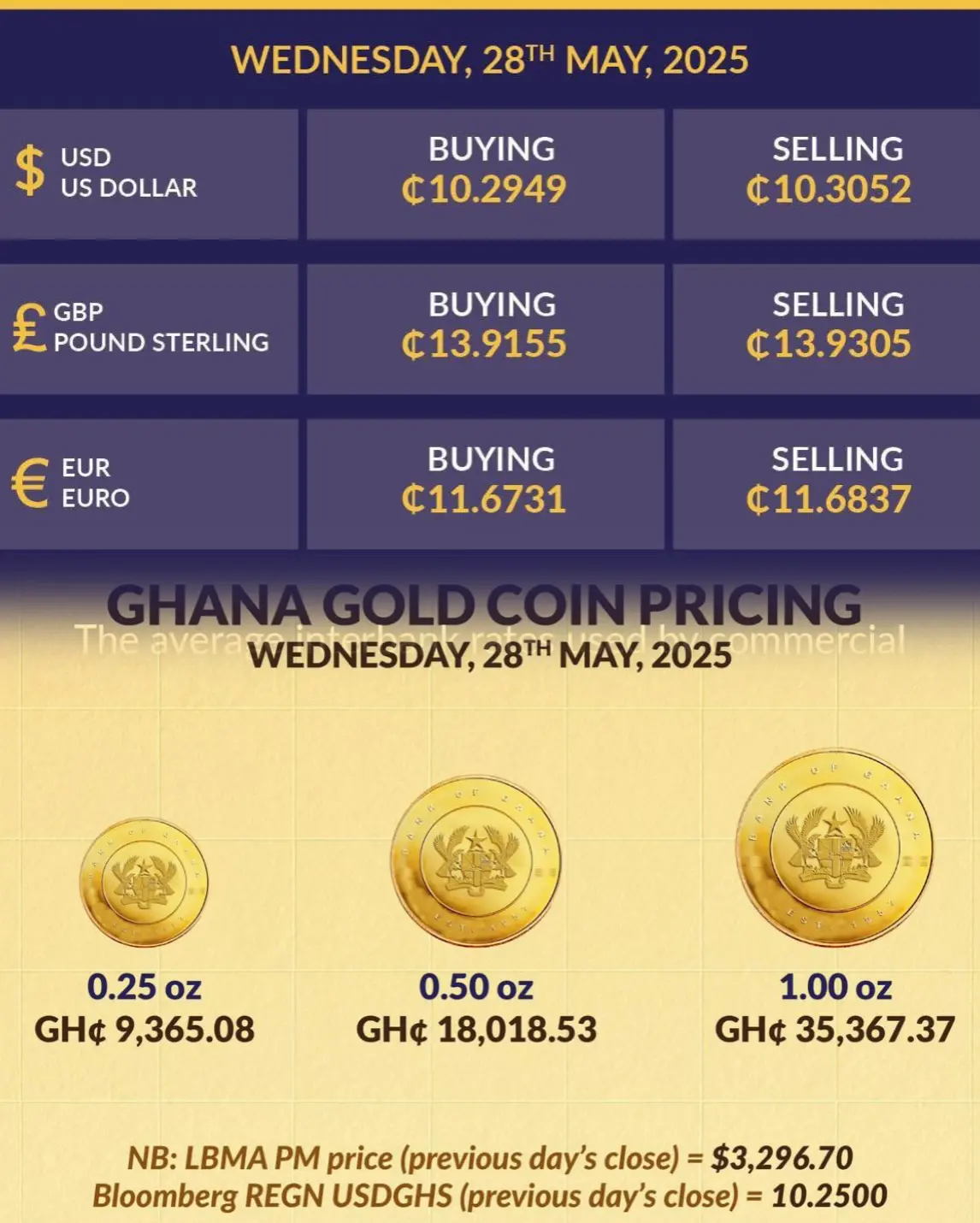
So far in 2025, the Ghana cedi has appreciated by 21.5% against the U.S. dollar, marking a dramatic turnaround from the 19.2% depreciation recorded in 2024. The performance has drawn both praise and scrutiny, with some questioning its sustainability.
Stronger Gold, Stronger Cedi
A primary driver of the currency’s strength is Ghana’s surging gold export revenues. In the first four months of 2025 alone, the country earned $5.2 billion from gold exports. This comes at a time when global gold prices have soared above $3,200 per ounce, fueled in part by geopolitical uncertainty and renewed trade tensions following policy shifts in the U.S.
Gold’s status as a global store of value has made it a reliable buffer for Ghana’s external accounts, helping the country accumulate foreign exchange and reduce pressure on the cedi. The Governor also credited Ghana’s Gold-for-Reserves Program, which swaps gold directly for foreign exchange, with reducing demand on the open FX market.
Current Account Surplus and Reserves Build-Up
For the first quarter of 2025, Ghana posted a current account surplus of $2.12 billion, supported by a $4.14 billion trade surplus. These positive external balances have allowed the Bank of Ghana to boost gross international reserves to $10.67 billion, equivalent to 4.7 months of import cover.
Such fundamentals, Dr. Asiama argued, offer more durable support to the currency than any temporary inflows.
Remittance Resilience
Despite global economic headwinds, diaspora remittances have remained robust, adding further support to Ghana’s foreign exchange position. According to central bank data, private transfers have remained consistent, driven by improved confidence in the domestic economy and favorable exchange rates.
Institutional Discipline
The Governor attributed much of the turnaround to tight monetary policy, enhanced FX regulatory enforcement, and fiscal consolidation under Ghana’s IMF-backed reform program. The central bank’s decision to maintain the policy rate at 28% has anchored inflation expectations while a shift to more active open market operations has improved liquidity management.
Crucially, Dr. Asiama emphasized that the policy mix behind the cedi’s strength is coordinated and credible—a sign that Ghana’s economic management has entered a new phase of maturity.
Settling the Debate
The cedi’s appreciation has sparked debate among analysts and market watchers. Some have speculated that the rally could reverse, especially if fiscal pressures mount or global commodity prices retreat. Others have claimed that the Bank of Ghana may be propping up the cedi through administrative means.
Dr. Asiama dismissed such claims as unfounded.
“We are not in the business of defending illusions,” he said. “We are in the business of restoring credibility.”
His comments are intended not only to settle market uncertainty but also to reassure investors that Ghana’s currency is backed by policies, not politics.
Looking Ahead
While risks remain—from global price shocks to domestic fiscal headwinds—there is a growing consensus that the foundation for Ghana’s external stability is firmer than it has been in years.
As the country seeks to anchor growth, attract investment, and exit debt distress, the strength of the cedi may prove to be one of its most potent signals of macroeconomic resilience.
