

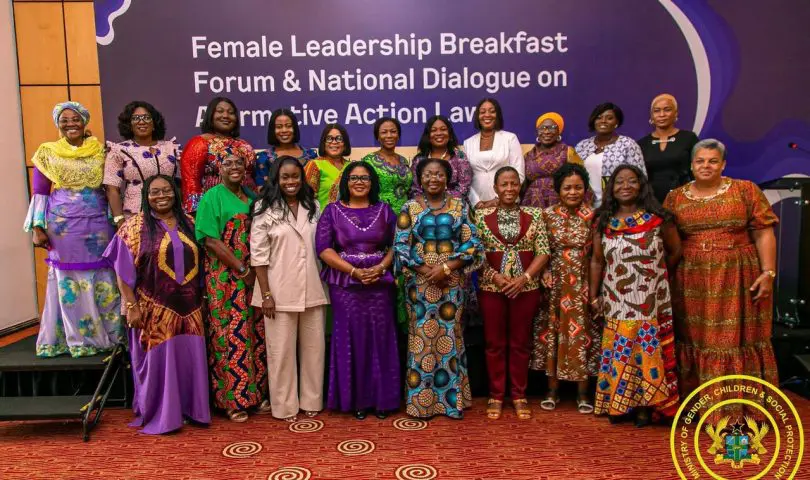

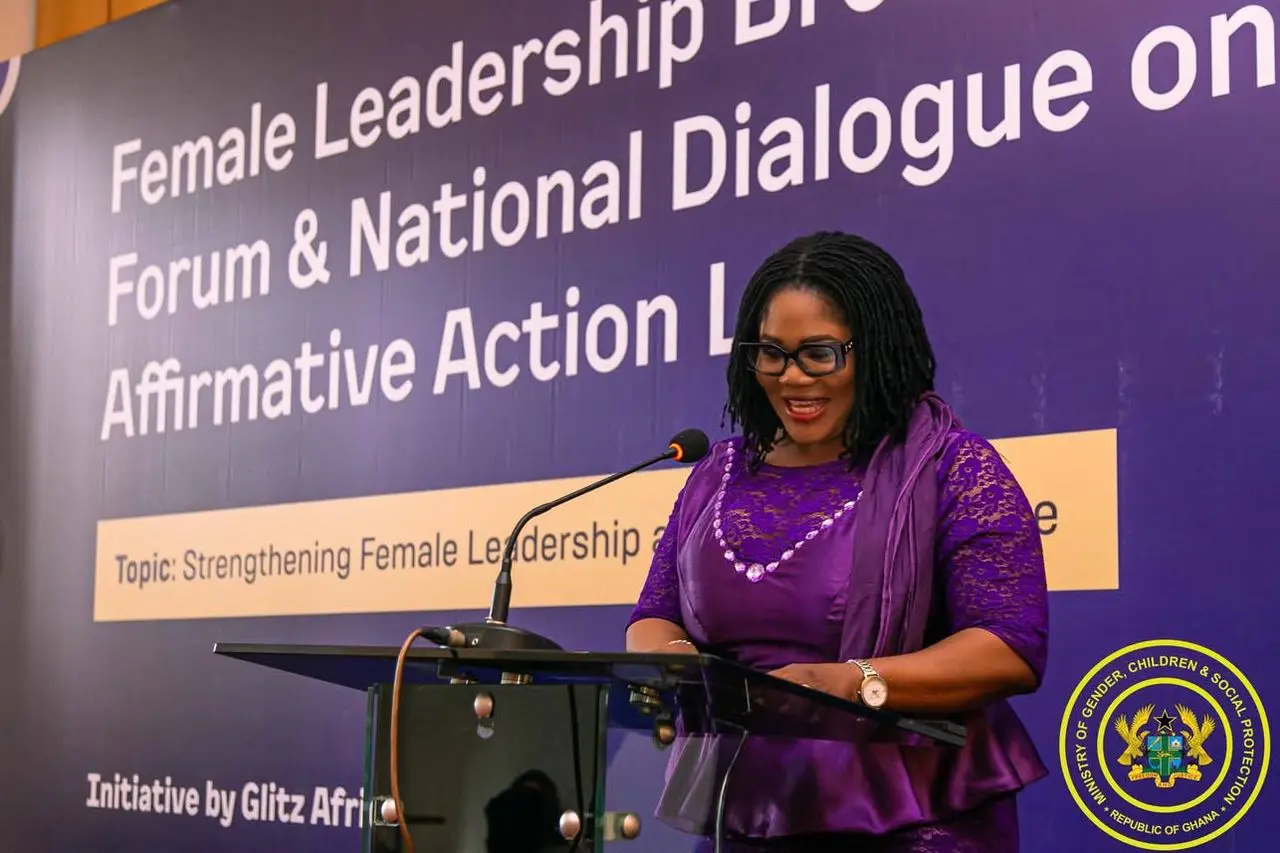
The Minister for Gender, Children and Social Protection, Dr. Agnes Naa Momo Lartey, participated in the National Dialogue on Affirmative Action and Breakfast Forum. The event, themed “Strengthening Female Leadership and Policy Influence,” brought together high-level female leaders and policy influencers from Ghana and beyond to discuss practical ways of enhancing women’s participation in leadership and governance.
The Minister described the conversation as both timely and necessary, especially in the wake of Ghana’s recent passage of the Affirmative Action (Gender Equity) Act. She noted that the law is not just a document but a national commitment to ensuring that women are no longer underrepresented or unheard in decision-making spaces.
Ghana’s Progress
The Minister shared key highlights from her recent participation in the ECOWAS High-Level Interactive Session during the 69th Session of the Commission on the Status of Women (CSW69) in New York. She revealed that at the current global pace, it could take over 100 years to bridge the gender gap. However, she expressed optimism that platforms like the National Dialogue could accelerate progress and reduce that timeline significantly.
Implementing the Affirmative Action Act
The Minister outlined Ghana’s steps toward implementing the Affirmative Action Act. These include finalizing the Legislative Instrument to support enforcement of the law, establishing a Gender Equity Committee to oversee compliance, and working towards meeting the 30% minimum quota for women in all political appointments.
Call to Action
The Minister called for a collective national effort to strengthen female leadership through institutional commitment, intergenerational mentorship, and strong accountability mechanisms. She emphasized that leadership should not be defined by gender, but by competence, vision, and inclusivity. The Minister concluded her remarks with a call to action, urging all stakeholders to push for more women in leadership, challenge societal biases, and work toward achieving full gender parity in policy-making.
Ruth Abla ADJORLOLO
