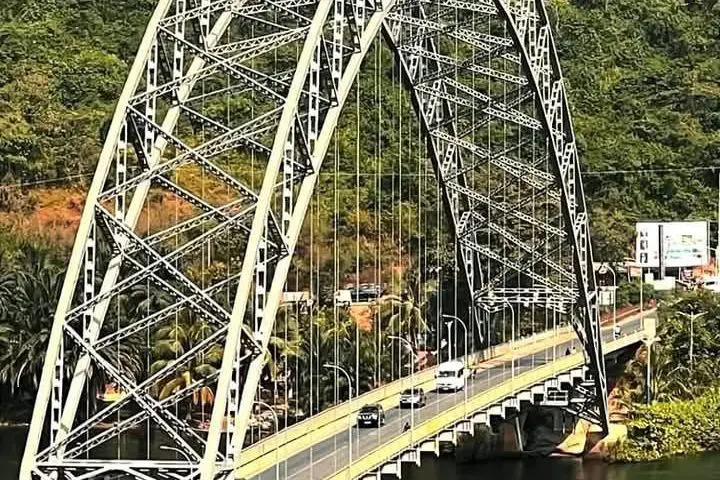

It was the year 1955 when the first bricks were laid on the banks of the mighty Volta River at Atimpoku. The villagers watched in awe as their peaceful riverside landscape transformed into a bustling construction site. For two years, the air was filled with the rhythmic sounds of hammering, and the clamor of machinery, and the fervent voices of workers from all corners of Ghana and beyond. This grand project was none other than the creation of the Adomi Bridge, destined to be the longest in the region, stretching an impressive 334 meters with its longest span reaching 245 meters.
By 1957, the bridge stood majestically over the Volta River, a symbol of progress and unity. It wasn’t merely a passage of concrete and steel; it was a lifeline connecting the people of the Volta Region to the bustling hearts of Ghana’s cities. As the first vehicles and pedestrians crossed the bridge, a new era began for Atimpoku.
With time, the Adomi Bridge became more than just an architectural marvel; it evolved into a vibrant marketplace. Vendors of all sorts, from fruit sellers to artisans, lined the bridge, their colorful wares adding life to the structure. The aroma of grilled kebabs, the sweet scent of roasted plantains, and the fragrant allure of locally made spices beckoned travelers from near and far. For many, the journey across the bridge was incomplete without a stop to buy something to chew on or a keepsake to take home.
As the sun set over the Volta River, the bridge would glow under the twilight, a picturesque scene that captivated the hearts of many. The Adomi Bridge stood as a testament to human ingenuity and resilience, a conduit of dreams and a canvas for countless stories. It was more than just a crossing; it was the heartbeat of Atimpoku, pulsing with life, hope, and endless possibilities.
By James Anumu