

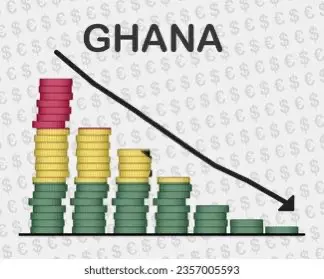

Ghana’s domestic revenue mobilization has been on a downward spiral, falling short of its peers in Africa. The World Bank reports that the country’s collected revenues as a share of Gross Domestic Product (GDP) dwindled from 15.7% in 2017 to a mere 13% in 2021.
This decline is not just a numbers game; it has real-world implications. Ghana’s tax system is plagued by numerous exemptions and complexities, which have led to a compliance gap. The Personal Income Tax (PIT) system, in particular, has been criticized for its detrimental impact on compliance and revenues.
The World Bank’s Ghana Public Finance Review reveals that collection from all major taxes has declined, with a notable fall in revenue from income taxes and VAT. This trend is in stark contrast to what’s being observed in peer countries.
Ghana’s tax exemptions have also come under scrutiny. The country’s tax exemptions from Valued Added Tax (VAT), PIT, and import duties are estimated to generate a loss in revenue of 3.9% of GDP. While these exemptions offer fiscal relief, they create leakages, complexity, and distortions.
The largest source of VAT forgone revenue is the VAT exemption on the supply of dwellings and land, accounting for 33% of the overall cost. For PIT, the exemption for cocoa farmers has had the deepest impact on revenue, followed by deductions for pension/social security contributions.
To address these challenges, Ghana must rationalize its tax expenditures while mitigating negative welfare impacts. This requires a careful balancing act, but one that is necessary to get the country’s revenue mobilization back on track.
Ruth Abla ADJORLOLO
