
In a groundbreaking move, Uganda’s Ministry of Health, the World Health Organization (WHO), and other partners have launched the first-ever clinical efficacy trial for a vaccine against the Sudan species of the Ebola virus. This milestone marks a significant step towards combating the deadly disease, which has claimed countless lives in Africa.
The trial, which began just four days after the outbreak was confirmed on January 30, is a testament to the power of collaboration and advanced research preparedness. Principal investigators from Makerere University and the Uganda Virus Research Institute (UVRI) worked tirelessly to get the trial ready, ensuring full compliance with national and international regulatory and ethical requirements.
The candidate vaccine, donated by IAVI, has undergone trials for safety and immunogenicity. This is also the first clinical trial of the vaccine during an outbreak, making it a crucial step towards saving lives. Dr. Tedros Adhanom Ghebreyesus, WHO’s Director-General, hailed the trial as a “critical achievement towards better pandemic preparedness”.
Three vaccination rings have been defined, with the first ring involving about 40 contacts and contacts of contacts of the first reported and confirmed case, a health worker who has died. Although there is currently no licensed vaccine available to combat the Sudan species of the Ebola virus, the trial offers hope for a solution.
The vaccine doses were pre-positioned in the country, and WHO worked with the principal investigators and national authorities to ensure the doses were stored correctly. Additional doses of the candidate vaccine will be made available shortly, thanks to a signed agreement between WHO and IAVI.
This historic trial is a beacon of hope in the fight against Ebola, and its success could pave the way for a licensed vaccine to combat the Sudan species of the virus.
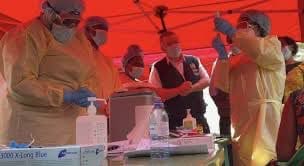
WHO/ Ruth Abla ADJORLOLO