

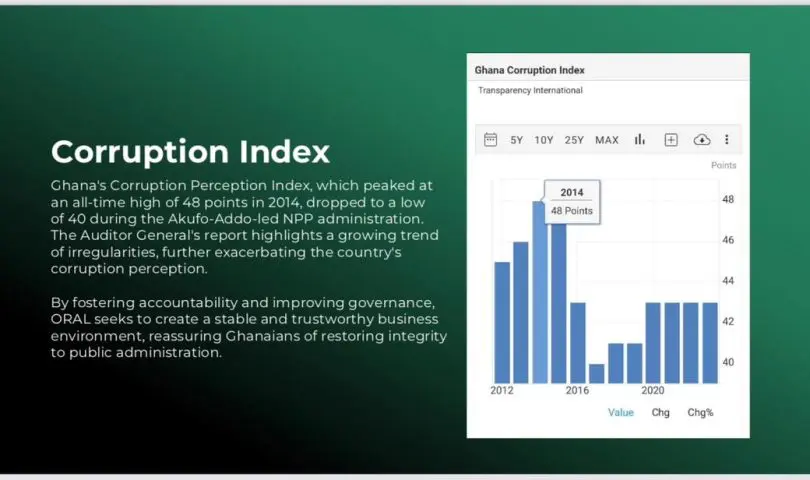

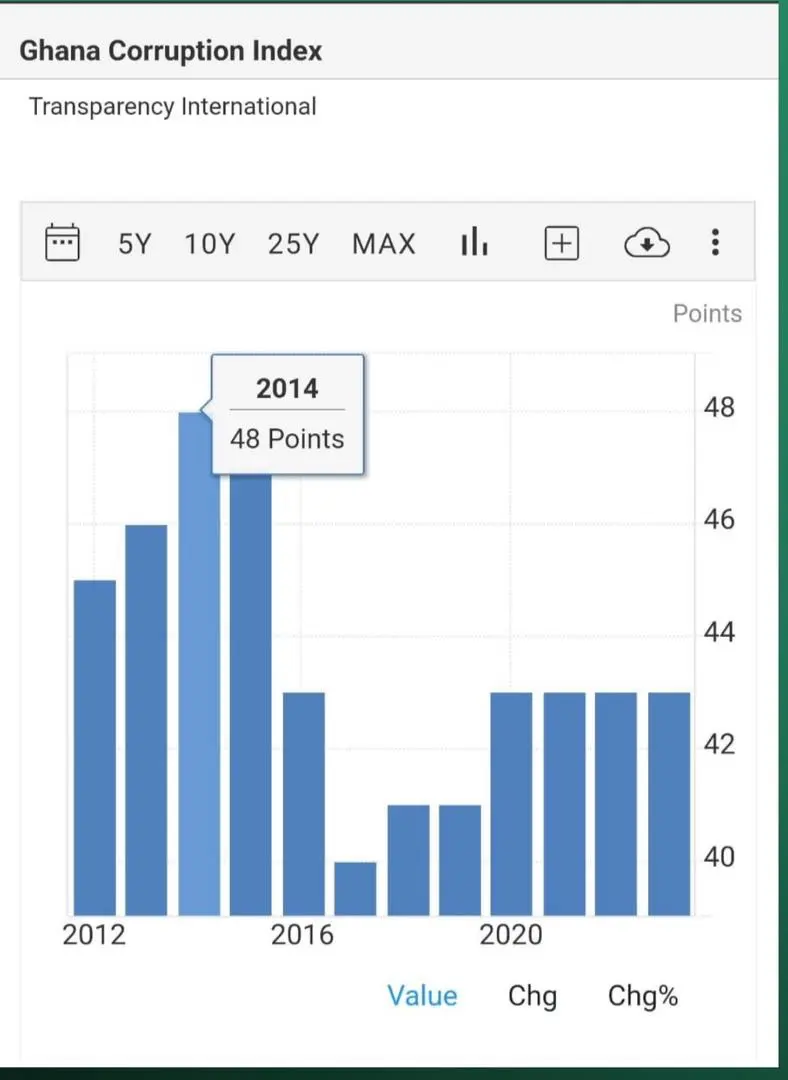
Ghana’s Corruption Perception Index (CPI) has been a rollercoaster ride, peaking at 48 points in 2014 before plummeting to 40 during the Akufo-Addo-led NPP administration. This decline is alarming, and the Auditor General’s report only adds fuel to the fire, revealing a growing trend of irregularities that have exacerbated the country’s corruption perception.
The report indicates that public boards, corporations, and statutory institutions have been embroiled in significant financial irregularities, totaling a staggering GH¢8.80 billion. The majority of these irregularities are considered recoverable, encompassing debts among governmental agencies, overdue receivables, and unretired imprests.
However, there is a glimmer of hope. The government’s efforts to restructure the banking sector between 2017 and 2020, although costly, have helped address widespread insolvency and regulatory breaches. The Bank of Ghana’s intervention, which included revoking licenses and merging banks, has protected depositors and ensured stability.
To combat corruption, Ghana needs to foster accountability and improve governance. The Operation Recover All Loot (ORAL) initiative is a step in the right direction, aiming to create a stable and trustworthy business environment. By promoting transparency and integrity, Ghana can restore public trust and ensure that corruption is no longer a major obstacle to development.
Ghana’s corruption story is complex, but with efforts like ORAL and a commitment to accountability, there is hope for a brighter future. As Transparency International notes, Ghana’s CPI score has improved slightly since 2017, ranking 70th out of 180 countries in 2023. While there is still much work to be done, Ghana is taking steps towards a more transparent and accountable future.
Ruth Abla ADJORLOLO
