

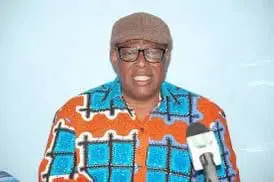

Why I can’t seem to care about the 2024 Elections – By Nana Nana Kwasi Gyan-Apenteng a Communication, Media, and Culture consultant, journalist and columnist.
I voted for the first time in Ghana in December 2004. I had been away in a necessary self-imposed exile from 1988 and returned (almost) in 2003. The last election I witnessed was the 1979 election won by Limann and the PNP. I could have voted, but I was out of the country on Election Day, and there was no proxy vote then. Of course, the 1981 coup, which toppled Limman, also ensured no national elections until 1992.
Ironically, I first cast a vote in the UK, where my status as a Commonwealth citizen gave me the right to vote. I voted in the 1990 election, which was won by John Major, in the Tony Blair election of 1997, and in the 2001 election, which was the last won by Blair and Labour for nearly two decades.
However, voting in my own country was unique, and I was so excited that I could hardly sleep the night before the vote. It felt like it used to be when we were kids and going to travel, especially by train, the following day. I must have dressed up by 4 am and ready to vote. I voted at the Manetville Polling Station inside our walled estate. It was so peaceful that the young security official – a lady from one of the services – had nothing to do but wait in utter boredom.
I was at the counting after the polls closed when the lights went out in the estate. We drove our cars in four directions and turned our lights onto the counting table. I remember President Kufuor beat Professor Mills by about ten votes in the presidential poll. We had many recounts under our improvised floodlights.
Of course, Kufuor and the NPP won that election. The next election was the 2008 one, which needed the Tain tiebreaker. The real drama was the next election in 2012, whose result was disputed and took eight months to resolve at the Supreme Court. The Supreme Court narrowly confirmed the victory of Atta Mills and NDC.
The 2012 elections were the most memorable because STAR-Ghana commissioned me to travel around half of Ghana to write about the activities of organisations using its grants to promote election peace. The late Dr Doris Yaa Dartey took the other half of the country. It was most enjoyable. This experience, witnessing the efforts to maintain peace during a contentious election, significantly shaped my perspective on the political process and the role of the people in it.
As we need no reminding, Nana Akufo-Addo won the 2016 election with the most significant plurality in our history but won 2020 with a reduced majority and a hung parliament.
Although my excitement has been nowhere near my 2004 level in every previous election, I have been anxious and excited enough to pay attention to the campaign messages. I make sure I follow campaign events and comment on them. This time, I don’t feel the election vibe; the energy is either not being transmitted, or I am not getting it.
I don’t think it has anything to do with the quality of candidates, as a friend argued in a private conversation on the topic. All the presidential candidates have been endorsed as required by law and continue to make promises to citizens, as has been the case in the past. What has changed for me is the acceptance of the truth that this election, like previous and future ones, will not fundamentally change anything much for the people of Ghana.
Don’t get me wrong. Governments have built infrastructure and improved policies in education, health, etc. However, on the whole, things have not improved appreciably for the majority of citizens. What is worse, the gap between the rich and the poor is widening, and there is little recourse to social justice or any justice for the poor.
I don’t doubt that various manifestos and campaign promises have been given in good faith (if there is any such thing in politics). Still, our people say that when nakedness promises to clothe you, remember who is making the promise. The next government will inherit a huge debt, as has every government. We depend on debt and imports for our existence, and as every sensible person knows, it is dangerous to pin your survival on what other people provide.
The manifestos and candidates have yet to provide a clear roadmap to take us out of debt and dependency. That is because they are all wielded to the neoliberal economic model, a system that emphasises free-market capitalism, deregulation, and privatisation, which has consigned us to the status of “hewers of wood and drawers of water”, to use a picturesque phrase from the King James Bible. We have taken neoliberalism to the extreme not as a stopgap measure but as an article of faith. This is the basis of our dependence, and it manifests in key areas in which no real solutions are offered.
The first is food. We depend on food imports to feed ourselves. I have read figures as high as 85 per cent for the portion of the food we import. Whatever the proportion, we imported about 2.5 billion dollars worth of food in 2022. It is established that we import 55 per cent of rice and 300,000 metric tonnes of imported poultry. Only 5 per cent of our poultry is produced locally. That is just the tip of the proverbial iceberg or rubbish heap. We import cereals, tomatoes, cooking oils, sugar… You name it, we import it. Nothing anyone has said so far shows the slightest inclination towards seriously reversing this trend.
The second is energy. We depend on energy to light our homes, offices, and streets and, more crucially, move us around and fuel our factories. This means we are talking about electricity and imported petroleum products. Our energy needs depend on imports, and the regular shortfalls in cost recovery mean huge gaps between demand and supply. Our electricity situation has improved a bit from the dire straits earlier this year, but that does not hide the huge debts and dependency in the energy sector. The cost of petroleum products has created inflation in all areas of the economy and destroyed the value of people’s incomes and assets.
The third is machinery. We depend on 99 per cent imported machinery for our industries, mechanised farming, infrastructure, and any activity that requires mechanical tools. So, when we talk about going into agro-industries or any other form of adding industrial value to our primary products, we talk about importing the machinery. To make matters worse, we have to import parts for those machines because we don’t even make moulds for machine parts in this country. Unless we address this point seriously, with costs and timelines, we will continue to export our raw materials and import poverty and dependence in return.
At this point, galamsay looms very large in our political space, and it compounds the sense of hopelessness that is probably at the heart of my inability to connect to the coming polls. However, galamsay is a product of the same ideology that has created profound deficits in the critical areas I have outlined above. It also indicates the state’s incapacity within the economic framework in which it has forfeited its leading role even in enforcing its own mandates.
Political parties and their candidates are making promises about building roads, schools, hospitals, and the like. That is important; even colonialists built schools and roads! Without addressing the root cause of why our nation is sliding backwards and producing poverty on such a massive scale, none of those promises will make any impression on the lives of the majority of our people.
As tomorrow approaches, I know I will vote but with scant hope or enthusiasm.
©️ Nana K. Gyan-Apenteng
December 6, 2024
