

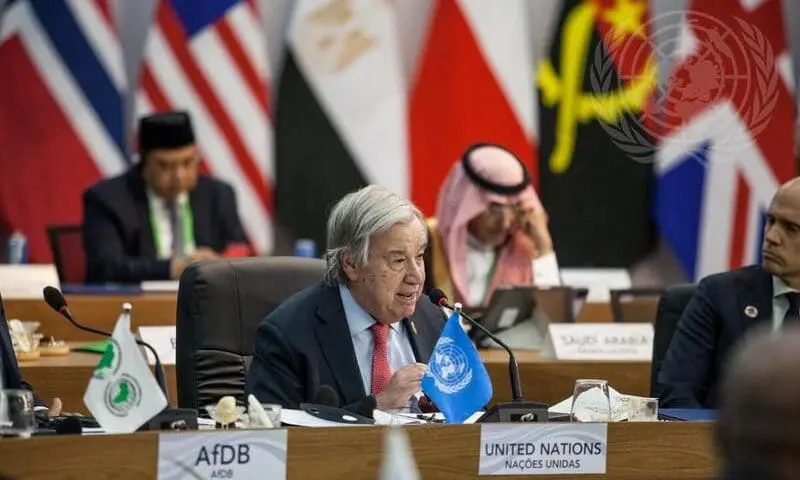

The annual G20 summit came to a close, but not before UN Secretary-General António Guterres delivered a stark warning about the climate crisis. Speaking at a session on Sustainable Development and Energy Transition in Rio de Janeiro, Guterres emphasized that our climate is at a breaking point. Unless we limit global temperature rise to 1.5 degrees Celsius, spiraling disasters will devastate every economy.
Guterres stressed that countries must accelerate their near-term emissions cuts to reduce global emissions by nine percent every year this decade. However, he noted that emissions are still rising. The next round of national climate action plans is crucial to getting the world on track, and Guterres urged countries to agree on a new ambitious climate finance goal this year.
The Secretary-General also attended a session on Reform of Global Governance Institutions, where he warned of a global governance deficit and trust deficit. With poverty, inequalities, and the climate crisis worsening, and peace becoming increasingly elusive, Guterres emphasized the need for global solutions rooted in the UN Charter.
On a positive note, the UN launched the Global Initiative for Information Integrity on Climate Change alongside Brazil. This initiative aims to combat climate disinformation by working with researchers and partners. Countries participating in the initiative will contribute to a UNESCO-administered fund, which will provide grants to non-governmental organizations to support their work in researching climate information integrity and developing communication strategies.
As the G20 summit concludes, the world waits with bated breath to see if leaders will take heed of Guterres’ warnings. The Secretary-General’s call to action is clear: failure is not an option. The success of COP30 in Brazil hangs in the balance, and the world cannot afford to wait.
UN/Ruth Abla ADJORLOLO
