


Can the Supreme Court interfere in the interpretation of parliamentary rules?
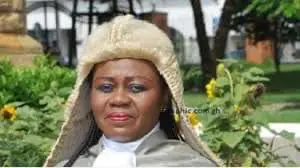
The ongoing chieftaincy clashes in Bawku have taken a dire turn, prompting Ghana’s Chief Justice, Justice Gertrude Araba Esaaba Sackey Torkornoo, to order the immediate closure of seven courts in the Upper East Region. This drastic measure aims to safeguard the lives of judges, staff, lawyers, and court users amidst escalating violence.
According to Justice Cynthia Pamela C. A Koranteng JA, Judiciary Secretary, the affected courts include the Bolgatanga High Court, Bolgatanga Circuit, Bolgatanga District Court, Zuarungu District Court, Zebilla District Court, Garu District, and Bongo District Court. The closure follows concerns raised by lawyers and stakeholders about the volatile situation in Bawku.
Renewed tensions stem from the return of a rival chief, whose enskinment was initially deemed illegal by a High Court. Although the arrest warrant was later withdrawn, the chief’s return sparked gunfire, deaths, and injuries. The conflict began with the alleged killing of an 11-year-old girl, resulting in over 20 fatalities in Bawku Township and eight more on the Bolgatanga-Tamale highway.
This conflict has deep roots, dating back to 1931, with the Kusasi and Mamprusi ethnic groups vying for control of the Bawku traditional area. The situation remains precarious, with reports of jihadist infiltration and arms trafficking in the region.
The government and stakeholders, including the Bawku Inter-Ethnic Peace Committee, have initiated peacebuilding efforts in response to the crisis. However, lasting resolution remains elusive, and the conflict’s persistence raises concerns about potential exploitation by extremist groups.
Can the Supreme Court interfere in the interpretation of parliamentary rules?
The Supreme Court generally avoids interfering in the interpretation of parliamentary rules, adhering to a principle known as the doctrine of parliamentary privilege. This doctrine, established in cases like Tuffuor v. Attorney General (1980), emphasizes the separation of powers and the autonomy of Parliament in managing its internal affairs.
However, there are instances where the Supreme Court may step in, primarily if constitutional implications exist or the interpretation of parliamentary rules conflicts with fundamental rights and principles. For example, the Supreme Court has ruled on parliamentary privilege and accountability matters, ensuring that legislative bodies do not abuse their powers.
In summary, while the Supreme Court typically respects Parliament’s independence, it can intervene when necessary to uphold the rule of law and protect constitutional values.
Ruth Abla ADJORLOLO / Sankofaonline.com
