

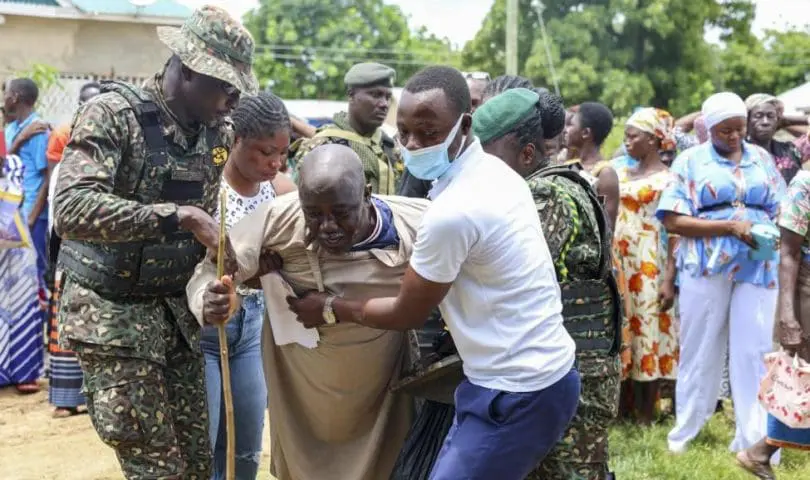

In a groundbreaking effort to strengthen border management and mitigate the impact of cross-border crises, the National Disaster Management Organization (NADMO) and the International Organization for Migration (IOM) have conducted a crisis simulation exercise at the Paga border in Ghana’s Upper East Region.
The exercise aimed to test the effectiveness of the National Cross-Border Humanitarian Crises Response Plan in responding to massive population displacement from neighboring countries, including Burkina Faso, Mali, and Togo. The simulation recreated a scenario of material, sanitary, and human damages, enabling key response actors to assess their human and material capacities in managing border crisis situations.
Fatou Diallo Ndiaye, Chief of Missions at IOM, emphasized the critical importance of finding solutions to tackle cross-border crises. “The objective of this simulation is to identify ways to address the challenges that arise during such crises,” she stated.
Mr. Kwaben Ofori, Deputy Director General of NADMO, highlighted the benefits of the exercise, noting that it would strengthen border management by engaging local populations in humanitarian crisis management and fostering mutual trust between law enforcement officials and cross-border communities.
Gerald Ataogye, District Chief Executive for Kasena Nankana West, praised the initiative, citing its potential to minimize inter-community conflicts and improve social cohesion.
Prior to the simulation, local authorities, security forces, and civil protection agents from Ghana and Burkina Faso underwent training on humanitarian border management. Participants included officials from the Immigration Service, National Ambulance Service, Police, Military, and civil society organizations.
This collaborative effort demonstrates Ghana’s commitment to regional cooperation and preparedness in addressing cross-border humanitarian crises. By strengthening border management and fostering community engagement, Ghana and its neighbors can better respond to future challenges and ensure a safer, more resilient region.
GBC/Ruth Abla ADJORLOLO
