

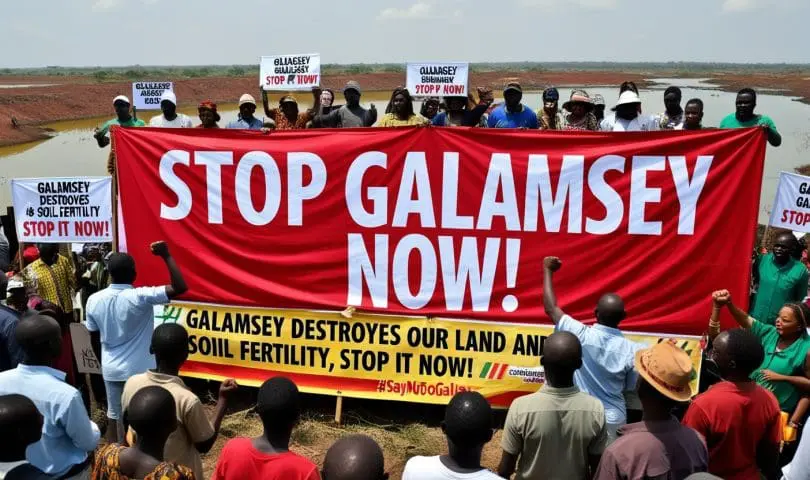


Source : Sankofaonline.com
In a dramatic turn of events, a diverse group of Ghanaians, ranging from 12 to 62 years old, found themselves behind bars for protesting against the rampant illegal mining practice known as galamsey. Their rallying cry, “Stop Galamsey Now! ” echoed through the streets, demanding an end to the environmental devastation that has plagued their communities. But as these citizens stood up for their right to clean water and a healthy environment, questions arose about whether their civil rights were being violated.
The impact of galamsey on Ghana’s water bodies is nothing short of catastrophic. Reports indicate that nearly 80% of water sources in the most affected areas are unsafe for drinking. The presence of heavy metals, such as mercury, has contaminated pipe-borne water, posing severe health risks. Tragically, children are being born with missing limbs, a heartbreaking consequence attributed to water pollution caused by galamsey.
Despite the clear and present danger, the government’s response has been to suppress the voices of those who dare to protest. Like in all previous demonstrations, the government’s approach to genuine protests aimed at protecting citizens’ rights has been to make arbitrary arrests, effectively emasculating the citizens instead of addressing the underlying issues. This raises a critical question: Why is the government trying to silence its citizens instead of addressing this impending national disaster?
The protesters argue that their actions are not just about environmental preservation but about safeguarding the future of Ghana. They believe that the government’s failure to act decisively against galamsey is a betrayal of its duty to protect its people. The arrests have only fueled their determination, as they see their struggle as a fight for justice and the fundamental right to clean water.
As the nation watches, the plight of these protesters serves as a stark reminder of the urgent need for action. Again , we call on the government to seriously start addressing the underlying causes of these protests. The voices of its citizens are not a threat but a call to duty. Addressing the galamsey crisis requires a united effort, where the government and the people work together to restore the health of Ghana’s water bodies and ensure a safe and sustainable future for all.
In the end, the fight against galamsey is not just about stopping illegal mining; it’s about standing up for the rights of every Ghanaian to live in a clean and healthy environment. The courage of these protesters should inspire us all to demand accountability and action from those in power. Only then can we hope to turn the tide against this environmental catastrophe and secure a better future for generations to come.
