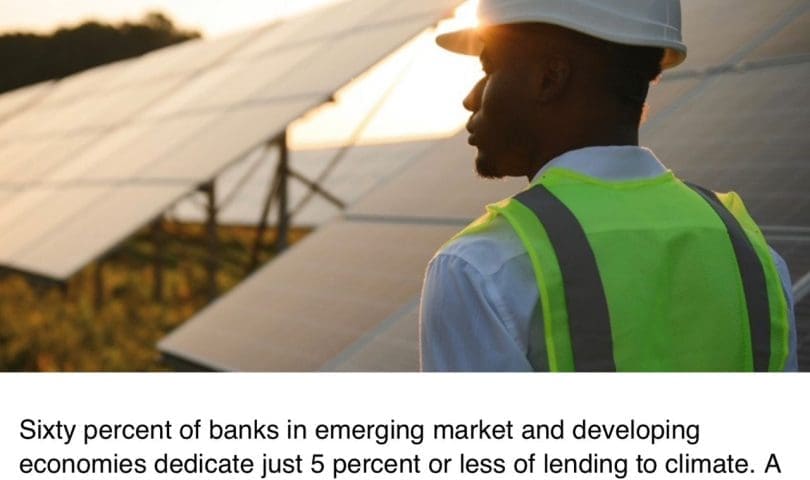

A new World Bank report reveals a staggering climate financing gap in Emerging Market and Developing Economies (EMDEs), where banks dominate the financial sector. Despite the urgent need for climate-related investments, nearly 60% of banks in EMDEs allocate less than 5% of their portfolios to climate financing, while over one-quarter offer no climate financing at all.
This lack of investment comes at a critical time, as climate change is expected to significantly impact economic opportunities and development outcomes in EMDEs. The report emphasizes the crucial role banks can play in closing the climate financing gap, but notes that collective action is necessary to achieve this goal.
Globally, banking authorities are exploring new approaches to support climate financing, including the adoption of green and sustainable taxonomies. However, these taxonomies currently cover only 10% of EMDEs, compared to 76% of advanced economies.
The report also highlights the underfunding of adaptation efforts, with only 16% of domestic and international climate finance in EMDEs channeled towards adaptation. Furthermore, 98% of this small share comes from public resources or official financing, leaving a significant gap for private investment.
In addition to increased climate lending from banks, the report stresses the need for larger capital and insurance markets in developing economies to provide essential long-term funding for critical climate-resilient infrastructure. Improving financial access for vulnerable groups is also crucial.
The World Bank’s Finance and Prosperity 2024 report calls for banks to step up climate action, strengthen financial stability, and promote inclusion for underserved people. With the right policies and frameworks in place, banks can play a pivotal role in financing a green, low-carbon, and sustainable development path.
Ruth Abla ADJORLOLO