

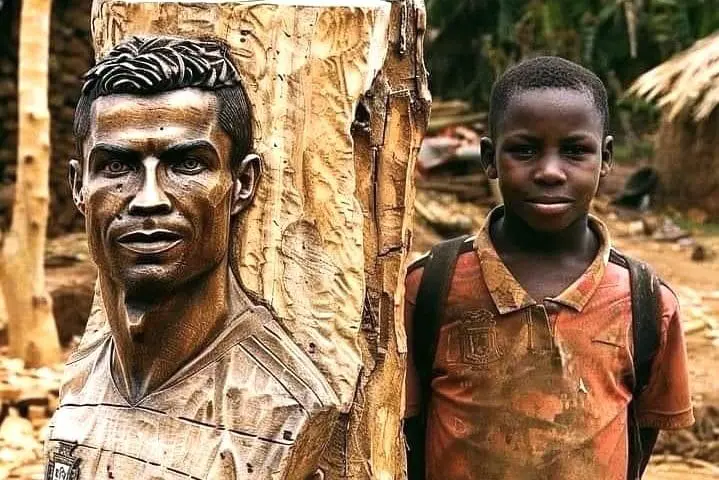

In the small farming community of Dormabin, in the Oti region of Ghana, there lived a young boy with a passion for art and craftsmanship. He spent most of his free time honing his skills, and his latest project was his most ambitious yet.
The boy had decided to carve an idol by hand, using nothing but a few simple tools and his own creativity. He spent hours every day for nine days straight, meticulously chiseling and shaping the wood into a beautiful work of art.
As the days passed, the boy’s idol began to take shape. He added intricate details and patterns, pouring all of his energy into the project. Finally, after nine long days, the idol was complete.
The boy was overjoyed with his finished product, and he couldn’t wait to show it off to his friends and family. He had created something truly special, a testament to his skill and dedication.
The idol was not only a beautiful piece of art, but it also held deep meaning for the boy. It represented his connection to his community and his heritage, and it was a symbol of his passion and creativity.
The boy’s idol quickly became a source of pride for the entire community. It was a reminder of the importance of tradition and culture, and it inspired others to pursue their own creative passions.
Years later, the boy’s idol was still revered in the community, a reminder of the power of hard work and dedication. And the boy, now a man, continued to create beautiful works of art, inspiring future generations to do the same.
Ruth Abla ADJORLOLO
