

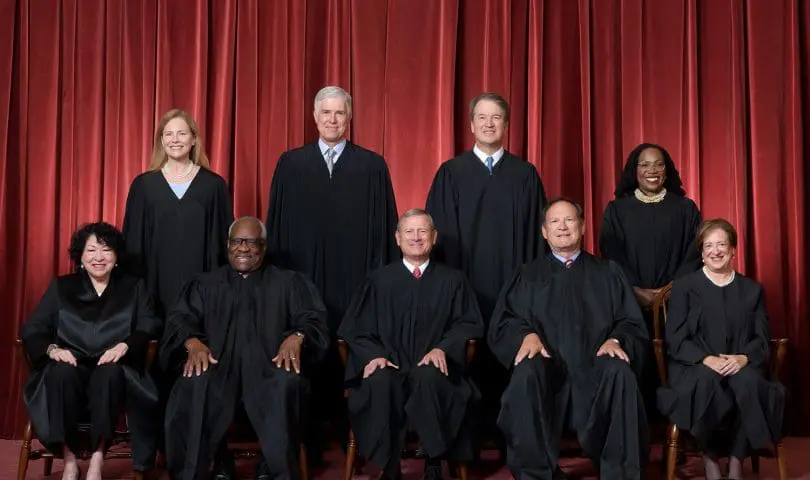

In a landmark ruling delivered on June 21, 2024, the U.S. Supreme Court decided by a 6–3majority that U.S. citizens do not have a constitutional interest in their non-citizen spouses being able to enter the United States. This decision has significant implications for married couples where one partner is a U.S. citizen and the other is not.
The case involved Sandra Muñoz, a U.S. citizen whose husband was denied a visa by the U.S. consulate in El Salvador. The denial was based on a broad provision in U.S. immigration law that disqualifies a person from obtaining a visa if the consulate believes they intend to engage in unlawful activity. Muñoz argued that her husband’s inexplicable denial infringed on her constitutional liberty interest in their ability to start a life together in the U.S.
Justice Sonia Sotomayor, in her dissent, warned that this ruling could have broader implications. She accused the conservative supermajority of chipping away at constitutional protections for married couples, drawing parallels to the 2022 Supreme Court ruling that overturned federal abortion protections. Sotomayor emphasized that U.S. citizens now rely on other countries’ immigration laws to vindicate their basic civil rights and live alongside their spouses.
This decision also raises concerns about its impact on same-sex couples, echoing the core of the landmark Obergefell v. Hodges ruling that legalized same-sex marriage in 2015. Justice Sotomayor’s critical cautions reinforces the need to protect the right to marriage for all couples, regardless of citizenship status.
