
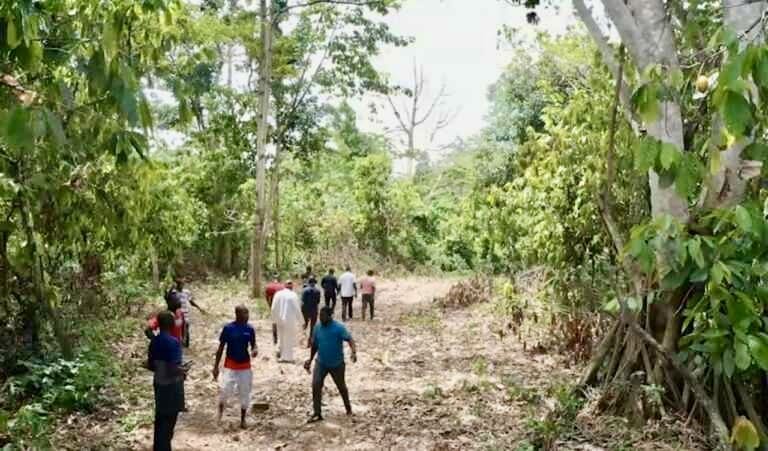
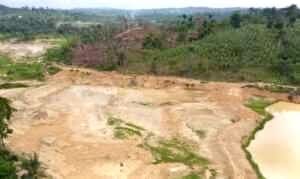
One hundred and sixty-nine hectares of rehabilitated cocoa farms in five communities within the Nkawie Cocoa District of Ashanti Region has come under attack by a foreign-owned mining firm.
The mining firm, currently engaged in gold exploration and development, has set its sights on Brahabebome, Nkotonmire, Ouagadougou, Apuoyem, and Brosanko, disrupting the lives and livelihoods of local cocoa farmers. These communities, once ravaged by Cocoa Swollen Shoot Virus Disease (CSSVD) and aging farms, found hope through the Cocoa Rehabilitation Programme, only to face renewed despair as their farms are threatened once again.
Among those affected is 63-year-old Nsiah Asare, whose 21-acre cocoa farm has sustained him and his family since 1989. Despite pressure from the mining company to relinquish his land, Asare remains steadfast, clinging to his livelihood and his dream of passing down his farm to his children.
Mavis Asare, widowed and reliant on her late husband’s two and a half acre cocoa farm to support her family, shares a similar plight. With her farm at risk, she faces an uncertain future, questioning why farmers are being marginalized and their rights overlooked.
The Ghana Cocoa Board (COCOBOD) has raised alarm over the unauthorized destruction of cocoa farms, estimating that over 4,300 hectares are targeted by the mining company.
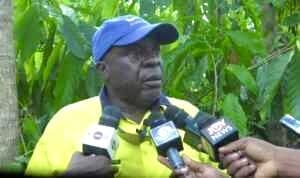
“COCOBOD is now using the Economic Plant Protection Act to protect cocoa trees. The law says nobody has the right to destroy any cocoa tree without seeking proper permission from COCOBOD through the Ministry of Food and Agriculture. Per the figures we have, over 4,000 hectares of cocoa farms are going to be affected and we can’t allow this to happen, especially with the continuous decline in cocoa production in the country”, head of Anti-illegal Mining Unit at COCOBOD, Professor Michael Kwarteng explained.
In response, MIGOP Mines Limited, the mining firm in question, refutes accusations of illegality, asserting compliance with regulatory requirements. The company’s Public Relations Manager, Richard Gyasi, claims to operate within the bounds of the law and promises compensation for affected farmers.
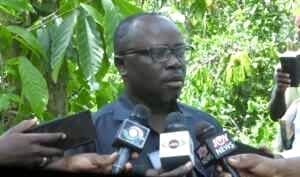
“We are working under the confines of the law and the Minerals Commission has given us the license to do the exploration. It’s been indicated in the document that when we destroy any crop, we will have to pay the farmer and that is exactly what we are doing. When we are done with the exploration and are successful, then we can begin the proper mining. That is when we have to compensate affected farmers per the law stipulates”, Mr Gyasi said.
This crisis comes amid a troubling decline in cocoa production in Ghana, dropping from one million metric tonnes in 2021 to 480 thousand metric tonnes in 2024. Reports indicate that over 19,000 hectares of cocoa farms were destroyed by illegal gold mining activities in 2022 alone, exacerbating the threat to Ghana’s position as the world’s second-largest cocoa producer.
As Ghana grapples with the devastating impact of mining on its cocoa industry, urgent action is imperative to protect the livelihoods of cocoa farmers and preserve the nation’s vital agricultural heritage.

[Source: 3 News]