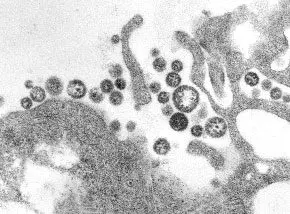

06 Mar 2023 Accra Ghana: The Ghana Health Service reports via media a continuing outbreak of Lassa fever in the Accra area. Since 26 February, there have been 14 confirmed cases of Lassa fever, one of whom has died. The 13 surviving cases are in a stable condition
Due to the outbreak, we bring to our readers’ detailed information about the disease below:
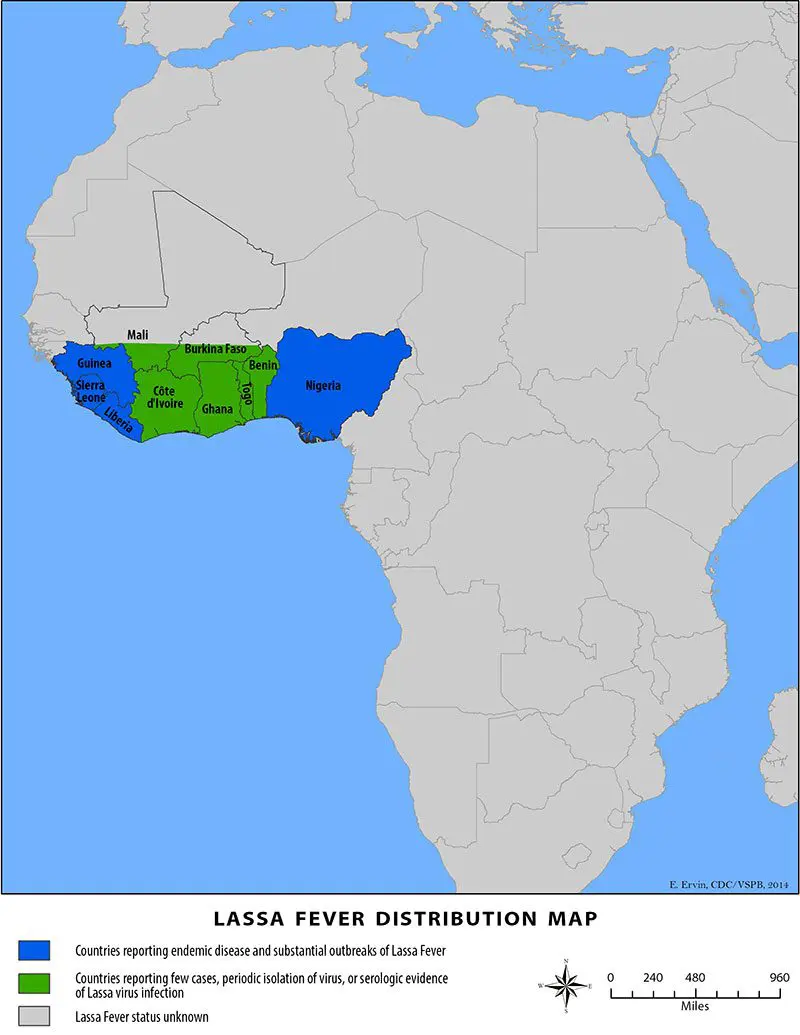
Lassa fever is an animal-borne, or zoonotic, acute viral illness spread by the common African rat. It is endemic in parts of West Africa including Sierra Leone, Liberia, Guinea, and Nigeria. Neighboring countries are also at risk because the animal vector lives throughout the region.
The first documented case occurred in 1969. Lassa fever is named after the town in Nigeria where the first cases occurred.
About The Disease:
Occurence
About 100,000 to 300,000 infections of Lassa fever occur annually, with about 5,000 deaths. Surveillance for Lassa fever varies between locations so these estimates are crude. In some areas of Sierra Leone and Liberia, about 10-16% of people admitted to hospitals annually have Lassa fever. This shows the serious impact the disease has on the region.
Vectors
The reservoir, or host, of the Lassa virus, is a rodent known as the “multimammate rat” (Mastomys natalensis). Once infected, this rodent is able to excrete the virus in urine for an extended time period, maybe for the rest of its life. Mastomys rodents breed frequently, produce large numbers of offspring, and are numerous in the savannas and forests of the west, central, and east Africa. In addition, Mastomys readily colonize human homes and areas where food is stored. All of these factors contribute to the relatively efficient spread of the Lassa virus from infected rodents to humans.
Transmission
Transmission of the Lassa virus to humans occurs most commonly through ingestion or inhalation. Mastomys rodents shed the virus in urine and droppings and direct contact with these materials, through touching soiled objects, eating contaminated food, or exposure to open cuts or sores, can lead to infection.
Because Mastomys rodents often live in and around homes and scavenge on leftover human food items or poorly stored food, direct contact transmission is common. Mastomys rodents are sometimes consumed as a food source and infection may occur when rodents are caught and prepared. Contact with the virus may also occur when a person inhales tiny particles in the air contaminated with infected rodent excretions. This aerosol or airborne transmission may occur during cleaning activities, such as sweeping.
Direct contact with infected rodents is not the only way in which people are infected; person-to-person transmission may occur after exposure to the virus in the blood, tissue, secretions, or excretions of a Lassa virus-infected individual. Casual contact (including skin-to-skin contact without the exchange of body fluids) does not spread the Lassa virus. Person-to-person transmission is common in health care settings (called nosocomial transmission) where proper personal protective equipment (PPE) is not available or not used. Lassa virus may be spread in contaminated medical equipment, such as reused needles.
Signs and Symptoms
Signs and symptoms of Lassa fever typically occur 1-3 weeks after the patient comes into contact with the virus. For the majority of Lassa fever virus infections (approximately 80%), symptoms are mild and are undiagnosed. Mild symptoms include slight fever, general malaise and weakness, and headache. In 20% of infected individuals, however, the disease may progress to more serious symptoms including hemorrhaging (in gums, eyes, or nose, as examples), respiratory distress, repeated vomiting, facial swelling, pain in the chest, back, and abdomen, and shock. Neurological problems have also been described, including hearing loss, tremors, and encephalitis. Death may occur within two weeks after symptom onset due to multi-organ failure.
The most common complication of Lassa fever is deafness. Various degrees of deafness occur in approximately one-third of infections, and in many cases hearing loss is permanent. As far as is known, the severity of the disease does not affect this complication: deafness may develop in mild as well as in severe cases.
Approximately 15%-20% of patients hospitalized for Lassa fever die from the illness. However, only 1% of all Lassa virus infections result in death. The death rates for women in the third trimester of pregnancy are particularly high. Spontaneous abortion is a serious complication of infection with an estimated 95% mortality in fetuses of infected pregnant mothers.
Because the symptoms of Lassa fever are so varied and nonspecific, clinical diagnosis is often difficult. Lassa fever is also associated with occasional epidemics, during which the case-fatality rate can reach 50% in hospitalized patients.
Risk
Individuals at greatest risk of Lassa virus infection are those who live in or visit endemic regions, including Sierra Leone, Liberia, Guinea, and Nigeria and have exposure to the multimammate rat. Risk of exposure may also exist in other west African countries where Mastomys rodents exist. Hospital staff are not at great risk for infection as long as protective measures and proper sterilization methods are used.
Diagnosis
Lassa fever is most often diagnosed by using enzyme-linked immunosorbent serologic assays (ELISA), which detect IgM and IgG antibodies as well as Lassa antigen. Reverse transcription-polymerase chain reaction (RT-PCR) can be used in the early stage of the disease. The virus itself may be cultured in 7 to 10 days, but this procedure should only be done in a high-containment laboratory with good laboratory practices. Immunohistochemistry, performed on formalin-fixed tissue specimens, can be used to make a post-mortem diagnosis.
Treatment
Ribavirin, an antiviral drug, has been used with success in Lassa fever patients. It has been shown to be most effective when given early in the course of the illness. Patients should also receive supportive care consisting of maintenance of appropriate fluid and electrolyte balance, oxygenation and blood pressure, as well as treatment of any other complicating infections.
Prevention
Primary transmission of the Lassa virus from its host to humans can be prevented by avoiding contact with Mastomys rodents, especially in the geographic regions where outbreaks occur. Putting food away in rodent-proof containers and keeping the home clean help to discourage rodents from entering homes. Using these rodents as a food source is not recommended. Trapping in and around homes can help reduce rodent populations; however, the wide distribution of Mastomys in Africa makes complete control of this rodent reservoir impractical.
When caring for patients with Lassa fever, further transmission of the disease through person-to-person contact or nosocomial routes can be avoided by taking preventive precautions against contact with patient secretions (called VHF isolation precautions or barrier nursing methods). Such precautions include wearing protective clothing, such as masks, gloves, gowns, and goggles; using infection control measures, such as complete equipment sterilization; and isolating infected patients from contact with unprotected persons until the disease has run its course.
Further, educating people in high-risk areas about ways to decrease rodent populations in their homes will aid in the control and prevention of Lassa fever. Other challenges include developing more rapid diagnostic tests and increasing the availability of the only known drug treatment, ribavirin. Research is presently under way to develop a vaccine for Lassa fever.
Source: Lassa Fever | CDC