
The political events of June 4,1979, may mean different things for different people . I always praise it to the high heavens(as I am doing now) because, at least , it attempted to introduce a certain level of Social Justice in the Ghanaian society, within the brief period of four months(June to September).
To other people, especially those who were beneficiaries of the decadent and corrupt regime of the Supreme Military Councils l and ll, it was a miserable period. Other beneficiaries say it introduced indiscipline into the Ghana Armed Forces. June 4 also marked the loss of dear ones who had to pay the ultimate price for the rot in the system .
Like it or hate it, June 4 was a result of a combination of factors—corruption, bad governance, frustration, nepotism,tribalism , political arrogance ,etc etc. In short, despite the feverish preparations to transfer power to a civilian administration through a multi party system, June 4 was hailed as God-sent. It is the reason the leader was christened Junior Jesus.
43 years ago, on May 15, a group of other ranked soldiers led by an unknown junior officer from the Ghana Air Force, staged a mutiny and was put on trial before a military court martial .
The mutiny coincided with an elaborate program to transfer power to a civilian administration. One can therefore , imagine the political party campaign mood that had engulfed the nation.
On the economic front, there was acute shortage of all basic commodities of life . The list is too long to mention but we simply called them “essential commodities “. I mean milk, sardines, sugar mackerel, soap , detergent, etc. Today , people have the luxury of looking for brand names of commodities . Those days anything passed . Lome became the shopping hub for most Ghanaian ladies. The common vehicle between Aflao and Accra was the Peugeot 504 caravan which was given the name “one pound, one pound “ though our currency was the cedi.
Hoarding was a common practice by traders. And because prices were not controlled , pricing was wide and varied depending on the source. The height of all that was a popular practice “Kalabule” . And the worst thing is that very often one had to journey some kilometers before arriving at where the goods were kept.
To ensure equitable distribution and price control, government set up super markets. The demolished International Trade Fair site was where government goods were kept and distributed. The Commissioner for Trade at the time was the then La Mantse,Nii Anyetei Kwakwranya .
When the news of the mutiny broke, the reaction was mixed apparently because most of the story remained in Burma Camp, the army HQ.
It was not until the trial began and the national dailies, The Daily Graphic and the Ghanaian Times came out with a screaming headline “Leave my men alone “ declares Rawlings that the message and intention was understood .
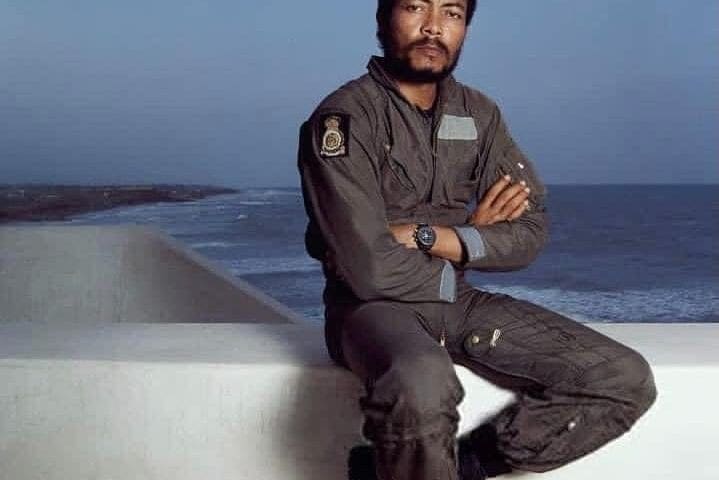
Admittedly, that was the first time 99.999 % of Ghanaians heard of the name Flt Lt Jerry John Rawlings.
The Rawlings’ message hit a raw nerve among the underprivileged Ghanaians. The support, though silent , was palpable . All of a sudden , the hopelessness among the people seemed vanished , giving rise to optimism .
It was against this backdrop that when on June 4, Rawlings’ cracking voice was heard on the national radio station, the Ghana Broadcasting Corporation, the country went quiet at first. This is because , the picture appeared like the fighting was still ongoing despite the fact that the junior ranks had freed Rawlings . Then the support became spontaneous as the ‘war’ ended with General Odartey Wellington heroically fighting till the end.
History was therefore ,made with the formation of the Armed Forces Revolutionary Council(the AFRC) , an all junior ranks government. The brief stay of the AFRC marked a tremendous change in the annals of Ghana politics. The successes of the government were every where with ordinary people from some African countries calling for the AFRC type revolution .
In the process 8 top army officers, including three ex heads of state faced military firing squad in public.
They were
General I K Acheampong
General Fred Akuffo
General Akwasi Afrifa
All heads of state. The rest were Lt Col Roger Felli ,Rear Admiral Joy Amedume, Major General Emmanuel Utuka,Major General Yaw Boakye and Major General Robert Kotei.
To conclude, l wish to remind the political class , who in the face of extreme poverty among most Ghanaians, are arrogant and rude because they have money and power. I hope they will restrain themselves from annoying the people. My reason is that, today’ conditions are far worse than what triggered the events 43 years ago.
History punishes people who refuse to learn its lessons.
Long live June 4
Long live Ghana
Continuamos la lucha
(by eric bortey, a journalist, formerly with the GBC and NCCE)
Tuesday, May 31,2022