


By Daniel Nii Okine
For years, Ghanaian taxpayers have suspected that the potholes destroying vehicle suspensions, the unfinished highways littering the country, and the endless dust clouds tormenting communities were not merely the result of poor planning or inadequate funding. They suspected something far worse.
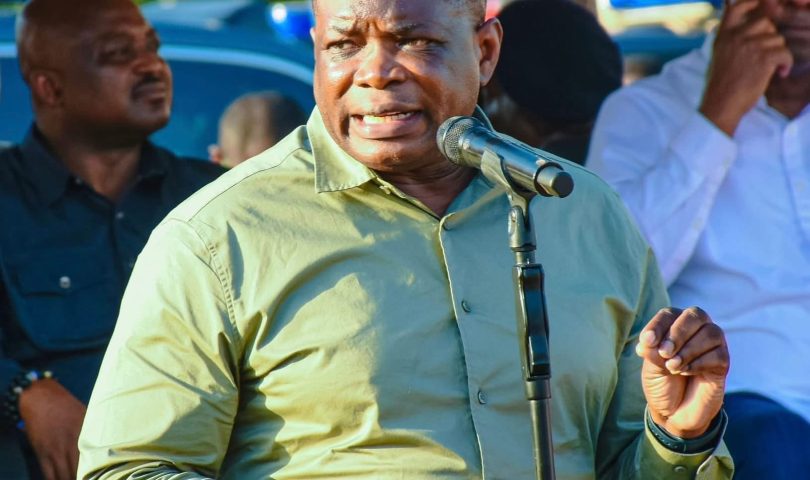
Last week, on the floor of Parliament, the Roads and Highways Minister, Kwame Governs Agbodza, effectively confirmed what many citizens have long believed.
During deliberations on the 2027 Budget, the Minister disclosed that some contractors who benefited from road projects under the Akufo-Addo administration’s much-publicised “Year of Roads” initiative simply abandoned their contracts, remained inactive on site, and waited for a change of government in the hope that the same projects would be repackaged and awarded again under new terms.
The revelation becomes even more troubling when viewed against the government’s ongoing “Big Push” infrastructure programme. According to the Minister, despite ring-fenced funding arrangements and a payment regime under which certified claims are not left outstanding for months, some contractors continue to receive public funds while delivering only a fraction of the work expected.
Let that reality sink in.
While successive governments have spent years arguing over who constructed more kilometres of roads, a well-connected network of contractors appears to have mastered a more profitable enterprise: extracting public money while delaying public infrastructure.
WHO IS GUARDING THE PUBLIC PURSE?
A road contract is not a ceremonial handshake. It is a legally enforceable agreement involving public funds, statutory obligations, technical supervision, and regulatory oversight.
If contractors can receive mobilisation funds, submit payment certificates, and effectively vanish from project sites without consequence, it means multiple layers of accountability have failed simultaneously.
The Ministry of Roads and Highways, together with the Ghana Highway Authority, the Department of Urban Roads, and the Department of Feeder Roads, bear the primary responsibility for monitoring performance and enforcing contractual obligations.
Supervising consultants and resident engineers are paid specifically to verify work completed, test quality standards, and certify progress before public funds are released.
The Public Procurement Authority provides mechanisms for contract enforcement, recovery of losses, application of penalties, and termination of non-performing contracts.
Parliament and the Auditor-General are expected to ensure value for money and hold officials accountable when public resources are squandered.
When contractors are paid and roads remain untouched, the inevitable conclusion is uncomfortable but unavoidable: either the oversight system is asleep, or parts of it are complicit.
THE BUSINESS MODEL OF DELAY
What is unfolding is not ordinary inefficiency. It increasingly resembles an exploitative business model built around Ghana’s four-year electoral cycle.
In functioning procurement systems, failure to deliver a multi-million-cedi public contract attracts severe consequences. Performance bonds are called in, guarantees are activated, legal action follows, and future opportunities disappear.
In Ghana, however, delay often appears to be rewarded.
A contractor secures a lucrative road contract, receives mobilisation funds, carries out enough preliminary activity to justify an initial certificate, and then gradually slows operations as election season approaches.
The calculation is simple.
If the governing party loses power, the incoming administration inherits a portfolio of stalled projects. Rather than aggressively enforcing termination clauses and pursuing recovery actions, governments frequently choose a politically convenient alternative: repackaging.
In procurement language, repackaging means revising scopes, adjusting costs upward due to inflation and exchange-rate depreciation, and re-awarding delayed projects under new financial terms.
The result is predictable.
The taxpayer pays more.
The project takes longer.
The country loses.
The contractor wins.
Meanwhile, thousands of registered contractors remain sidelined while a familiar circle continues to dominate public works contracts.
For some operators, delay is no longer a risk.
It is the business strategy.
WHEN INCOMPETENCE NO LONGER EXPLAINS THE PATTERN
At some point, citizens must stop accepting “administrative challenges” as an explanation.
Institutional blindness of this magnitude rarely survives without institutional protection.
When contractors repeatedly fail to perform despite prompt payments, legitimate questions arise.
Who approved the certificates?
Who ignored the warnings?
Who declined to enforce the penalties?
Who benefited from the delays?
These questions become even more urgent in a political environment where large contractors often maintain close relationships with influential political figures across party lines.
Minister Agbodza’s declaration that contract terminations will proceed regardless of contractors’ size or political connections is welcome. However, warning speeches alone will not dismantle entrenched networks of influence.
The larger concern is that inflated contract variations and repeated project restructuring create financial space for waste, patronage, and potential corruption.
A resident engineer who certifies work that does not exist.
A consultant who overlooks significant delays.
An official who shelves a justified termination recommendation.
None of these actions occur in a vacuum.
Accountability evaporates when the consequences of enabling wrongdoing remain lower than the rewards of facilitating it.
ENOUGH RHETORIC. ENFORCE THE LAW.
Ghanaians have heard promises before.
Every administration vows to crack down on non-performing contractors. Every administration announces a new era of accountability.
Yet abandoned roads continue to litter the nation.
If the government is serious about ending this cycle, several measures should become automatic rather than discretionary.
Trigger Performance Bonds Immediately
Public works contracts require Advance Payment Guarantees and Performance Bonds for a reason.
Where verified milestones are missed without legitimate justification, guarantees should be called immediately and liquidated damages imposed automatically.
No minister should have the discretion to waive accountability.
Hold the Gatekeepers Personally Liable
Contractors do not operate alone.
Engineers, consultants, project managers, and public officials who knowingly certify incomplete, defective, or non-existent work should face personal surcharges, professional sanctions, and criminal prosecution where appropriate.
Public funds deserve public accountability.
Blacklist Chronic Defaulters
Terminating contracts means little if the same individuals return through affiliate companies and proxy directors.
The Public Procurement Authority and sector ministries should establish and publish a national blacklist covering defaulting contractors, directors, and beneficial owners, preventing participation in public tenders for a significant period.
Publish Every Road Contract
Transparency remains one of the most effective anti-corruption tools.
Every active road project should be publicly accessible online, including contract values, contractor identities, beneficial ownership details, amounts paid, completion timelines, and independently verified progress reports.
Citizens should not have to rely solely on whistleblowers and social media videos to discover stalled projects.
Pay for Results, Not Promises
The culture of large upfront payments must end.
Public funds should be released strictly against independently verified work milestones, supported by transparent documentation and engineering validation.
Taxpayer money should finance completed infrastructure, not private fortunes.
THE REPUBLIC DESERVES BETTER
Roads are not gifts from politicians.
They are not campaign souvenirs, political rewards, or retirement plans for connected contractors.
Every abandoned road project represents more than unfinished asphalt.
It represents economic opportunities lost, communities isolated, businesses constrained, emergency services delayed, and lives endangered.
Every wasted cedi on a failed road contract is a cedi unavailable for schools, hospitals, agriculture, water systems, and other critical national needs.
If the current administration genuinely intends to distinguish the “Big Push” from the failures of the past, the first step is obvious.
Publish the names.
Call the bonds.
Recover the money.
Prosecute the enablers.
The era of rewarding failure must end.
Anything less will simply prove that Ghana’s road sector remains what many have long feared it has become: a lucrative racket financed by taxpayers and protected by politics.