


Sankofaonline Editorial| November 16,2026
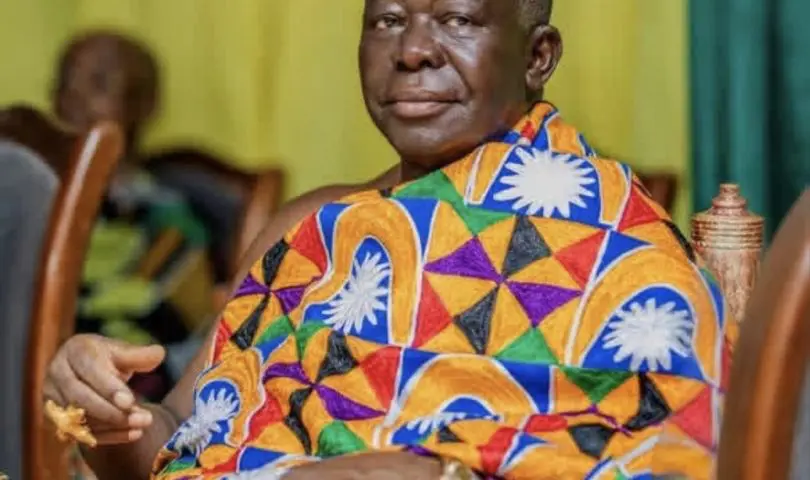
There are moments in a nation’s history when a speech rises above ceremony and becomes a defining challenge to an institution. The visit of Otumfuo Osei Tutu II to the Western Regional House of Chiefs in Sekondi was one of those moments.
What transpired was far more than a gathering of royal dignitaries exchanging courtesies beneath colorful canopies and ancestral symbols. It was an uncomfortable but necessary reckoning with the future of chieftaincy in Ghana.
At a time when many public leaders choose carefully crafted words that offend nobody and challenge nothing, the Asantehene spoke with rare candor. He confronted a reality that many within traditional leadership circles have long been reluctant to acknowledge: relevance is not inherited with a stool, nor guaranteed by history. It must be earned through service, vision, and tangible impact.
His message was unmistakable.
If traditional leaders fail to address the struggles and aspirations of Ghana’s youth, the youth may eventually withdraw their faith from the institution itself.
That warning should reverberate through every palace, traditional council, and House of Chiefs across the country.
For generations, chieftaincy has occupied a revered place in Ghana’s social and cultural fabric. Yet reverence alone cannot sustain any institution indefinitely. A throne cannot survive on nostalgia, nor can a stool command respect simply because it once did. Every generation ultimately asks the same question of its leaders: What difference are you making in our lives?
Today, that question is being asked by thousands of young people confronting unemployment, limited opportunities, environmental degradation, and growing economic uncertainty. The university graduate searching endlessly for work does not measure leadership by the grandeur of a durbar. The farmer whose river has been poisoned by galamsey draws little comfort from ceremonial prestige. The young entrepreneur struggling to access capital is less interested in tradition than in whether leadership can create pathways for opportunity and progress.
It was this reality that formed the heart of Otumfuo’s challenge in Sekondi.
Rather than encouraging chiefs to retreat behind the symbolism of their offices, he called on them to embrace a more purposeful form of leadership, one that positions traditional authorities as catalysts for development, champions of education, defenders of the environment, and advocates for economic transformation. His message was clear: chiefs can no longer afford to be passive observers while the communities they lead grapple with increasingly complex social and economic problems.
Equally significant was his rebuke of the growing tendency among some traditional leaders to reduce themselves to petitioners before political power. Chieftaincy was never intended to function as an appendage of government. Chiefs are custodians of lands, culture, heritage, and the collective aspirations of their people. Their role is not to chase politicians for attention but to hold governments accountable, demand development, and ensure that the voices of their communities are heard.
In many ways, the concerns raised by the Western Regional House of Chiefs during the same gathering reinforced the very point Otumfuo was making. The alarm sounded over galamsey and inequitable mining arrangements highlighted the enormous challenges confronting resource-rich communities across Ghana. Rivers are being destroyed, farmlands are disappearing, and many communities continue to watch vast mineral wealth leave their lands while local development remains painfully inadequate.
Such issues demand more than ceremonial interventions. They require chiefs willing to engage, challenge, negotiate, and advocate relentlessly on behalf of their people.
The future of chieftaincy, therefore, will not be secured by protocol alone. It will be secured by purpose. It will not be preserved merely through festivals, titles, and elaborate ceremonies, but through leadership that delivers results and addresses the pressing realities facing ordinary citizens.
That is why Otumfuo’s address in Sekondi deserves to be remembered not as a speech, but as a call to action.
It was a challenge to traditional leaders who have become comfortable with symbolism while neglecting substance. It was a challenge to institutions that celebrate their history without adequately preparing for the future. Above all, it was a challenge to recognize that the legitimacy of chieftaincy in the twenty-first century will increasingly depend on its ability to improve lives, create opportunities, protect communities, and inspire confidence among younger generations.
The verdict delivered in Sekondi could not have been clearer.
Chieftaincy stands at a crossroads. One path leads to renewal, influence, and continued relevance. The other leads to gradual decline, as younger generations seek answers elsewhere.
History will remember which path Ghana’s traditional leaders choose.
And as Otumfuo Osei Tutu II reminded the nation in Sekondi, the enduring strength of chieftaincy will ultimately be measured not by the glory of its past, but by the value it creates for the people whose future it is entrusted to protect.
Sankofaonline Editorial Board
The age of ceremonial leadership is fading. The age of transformational leadership must begin.
