


By Sankofaonline News Desk
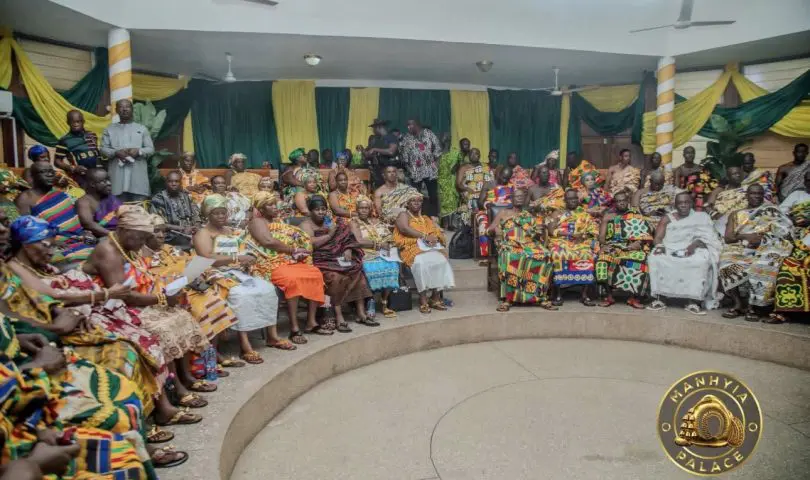
SEKONDI, Ghana:The Western Regional House of Chiefs used the historic visit of Otumfuo Osei Tutu II to raise urgent concerns over the escalating destruction caused by illegal mining and what traditional leaders describe as decades of unfair mining arrangements that continue to disadvantage local communities.
Speaking on behalf of the House during the Asantehene’s visit to Sekondi, the President of the Western Regional House of Chiefs, Nana Kobina Nketsia V, welcomed the revered monarch and reaffirmed the longstanding historical ties between Asanteman and the chiefs of the Western Region.
Beyond the ceremonial exchanges, Nana Kobina Nketsia V drew attention to two major issues confronting traditional authorities in one of Ghana’s most resource-rich regions: the growing threat of illegal mining, popularly known as galamsey, and the longstanding inequities embedded in the country’s mining agreements.
Western Chiefs Raise Fresh Concerns Over Galamsey
The Essikado Omanhene described illegal mining as an ongoing environmental crisis that continues to wreak havoc on rivers, farmlands, forests, and local ecosystems across the Western Region.
According to him, traditional authorities have been actively engaging government officials and stakeholders on proposals for responsible and cooperative mining models that could help balance economic activity with environmental protection.
He expressed hope that Otumfuo Osei Tutu II, widely respected for his advocacy on environmental preservation and sustainable development, would lend his experience and leadership to the discussions when chiefs reconvene to chart a way forward.
The appeal comes amid growing national concern over the destruction of water bodies and agricultural lands linked to illegal mining activities across several parts of Ghana.
Call for Reform of Colonial-Era Mining Arrangements
Nana Kobina Nketsia V also used the occasion to spotlight what he described as historical injustices in Ghana’s mining sector.
He raised concerns about mining agreements that originated during the colonial era and have, over the years, been maintained under successive administrations.
According to the chief, these arrangements have significantly reduced the authority of traditional landowners over mineral-rich lands while limiting the economic benefits that flow back to communities where mining activities take place.
Despite hosting some of the country’s most valuable natural resources, many traditional areas, he suggested, continue to receive limited returns relative to the wealth extracted from their lands.
He therefore called for a united front among traditional authorities across Ghana to pursue reforms that would ensure greater fairness, equity, and local participation in the management of the nation’s mineral resources.
A Platform for National Dialogue
The concerns raised before the Asantehene transformed what began as a courtesy visit into a broader conversation about environmental protection, natural resource governance, and the role of traditional leadership in safeguarding community interests.
With galamsey continuing to threaten livelihoods and growing demands for a review of mining arrangements, the intervention by the Western Regional House of Chiefs signals an increasing determination among traditional authorities to play a more assertive role in shaping policies that affect their lands and people.
For many observers, the decision to place these issues before Otumfuo Osei Tutu II underscores the significance chiefs attach to both challenges and their desire for collective traditional leadership in seeking lasting solutions.
