


By Fuvi Kluku
Sankofaonline
There was a time in Ghana when the sight of a nurse in a crisp white or green uniform inspired instant trust. Patients entered hospital wards believing their dignity would be protected, their privacy respected, and their lives placed in caring, professional hands.
Today, that trust is under assault.
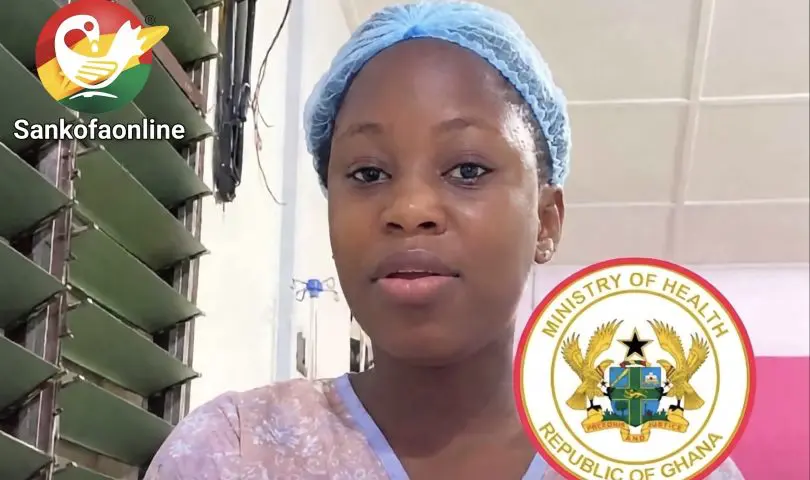
The recent scandal involving a nurse who allegedly livestreamed a pregnant woman in distress, exposing one of the most vulnerable moments of her life to social media viewers while a Mobile Money number appeared on screen, should disturb every Ghanaian. It was not merely a lapse in judgment. It was a shocking betrayal of professional ethics and a painful reminder of how far some sectors of our society have drifted from the values that once defined us.
A delivery room is not a stage. A patient is not content. Human suffering is not entertainment.
Yet as viewers reportedly flooded the livestream with inappropriate comments and engaged with the spectacle unfolding before them, one troubling reality became impossible to ignore: somewhere along the way, we have begun to lose our sense of duty, compassion, and basic human decency.
The Ministry of Health and the Nursing and Midwifery Council have responded and investigations are underway. That is necessary. But this incident is not the disease. It is merely a symptom of a much deeper national crisis.
Older generations will remember a time when professional discipline was not negotiable. Long before social media, smartphones, and digital regulations, healthcare workers understood the sacred responsibility entrusted to them. Under formidable matrons such as the late Vanderpuje of Korlebu Teaching Hospital , patient confidentiality was fiercely protected. Professional ethics were not suggestions. They were obligations. A nurse’s conduct reflected not only on the individual but on the entire profession.
Today, in some quarters, that sense of responsibility appears to have been replaced by the pursuit of online attention, viral fame, and quick financial gain.
But let us not deceive ourselves into believing this problem begins and ends in our hospitals.
The same mindset is visible across our nation.
We invest billions in roads, only to watch citizens destroy embankments through illegal sand winning operations. We build infrastructure intended to serve future generations, yet some see national assets merely as opportunities for personal enrichment.
Our railway lines, built through decades of sacrifice and public investment, continue to be vandalized and sold piece by piece as scrap metal. Instead of protecting what belongs to all of us, we tolerate its destruction.
Even more heartbreaking is what has happened to many of our rivers.
The Pra, Ankobra, Birim, and countless other water bodies that sustained communities for generations have become symbols of environmental devastation. Illegal mining activities continue to pollute waterways, destroy ecosystems, and threaten the health and livelihoods of future generations.
What makes this crisis even more troubling is the role played by some of those entrusted with safeguarding our collective interests. Across the country, allegations persist that individuals in positions of authority, whether traditional, political, or administrative, have failed to demonstrate the leadership necessary to confront these challenges decisively.
Meanwhile, ordinary citizens seeking basic public services often encounter bureaucratic indifference. Too many public offices have become places where service is treated as a favor rather than a duty. The people who pay taxes and sustain public institutions are too often met with delays, neglect, and unnecessary frustration.
The political class has not escaped scrutiny either. Across successive administrations, citizens have repeatedly complained about leaders who appear disconnected from the everyday realities facing ordinary Ghanaians. The humility of service frequently gives way to the comforts of power.
No country prospers when ethical standards collapse. No society advances when public trust is abused. No people achieve lasting progress when personal interest consistently triumphs over collective responsibility.
Development is not measured solely by skyscrapers, highways, or economic statistics. True development is reflected in character, discipline, accountability, and respect for human dignity.
A nation cannot rise if healthcare professionals exploit vulnerable patients, if public infrastructure is systematically vandalized, if natural resources are sacrificed for short-term gain, if public servants display indifference toward citizens, and if leadership fails to set the standard expected of the rest of society.
The investigation into the nurse’s conduct must proceed swiftly and fairly. Accountability matters. But accountability should not stop with one individual. This moment should force all of us to engage in a broader national conversation about responsibility, ethics, and the values we wish to pass on to future generations.
Ghana’s greatest challenge may not be a lack of resources, talent, or opportunity. It may be our growing tolerance for indiscipline.
Until we confront that reality from the hospital ward to the boardroom, from the chief’s palace to the corridors of government, from the classroom to the marketplace, our dreams of national transformation will remain frustratingly out of reach.
The time has come for Ghana to rediscover the culture of duty, integrity, and respect that once commanded admiration. Without it, progress will remain a promise forever deferred. With it, our future remains within reach.
