


By Sankofaonline News Desk
Ghana has taken a significant step toward what could become one of the most transformative infrastructure projects in its history, positioning itself to join the ranks of nations harnessing nuclear energy to power economic growth, industrialization, and long-term energy security.
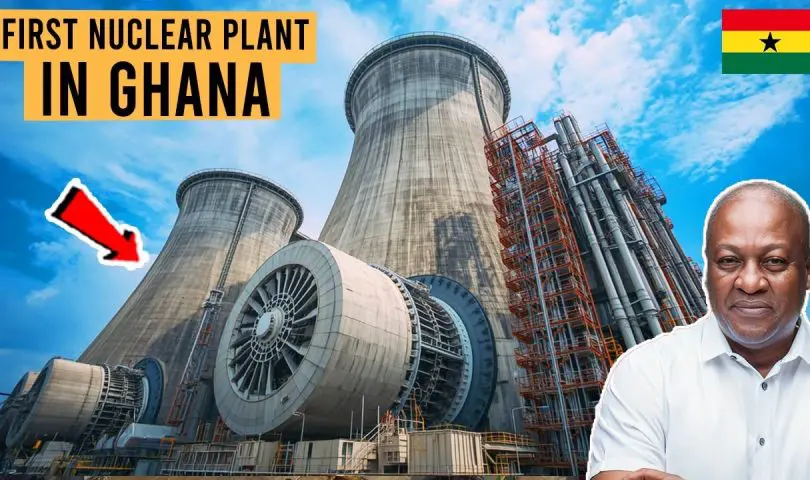
According to information shared by Cedi Showbiz, Ghana has successfully completed Phase I of the International Atomic Energy Agency (IAEA) nuclear development process, clearing a major hurdle on its journey toward establishing the country’s first nuclear power plant.
The milestone has paved the way for the launch of the Ghana Nuclear Phase II Completion and Investment Readiness Support Programme, a one-year initiative designed to strengthen the country’s preparedness for the next stages of nuclear energy development.
The programme will focus on developing a highly skilled nuclear workforce, attracting critical investment, strengthening regulatory institutions, and enhancing public engagement to build confidence in the country’s nuclear ambitions.
More Than a Power Plant: A National Transformation Agenda
While discussion about nuclear power often centers on electricity generation, experts argue that Ghana’s nuclear programme represents something much broader than simply adding another source of energy to the national grid.
It is a strategic investment in the future of Ghana’s economy.
Reliable power has long been one of the most critical ingredients for industrial growth. Manufacturers, mining companies, technology firms, hospitals, research institutions, and large-scale agricultural enterprises all depend on stable electricity supplies to remain competitive.
As Ghana’s population continues to grow and urbanization accelerates, energy demand is expected to increase substantially in the coming decades. Nuclear energy offers a long-term solution capable of providing large quantities of stable, uninterrupted electricity without the fluctuations often associated with some traditional energy sources.
For Ghana, this could mean fewer energy shortages, greater industrial productivity, and increased investor confidence.
A Game-Changer for West Africa
The implications extend far beyond Ghana’s borders.
If successfully developed, Ghana’s nuclear power programme could become a strategic asset for the wider West African region.
For decades, many countries in the region have struggled with unreliable electricity supplies that have hindered industrial expansion, job creation, and economic growth. A future nuclear-powered Ghana could strengthen regional energy cooperation and potentially support the West African Power Pool, helping improve electricity stability across neighboring countries.
The project could also position Ghana as a regional hub for nuclear science, engineering, research, and technical training.
Universities across West Africa may eventually collaborate with Ghanaian institutions on nuclear technology, radiation medicine, environmental monitoring, advanced engineering, and scientific research. This would create opportunities for a new generation of African scientists, engineers, technicians, and energy specialists.
Rather than exporting raw talent abroad, West Africa could increasingly develop world-class expertise within the region.
Driving Industrialization and Job Creation
One of the most compelling aspects of nuclear development is its capacity to create highly skilled employment opportunities.
The journey toward building a nuclear power plant requires thousands of professionals across multiple disciplines, including:
- Nuclear engineering
- Civil engineering
- Electrical engineering
- Environmental science
- Information technology
- Safety and security management
- Construction
- Regulatory oversight
- Research and development
The new programme’s emphasis on workforce development signals Ghana’s determination to ensure that local talent plays a central role in the country’s nuclear future.
This investment in human capital could have lasting benefits that extend well beyond the energy sector.
Strengthening Energy Independence
The global energy landscape has become increasingly unpredictable in recent years. Geopolitical conflicts, fuel price fluctuations, and supply chain disruptions have exposed the vulnerabilities faced by countries heavily dependent on imported energy resources.
Nuclear power offers Ghana an opportunity to diversify its energy mix and strengthen its energy independence.
A reliable domestic source of large-scale electricity generation could reduce long-term exposure to external energy shocks while supporting national economic resilience.
For businesses considering investment in Ghana, energy reliability remains a key factor in determining where to establish factories, processing facilities, and industrial operations. A strong nuclear energy programme could significantly enhance Ghana’s attractiveness as an investment destination.
Building Trust Through Transparency
Despite its potential benefits, nuclear energy also raises legitimate public concerns regarding safety, environmental protection, and regulatory oversight.
Recognizing this reality, the new programme places considerable emphasis on stakeholder engagement and strengthening regulatory institutions.
Public confidence will ultimately be one of the most important pillars of Ghana’s nuclear journey.
The success of countries operating nuclear power plants around the world has demonstrated that strong regulation, transparency, rigorous safety standards, and continuous public education are essential elements of a successful nuclear programme.
Ghana’s commitment to strengthening these safeguards at an early stage reflects a recognition that safety must remain the foundation of every future milestone.
A Defining Moment for Ghana
The completion of Phase I of the IAEA process represents more than a bureaucratic achievement. It signals Ghana’s growing ambition to embrace advanced technology and position itself among nations investing in long-term solutions to future energy challenges.
While significant work remains ahead before a nuclear power plant becomes a reality, the country’s progress demonstrates a commitment to strategic planning, scientific advancement, and sustainable development.
For many observers, this is not simply the story of a future power station.
It is the story of a nation preparing for the next chapter of industrial transformation.
And if executed successfully, Ghana’s nuclear power programme may one day be remembered not only as a turning point for Ghana, but as a landmark development that helped energize the economic future of West Africa itself.
